

Archive

Archive for November, 2010

Transneft Theft Revealed by Alexey Navalny

November 27th, 2010 No comments

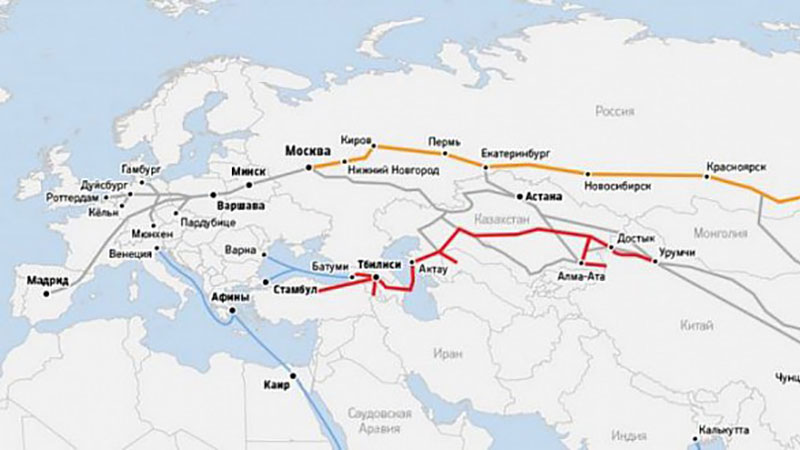
Alexey Navalny released a new video on his research into Transneft and other large scale projects underway. According to official documents provided by the Russian Federal Audit Chamber, the government has already spent over $15 billion in the Eastern Siberia-Pacific Ocean Pipeline with billions embezzled during the construction.

  • Share/Bookmark

Take the Money and Run, to Indonesia?

November 24th, 2010 No comments

Sergei Ignatyev, Russia’s central banker, announced on Tuesday that capital outflows have reached over $22 billion in the first 10 months of 2010. Compare this with the other BRIC nations that are seeing capital inflows and the overall emerging markets expect to take in $825 billion in private capital inflows this year.

In Seeking Alpha, Craig Pirrong writes

The net capital outflows reflects two things: (a) Relatively little money flowing into Russia, and (b) a lot flowing out. The former is readily understood, given the very weak investor protections, and the horrible experiences of many foreign investors (Shell, BP, Telenor, Ikea, and on and on). The latter is very revealing too, though. The distribution of wealth is highly concentrated in Russia, so net wealth outflows mean that even the extremely wealthy–those that have investible wealth and the ability to move it overseas–perceive that the risks of investing in Russia are extreme. Even given the vaunted discounts in Russian equity prices, they put a lot of their money overseas. They realize that they have their wealth at the whim of Putin and the siloviki. Better to get it (and in many cases, their families) in a place where it’s harder for the state and the power structures to get at it. They have more influence in the system than foreigners, but “more” doesn’t mean “a lot.”

The lack of effective law enforcement in Russia is reflected in the low prices of stocks on the Russian stock exchange as well as the concentrated management of Russian firms. Without say in the management or direction of the company, investors are not inclined to invest a lot of money.

Which leads us to, where are investors going with their money?

Emerging markets are still where investors are taking their money and BRIC companies make up a large part of those investments. The $48 billion MSCI Emerging Markets Index Fund has a portfolio that has half of the companies in BRIC countries. In the first 10 months of this year, investors have added $75 billion to emerging markets equity mutual funds compared with $15 billion in US large equity funds.

But seeing Russia’s issues with corruption and capricious governance, investors are turning towards Indonesia to replace Russia in the marquee emerging market acronym.

For plenty of money managers and economists, however, the Russo euphoria is all but gone. From Nouriel Roubini to Morgan Stanley, they are calling either for Russia to be ousted from the BRICs altogether in favor of Indonesia or, at the least, for Indonesia to join the other four. They are put off by the policymaking drift in the Kremlin, Russia’s demographic atrophy, and endemic corruption. Indonesia’s fiscal prudence, economic growth—6 percent this year, according to the International Monetary Fund—and strengthening social and political institutions have far more appeal. Twice-elected President Susilo Bambang Yudhoyono has directed funding toward schools and health care, and Indonesia’s coffers are full enough to put the onetime IMF bailout case on the brink of an investment-grade credit rating.

Despite President Medvedev’s roadshow to Silicon Valley and Washington DC, the continued uncertainty over the 2012 presidential elections adds another layer of uncertainty to any investment in Russia. Even wealthy Russians are taking their money and going elsewhere. Should you?

  • Share/Bookmark

Boris Nemtsov on Russia’s Future

November 18th, 2010 No comments

Boris Nemtsov at an event hosted by Columbia University's Harriman Institute and the Institute of Modern Russia

On November 17, 2010, Boris Nemtsov, a leader of the Russian democratic opposition and a former Deputy Prime Minister of Russia, spoke at Columbia University’s Harriman Institute on the current political situation in Russia and his perspective for its future. Echoing his thoughts and research in his recently published pamphlet, “PUTIN: What 10 Years of Putin Have Brought,” Mr. Nemtsov equated Prime Minister Vladimir Putin’s economic policy with Russia’s corrupted state. “If you break corruption, you will break Putin,” Mr. Nemtsov said.

The symbol of corruption in Russia remains the imprisonment of Mikhail Khodorkovsky. Mr. Nemtsov speaks in this video at length about how Khodorkovsky’s imprisonment is an impediment to foreign direct investment and perhaps even more importantly, how freeing Khodorkovsky allows President Dmitry Medvedev the opportunity to break free of Putin’s vertical power chain.

Allegations of corruption on a grand scale continue to dog the Kremlin. Transneft was accused by minority shareholder Alexey Navalny of embezzeling $4 billion during the construction of the East Siberia-Pacific Ocean pipeline. Some of the materials that support his allegations come from mid-level civil servants in the Audit Chamber, perhaps implying that vertical power is most profitable at the top.

Although much is written about the corruption in Russia, estimated by Russian authorities to be between $200 and $300 billion annually, the main indicator for investors is their return on investment.

There was another call today, to remove Russia from the group of emerging market powerhouses, BRIC and replace it with Indonesia. Although a fabricated group of emerging market countries, the allure of BRICs remain and companies from BRIC companies dominate indexes. Indonesia has a younger, growing population, maturing social and political institutions and commitment to education and public health and make it more attractive to foriegn investors. Above all, investors seek growth on their investment, as long as the Kremlin continues to siphon off working capital to grease their vertical power structure, Russia will only continue to be less productive and become less attractive to investors.

PUTIN: What Ten Years of Putin Have Brought

  • Share/Bookmark

EVENT: Discussion with Boris Nemtsov at Columbia University’s Harriman Institute

November 11th, 2010 No comments

The Current Political Situation in Russia and Perspectives for the Future

Wednesday, 17 November 2010, 6:00pm–7:30pm
Columbia University, Rennert Hall, Kraft Center
606 West 115th Street, Manhattan

Boris Nemtsov, Photo credit: The Economist

Columbia University’s Harriman Institute and the Institute of Modern Russia host a talk by Boris Nemtsov on Russia’s current political situation and potential political change.

Boris Nemtsov (b. 1959) is a leader of the Russian democratic opposition and a former Deputy Prime Minister of Russia. He was born in Sochi, graduated from Gorky State University and received his Ph.D. in physics. In 1990 Boris Nemtsov was elected to Parliament as a candidate for the anti-communist “Democratic Russia” movement. Between 1991 and 1997 Nemtsov served as Governor of Nizhny Novgorod region, where he earned the reputation of a successful free market reformer. He was re-elected as Governor in 1995 with 58 per cent of the vote. In 1997 President Boris Yeltsin appointed Nemtsov as First Deputy Prime Minister of Russia – a post he occupied until 1998 (in 1997 simultaneously serving as Oil and Energy Minister). In 1999 Nemtsov became one of the leaders of the “Union of Rightist Forces” party and was once again elected to Parliament. He served as Deputy Speaker of Parliament in 2000 and as leader of the “Union of Rightist Forces” from 2000 to 2004. In 2004 he actively participated in the Ukrainian “Orange Revolution” and after its success became an advisor to President Viktor Yushchenko (2005-2006). Nemtsov was nominated by the “Union of Rightist Forces” as its candidate in the 2008 presidential election, but pulled out, citing the lack of conditions for a free and fair vote. In December 2008 he became one of the leaders of “Solidarity”, a new pro-democracy opposition movement which also includes Garry Kasparov, Vladimir Bukovsky, Lev Ponomarev and other prominent figures. In April 2009 Nemtsov ran for Mayor of Sochi, host city of the 2014 Winter Olympics, coming second out of six candidates and establishing the pro-democracy “Solidarity” as the second force in Russian politics, ahead of the Communist Party and Vladimir Zhirinovsky’s LDPR.

This event is free and open to the public. No tickets or reservations required. Seating is on a first come, first served basis.

  • Share/Bookmark

Become a Shareholder of Russian Economic Freedom

November 2nd, 2010 No comments

Our recent participation in the Global Macro Investing and Geopolitical Risk Forum in New York helped us focus attention on the challenges and potential rewards of investing in Russia. We are asking supporters of free markets, free ideas and free people to show support for the rule of law, transparency and secure profits by requesting a symbolic share in Russian Economic Freedom today.

By becoming a shareholder in Economic Freedom you will send a message to Russia’s leaders that direct foreign investment will increase only if they stem corruption, increase transparency and enhance corporate governance. Owning a share will cost you nothing more than the courage of your own convictions, yet it will yield tremendous social and financial rewards for asset managers and the Russian people alike. Hedge your position – short Russia’s current regime and go long Russia’s economic future.

As you know, hope for an improved investment climate in Russia surged after President Dmitry Medvedev’s tour of Silicon Valley in June and California Governor Arnold Schwarzenegger’s October visit to Skolkovo, the new business and research hub started by Medvedev to encourage high tech innovation. Despite intense words of support by the Russian political and business elite, it’s become even more apparent that incubating entrepreneurs in Russia face massive bureaucratic hurdles to success.

As part of President Medvedev’s push to diversify the economy, he has launched an anti-corruption campaign, but the results have demonstrated the systemic nature of corruption in Russian society. The Prosecutor General Yury Chaika announced that the average bribe increased 30 percent to 30,500 rubles ($1,015) from 23,100 rubles last year. At a meeting of the heads of the law enforcement agencies, Chaika exhorted his colleagues, “In 2008 and 2009, we saw a significant revival of work in this area, but the results of the activities of law enforcement agencies in the first half of this year confirm complacency and a decrease of effectiveness and quality of work.”

At the capital markets level, a disappointing performance for Russian IPOs this year reflects the lack of progress in strengthening enforceable contracts, scaling back government intervention in business and allowing greater political expression. So far, the Russian IPO market has totaled only $3 billion this year, of which $2.2 billion is made up of the Rusal IPO on the Hong Kong Stock Exchange in March. This is only a tenth of the $20 billion IPO market predicted earlier this year by sell-side analysts.

The Russian stock market is posting gains along with increases by other emerging powerhouses China and India. However, volatility reigns as valuations on the RTS Index are trading at an average multiple of seven times 2010 earnings while other emerging markets are changing hands at an average of 13 times earnings. This represents an inherent risk premium for Russian businesses as investors seek safer harbors for their assets.

Transparency International’s recently released 2010 Corruption Perceptions Index ranked Russia as the world’s most corrupt major economy, falling to 154th of 178 countries. (Russia placed 146th in the 2009 index of 180 countries.) Russians now pay bribes totaling $300 billion a year, equivalent to almost a quarter of the nation’s GDP, according to Kirill Kabanov, head of the National Anti-Corruption Committee.

Jailed Russian businessman Mikhail Khodorkovsky and Hermitage Capital’s Bill Browder know all about doing business in Russia and how successful businesses can be run aground by the capricious whims of government officials. Khodorkovsky’s second trial is approaching its end and despite the trappings of a functioning judicial system, the ultimate decision maker of his fate rests within the Kremlin.

“A guilty verdict would damage President Medvedev’s reputation and his drive for modernization,” Mark Urnov, a political scientist at the Higher School of Economics in Moscow, told Bloomberg News. “Though Medvedev has never said that he’d like Khodorkovsky to be freed, his acquittal would be seen by many as Medvedev’s achievement.”

James Beadle, a U.K.-based consultant for investors in Russia, echoed that “a negative outcome for Khodorkovsky is likely to reinforce investor skepticism toward the fairness of the Russian business climate … I don’t think that any foreign company is under any illusions that things have changed; they remain hesitant.”

Investors should also heed the fate of Sergey Magnitsky, Hermitage Capital’s attorney who refused to give in to corrupt tax officials only to pay with his life. Recently, both US houses of Congress introduced the “Justice for Sergei Magnitsky Act of 2010”, which is not only symbolic but hits his perpetrators in their pocketbooks. The bill prevents Russian officials implicated in Sergey’s murder from entering the United States and freezes their assets here.

When introducing the bill, US Senator Benjamin Cardin said,

Nearly a year after Sergei’s death, the leading figures in this scheme remain in power in Russia. It has become clear that if we expect any measure of justice in this case, we must act in the United States…At the least we can and should block these corrupt individuals from traveling and investing their ill-gotten money in our country.

Although Russia is a tempting place to invest in new business with their highly educated population and large reserves, you should be cautious about the exhortations offered by President Medvedev. He has promised much but delivered little during his term and with the 2012 presidential elections coming up, the winds are blowing against his direction and even his meager declarations of modernization, transparency and accountability may come to an end.

Email info@russianeconomicfreedom.org and become a shareholder of Russian Economic Freedom.

  • Share/Bookmark

Mikhail Kasyanov and Political Change in Russia

November 1st, 2010 No comments

Pavel Khodorkovsky and Mikhail Kasyanov

On Friday, October 22, former Russian Prime Minister Mikhail Kasyanov spoke about the potential for political change in Russia at Columbia University’s Harriman Institute. Some issues he mentioned included the need for political opposition, rule of law and greater foreign investment in Russia. Kasyanov also mentioned the need for Russia to have an active political opposition, something Russia currently lacks. Over 100 people came to listen to the potential 2012 presidential candidate as he described a Russia that leads through example and cooperation, not words and intimidation.

Foreign investors are finicky and there are a lot of options. Last week, Transparency International released their latest Corruption Perception Index and Russia dropped to 154th out of 178 countries, making it the most corruption country in the G20.

  • Share/Bookmark