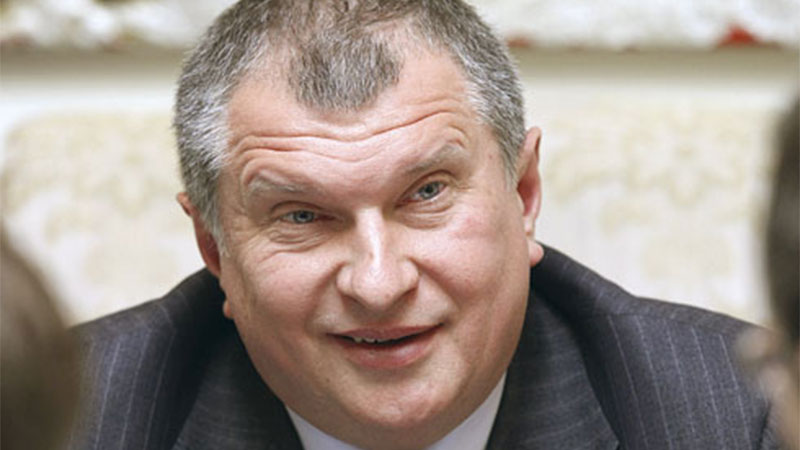


Prime Minister Vladimir Putin declared this week that he earned about $570,000 over the last four years from his government salary, KGB pension and dividends from a minority stake in Bank Saint Petersburg.
Putin also declared that he has $180,000 in his savings accounts; in Russia, presidential candidates must state recent earnings and savings figures.
These numbers, of course, pale in comparison to multi-billion fortune Putin has allegedly accumulated since rising to power in 1999, mostly from his stake in state-run and natural resource-based corporations. The Guardian and other media outlets have reported that the prime minister has much of his wealth hidden in Switzerland and Liechtenstein.
In 2007 Russian political expert Stanislav Belkovsky reported that Putin has secretly amassed more than $40 billion during his first eight years in power, which would make him the richest man in Europe.
Among his suspected holdings: 37 percent of the shares of Surgutneftegaz, Russia’s third biggest oil producer, worth $20 billion; a 4.5 percent stake in Gazprom, the world’s largest natural gas extractor and largest Russian company; and 75 percent of Gunvor, a Swiss-based oil trading firm.

Protestors gather in Moscow on Sat., Dec. 10 (Credit: Reuters)
Street protests in Moscow are to blame for Russia’s stock exchanges plummeting “faster than any other major equity market in the world over the last two weeks,” according to the New York Times.
Russian securities peaked the day after the Dec. 4 Duma elections and fell as the protests began. The Micex index had dropped 11 percent by Dec. 12, compared to a six percent decline for other emerging markets.
Businesses are now compelled to “ask questions that never really occurred to them before,” according to equity strategist Andrew Risk, including assessing how political instability would affect companies. Adds the Times:
Foreign investors, who drive the market here, have been grumbling for years about the same problems of pervasive corruption, judicial fraud and political stasis that [have] angered the protesters.
Read the full article here.
After more than 18 years of negotiations, Russia has finally been accepted into the World Trade Organization, making it the last of the world’s major economies to join the international body.
The Russian parliament has six months to ratify the responsibilities that are part of WTO membership.
For more information on the WTO accepting Russia, read this.

Pavel Khodorkovsky
As rigged parliamentary elections provoked an outcry across the globe, Russian citizens have risen up to demand accountability from their leaders, writes Pavel Khodorkovsky, son of jailed former Yukos CEO Mikhail Khodorkovsky, in the World Policy Journal.
The protest movement is Russian through and through, Khodorkovsky explains, not provoked by an outside source. It’s a movement that he expects will only gain momentum as the nation heads toward a spring presidential election.
Read the full article here.
Reuters chief Russian financial correspondent Douglas Busvine writes that the price of Russian securities thought to have ties to Prime Minister Vladimir Putin, or to have profited the most under his economic policies, “have sold off hardest” in the days following this month’s rigged Duma election.
Russian companies mostly deeply in the red since Dec. 4 include gas firm Novatek, tied to Putin’s friend and oil trader Gennady Timchenko; potash miner Uralkali, which Suleiman Kerimov, backed by state banks, won control of this year; and gold mining company Polyus, in which Mikhail Prokhorov owns a major stake.
Busvine writes:
With the opposition crying foul over alleged fraud in the December 4 election, which cut the majority of Putin’s ruling United Russia party, investors have slashed their exposure to stocks whose prospects they see as tied to the stability of the regime.
Utilities stocks, like state-controlled Federal Grid Company, InterRao and RusHydro, are also underperforming, as analysts note that the Russian stock market is now trading at roughly a 40 percent discount to its emerging markets peers.
Read the full article here.
Russian citizens took more than $500 billion out of the country in the decade since Putin rose to power, according to a new report from Global Financial Integrity, significantly hurting the economy and pre
venting even stronger growth.
As Russians grew wary of how their money would be handled at home, they took out more than $50 billion per year between 2000 and 2009. According to GFI economist Sarah Freitas, this trend is not likely to be reversed any time soon:
In a country where tax evasion and transfer pricing are commonplace pastimes, Russia is finding that its revenues are not quite up to par for debt repayment – especially when one considers the projected drop in oil prices. A global recession has caused investors to look to the dollar as a safe haven, implying a fall for weaker currencies like the ruble.
GFI points out that with growing income inequality, Russia cannot continue to hemorrhage scarce capital without serious consequences and recommends that the citizens demand, among other grievances, that their government strengthen anti-money laundering laws and fight tax avoidance to mitigate this phenomenon.

Prokhorov

Kudrin
As tens of thousands of Russians demonstrated across the country this weekend, protesting the rigged Duma elections of Dec. 4, two prominent figures, billionaire industrialist Mikhail Prokhorov (also known as the owner of the New Jersey Nets) and former finance minister Aleksei Kudrin have announced their intentions to run for president against Prime Minister Vladimir Putin in March.
More on this development here.

A man protesting the results of the Duma elections is arrested. Credit: Reuters
Tai Adelaja of Russian Profile notes that this week’s demonstrations in Moscow “may have started to take a toll on the country’s economy,” as state bank VneshEconomBank canceled its Eurobond placement and two Russian mining companies have completed their escape from the MSCI Index to the FTSE 100.
VEB’s bond postponement is the first of its kind since the early 1990s, as “bond investors who initially showed interest in buying VEB bonds have started to withdraw their applications, as uncertainty clouds political future in Russia.”
Meanwhile mining companies Polymetal and Evraz became the first Russian firms admitted to London’s FTSE 100, with analysts seeing “a political undertone in their decisions.”
Two other Russian companies, Russian Railways and TNK-BP, are planning to meet with investors next week, the results of which could signify how money managers feel toward Russia after the election.
Read the full article here.
Transparency International has once again ranked Russia as one of the world’s most corrupt major economies.
Russia placed 143 out of 182 nations in TI’s Corruption Perception Index, a few slots below Pakistan, Syria and Iran.
Russia is also perceived to be more corrupt that its fellow BRICS, as Brazil (75th), India (95th), China (75th) and South Africa (64th) all finished ahead of it.
Additionally, Russia companies were rated as the “most likely to bribe” when doing business abroad, according to a TI survey of 3,000 business executives also released today. TI wrote in its report:
Given the increasing global presence of businesses from [Russia], bribery and corruption are likely to have a substantial impact on societies in which they operate and on the ability of companies to compete fairly in these markets.
TI Russian director Elena Panfilova added: “Unfortunately… there are no islands of integrity in Russian public and business life.”
The report called for more to be done at the international level to outlaw companies from paying bribes in foreign countries.
The Corruption Perceptions Index ranks nations based on how corrupt their public sector is perceived to be, using data from more than a dozen surveys that look at kickbacks in public procurement, embezzlement of public funds and questions that probe the strength and effectiveness of public-sector anti-corruption efforts.