

Archive

Author Archive

Jamison Firestone Details Russian Lawlessness

February 18th, 2010 No comments

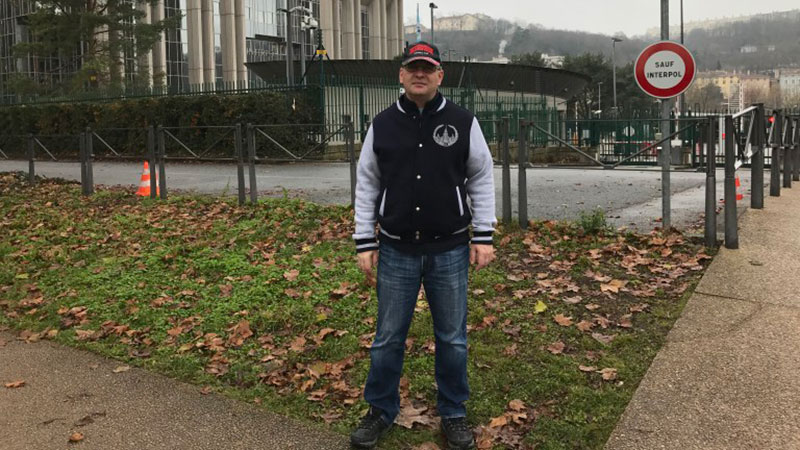
Today’s Bloomberg article details Jamison Firestone’s revelation that Russian Interior Ministry officials tried to collect $21 million in taxes using forgery and theft. The method the government officials used were similar to the expropriation in the Hermitage Capital case through taxes. In April 2009 and again in October 2009, Firestone filed complaints with the tax authorities and the General Prosecutor’s office but neither offices responded.

Russia’s issues with government, institutionalized corruption is well-known. Ranked 146th in Transparency International’s 2009 Corruption Perception Index is having a real financial effect on the Russian economy. According to data by EPFR Global,

Perceived lack of law is one reason Russia has attracted less than one-fifth the investment in China and Brazil and half of what’s invested in India, its fellow members of the so-called BRIC group of emerging nations.

Firestone supported this assertion with,

Corrupt law enforcement is the single biggest risk to business in Russia.

At last September’s Committee for Russian Economic Freedom event in New York, Firestone had this to say about the rule of law in Russia.

  • Share/Bookmark

Russian Investments: IKEA Update

February 17th, 2010 No comments

IKEA, the global furniture giant, recently fired their two executives who turned a blind eye on government bribes, but only to move their expansion project forward. Mikael Ohlsson, the chief executive and president for the Ikea Group, Ikea’s largest franchisee, which includes the Russian operation, said in a statement, “Corruption is totally unacceptable for Ikea.”

Corruption is a serious issue in Russia and it is routinely discussed by President Medvedev as a top priority for his government, however, not much as changed. The investment environment in Russia remains toxic and Russia is now falling behind economically and academically its BRIC rivals Brazil, India and China. In a recent Financial Times article, a large pension fund manager asked this question,

Russia defaulted in ’91, restructured in ’95, defaulted in ’98, took assets away from Yukos, from Shell from BP. If you cmplain, you get expelled from the country and then if you continue to complain you may die in London from polonium poisoning, or die in pre-trial detention in Russia. Now tell me why I should invest in Russia?

  • Share/Bookmark

CREF Chairman’s Open Letter to World Economic Forum Attendees

January 25th, 2010 No comments

Dear World Economic Forum Attendee:

As you prepare to attend the World Economic Forum, keep in mind that in a cramped court room just a few blocks from the Kremlin a drama is playing out that will have profound implications for the future of economic and political freedom in Russia. That country’s former leading business leader, YUKOS Chairman Mikhail Khodorkovsky, is undergoing a bizarre second trial on fabricated charges after he criticized Vladimir Putin for failing to abide by the rule of law. Sentenced to eight years, Khodorkovsky now faces an additional 22 years in a Siberian prison camp.

This Kafkaesque proceeding embodies everything that stands in the way of Russia achieving stability, growth, prosperity and Democracy for its people. GDP surges and plummets with oil prices, inflation and unemployment each exceed 10 percent, while the average salary is about $500 a month.  Respected companies like Ikea, the Swedish home furnishings giant, have been forced to declare a moratorium on investment in Russia, frustrated by Russian officials’ disregard for contractual obligations and fair play.

As a U.S. Senator, President Obama sponsored a bi-partisan resolution supporting Khodorkovsky after the first prosecution, stating that the case raises “troubling questions about the impartiality and integrity of the judicial system in Russia,” and that the imprisonment represents “a violation of the norms and practices of Russian law.” Other leaders from Italy, Germany, and European organizations joined in extending their support for Mr. Khodorkovsky.  Courts from Switzerland, the United Kingdom, the U.S., Netherland, Lithuania, and Cyprus, among others, have dismissed elements of the YUKOS affair.

The Russian government’s contempt for the Rule of Law and the simultaneous proliferation of corruption remains a huge impediment to direct foreign investment for this key player in the world economy. Both US and Russian officials have publicly acknowledged Russia’s weak property rights and rampant corruption as reasons to avoid doing business in Russia.

Russian First Deputy Prime Minister Igor Shuvalov said at an international conference on January 21, 2010, “Investment…is possible only with solid protection of private property rights. Therefore this problem is directly linked to the course of modernization.” On January 12, 2010 US Ambassador to Russia John Beyrle stated, “Russia is still a very tough place to do business. The combination of bureaucratic and administrative obstacles intertwined with pervasive corruption in Russia still constitutes a pretty significant risk premium for American investors and American businessmen who want to enter the Russian market or grow their businesses.”

Russian attorney Sergei Magnitsky was arrested in November 2008 after defending Hermitage Capital against expropriation by government officials. After being denied medical treatment during his year-long incarceration, Magnitsky died in Russian custody last November. If this can happen to Khodorkovsky and Magnitsky, what investor or corporation seeking to do business in Russia is safe? Why invest in Russia as long as Khodorkovsky is behind bars?

According to Russian government studies and US State Department statistics, it’s estimated that corrupt officials rob the Russia people of an estimated $300 billion annually, a sum equal to 18% of the country’s gross domestic product. The response to the newly-adopted package of anti-corruption legislation initiated and promoted by President Medvedev and passed by the Duma in December 2008, has been tepid at best. Medvedev recently admitted publicly that corruption is still endemic in Russia. The excessive role of government in the economy and business sector, which spurs the supply side of corruption, aggravates the problem.

As 2010 begins, signs of Russia’s complacency have become larger and the world stage is beginning to notice. The Khodorkovsky trial and continued politicization of the courts and trade illustrate the increasingly hostile nature of the Russian business environment.

Additional information can be found on our briefing “Russian Roulette: Current Investment Risks in Russia.”

Best regards,
Pavel Ivlev

  • Share/Bookmark

Impediments to Russia's Economic Growth

January 22nd, 2010 No comments

At an international conference in Moscow, Deputy Prime Minister Igor Shuvalov, who also happens to be the head of Russia’s anti-crisis program, mentioned two impediments to Russia’s economic development: lack of private property rights and an over dependence on oil and other raw materials to drive economic growth.

US Ambassador to Russia John Beyrle included these challenges in his speech at University of Michigan’s Ford School of Public Policy last week. Ambassador Beyrle cited corruption and the lack of rule of law in Russia as impediments to both foreign investment and the development of a democratic society.

On corruption, Ambassador Beyrle said,

Russia is still a very tough place to do business. The combination of bureaucratic and administrative obstacles intertwined with pervasive corruption in Russia still constitutes a pretty significant risk premium for American investors and American businessmen who want to enter the Russian market or grow their businesses.

And on the rule of law in Russia, he said,

Corruption in the Russian government and especially in the judicial system…is still rampant in Russia. The road ahead for Russia is not completely clear.

What both Deputy Prime Minister Shuvalov and Ambassador Beyrle recognize is reflected in the Heritage Foundation’s Index of Economic Freedom out this week. Russia’s overall rating in this measurement of economic openness, regulatory efficiency, the rule of law and competitiveness, dropped 10.5 points to 50.3 this year. Ten different components make up the overall score and Russia’s three lowest scores are in the Investment Freedom, Property Rights and Freedom from Corruption categories.

‘The problems of systemic corruption, abuse of property rights and legal nihilism are well known and recently publicly discussed by top US and Russian officials. The question is what, if anything, are they going to do with these impediments to Russia’s economic growth? Besides talking about “reset” or “modernization,” do they have the political will to find solutions to these issues?

  • Share/Bookmark
Categories: Analysis, Economic impact Tags:

Truthiness Abounds in Russia's Ratification of Protocol 14

January 15th, 2010 No comments

After dragging its feet for four years, the Russian parliament ratified the European Court of Human Rights’ (ECHR) Protocol 14 earlier today. Russia had been the only country out of 47 participating states to refuse to ratify Protocol 14, which improves the efficiency of the Court. The current process has created a backlog of complaints, a third of which are filed against Russia.

Dmitri F. Vyatkin, Russian Parliamentary member mentioned that the impasse was overcome because the ECHR had addressed Russia’s concerns by providing written commitments that Russian judges would be included in reviews of potential cases against Russia, the Court would not begin investigating complaints before cases were formally accepted and the Court would not have new powers to enforce rulings.

Taken together this sounds like Russia wants to transform the ECHR into a Russian court: by hearing complaints against Russia that the Russian government approves of, not delving too much in to the details of complaints filed and if the complaint is accepted for the Court to have no ability to enforce its ruling.

However, Thomas Hammarberg, the human rights commissioner of the Leaders of the Council of Europe, presents a different view of Russia’s approval of Protocol 14, that Russia’s concerns where heard but ultimately Russia will be held to the same rules that apply to other members and that no changes to the protocol were made.

Leaving for now, what Russia’s ratification of Protocol 14 actually means for the ECHR, a central question remains, “What propelled Russia to ratify the protocol after all these years?”

“Smoothing over differences” appears to be the official reason media outlets are reporting, however there may be other reasons political and financial reasons why Russia is offering this carrot to the West.  

Earlier this week, the $100 billion lawsuit YUKOS v. Russia was postponed for the third time because two Russian representatives were unavailable. Perhaps the Russian authorities feel that ratification of Protocal 14 could pave the way for this case to be dismissed.

Additionally, the Financial Times reported earlier this week that Russian companies would be seeking $90 billion over the next two years to finance debt restructuring and capital improvements and perhaps to rebuild the coffers for politically connected Russian business owners who saw their fortunes collapse during the 2008 financial crisis. As demonstrated with the Rusal IPO, concerns over the management of Russian companies remain and ratifying Protocol 14 may be a signal to the investment community that Russia wants to play nice.

Russia may see ratifying Protocol 14 satifying many goals: to reduce the effectiveness complaints against Russia in the ECHR while reassuring investors that Russia abides by the rule of law. But as the trial against former YUKOS chief Mikhail Khodorkovsky and a Russian policeman’s open letter to end authorized corruption demonstrate, Russia remains a feudal state, where

in absence of functional legal or law enforcement systems, people’s only real protection lies in a network of personal and professional relationships with powerful individuals.

  • Share/Bookmark

YUKOS vs. Rusal

January 11th, 2010 1 comment

It was the best of times. It was the worst of times.

On Thursday, January 14th the European Court of Human Rights (ECtHR) is hearing the case of YUKOS Oil Company v. Russian Federation, the first time in six years of litigation that both sides will meet face-to-face in a legal battle on the Russian authorities expropriation of YUKOS and its assets beginning in 2003.  Foreign policy and Russian officials have acknowledged that the imprisonment of YUKOS’s CEO Mikhail Khodorkovsky was due to political reasons stemming from his support of opposition parties.

Meanwhile, the Rusal continues on its IPO path, even as more doubts about the process have surfaced. Its controlling shareholder Oleg Deripaska continues to be linked to organized crime, was refused a visa to enter the United States on those grounds and has received millions in government money funnelled through Russian state-run Vnesheconombank (VEB), controlled by Prime Minister Vladimir Putin.

YUKOS’s Mikhail Khodorkovsky is being charged in a second round of trumped up charges while Rusal’s  Oleg Deripaska is being rewarded for his cooperation and collaboration with the Russian government, stating publicly that he would transfer Rusal back to the government at any time saying, “If the state says we need to give it up, we’ll give it up.”

  • Share/Bookmark

Putin’s TARP Plan

January 6th, 2010 No comments

According to Jacob Plieth of the Wall Street Journal, if the Rusal IPO goes as planned later this month, it will be a “latter-day miracle.” As you recall, Goldman Sachs declined to be an underwriter for this deal and the Hong Kong Stock Exchange has dragged its feet, even though completing this complex IPO would mean millions in fees and additional revenue for the exchange and the investment bankers willing to bring troubled Russian companies to the international capital markets counter.

Rusal is a company that operates with $16 billion in debt and even with a partial sale of Norilsk Nickel and the pending partial IPO, there are doubts that a company hasn’t reported operational profitability can keep up with its interest payments.

  • Share/Bookmark
Categories: Rusal, Russia Tags: , , ,

Igor Sechin – Russia's New Decider?

December 29th, 2009 No comments

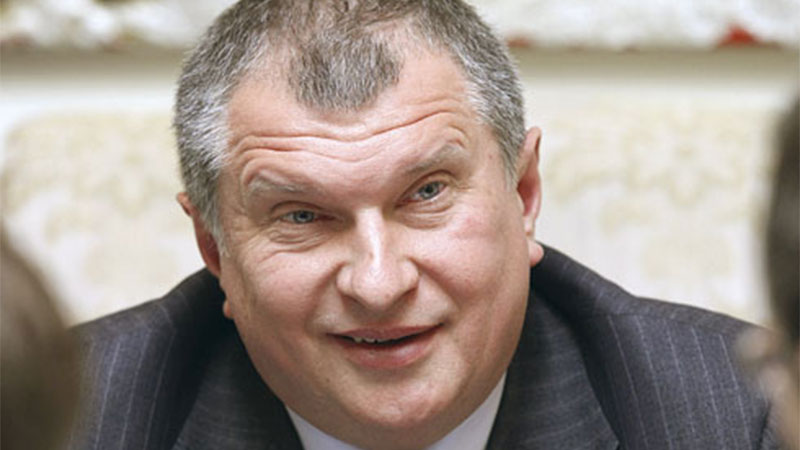
In a recent Newsweek article, “Sechin Evolution into Reportedly Number Two Man in Russian Government Examined,” Vice Premier Igor Sechin is revealed to be the true power broker in the Russian White House, “the country’s main manager” and “expanding…spheres of influence.” Additionally, IHS Global Insight recently reported:

…that Deputy Prime Minister, Igor Sechin, has reminded investors that new amendments to the law on foreign investment in state–controlled strategic mineral fields are not designed to relinquish state control over the strategic assets but rather to offer an asset-swap to gain a foothold in Russia’s natural resources industry. Sechin’s comments are a stark reminder why the investors are wary of venturing into Russia in the first place. The Kremlin needs to do more to assure the foreign investors, already guarded by the infamous Yukos and BP nationalisation cases, that they will be offered fair compensation and will have a clear explanation of what constitutes strategically important resources. IHS Global Insight Daily Analysis, Russian Prime Minister Seeks Foreign Investors’ Advice to Improve Investment Law, by Lilit Gevorgyan, 23 December, 2009

Indeed, with Sechin as Russia’s Vice Premier for Industry and Energy, the risk of corporate raiding by government officials remains high and President Medvedev’s talk of ending legal nihilism, will be just that, talk.

  • Share/Bookmark

Free Platon Lebedev

December 23rd, 2009 No comments

On the heels of the Moscow Times op-ed, “A Year of Increased Graft and Deadly Disasters,” the Russian Supreme Court found the 2003 arrest of Platon Lebedev illegal on procedural grounds.

Before his politically motivated arrest on July 2, 2003 as part of a case against former Yukos owner Mikhail Khodorkovsky, Lebedev was director of Group MENATEP, a holding company with diversified assets of $20 billion. Group MENATEP was the majority shareholder of Yukos.

Lebedev’s arrest and prosecution were widely perceived to have been a warning to Khodorkovsky, as well as a means for the government to facilitate the re-nationalization of Russia’s oil and gas industry. Lebedev’s ordeal has been replete with violations of the most basic human rights.

After his arrest in his hospital bed in July 2003, the denial of independent medical attention during the trial, and his sentence at a work camp in Russia’s inhospitable Arctic, this ruling will hopefully bring an end to Lebedev’s six year legal farce.

Now President Medvedev needs to make good on his talk of ending legal nihilism, battling corruption and respecting the rule of law by setting Platon Lebedev free.

  • Share/Bookmark

Why Is the Rusal IPO Worrying Goldman Sachs and the Hong Kong Stock Exchange?

November 30th, 2009 No comments

According to the WSJ’s article, “Rusal Listing Delay Won’t Derail IPO,” the various hurdles to Rusal’s IPO are just bumps on the road to the first Russian listing in Hong Kong. Rusal is the world’s largest aluminum producer and is expected to raise about $2.5 billion in the IPO.

But an exchange not known for onerous listing requirements has requested more information from Rusal and Goldman Sachs was dropped as a book runner “after the investment bank expressed reservations about sponsoring the deal.”

The proceeds from the Rusal IPO would go to repay part of its $4.5 billion loan largely held by the Russian state-run VEB bank, also Rusal’s biggest single creditor. It seems like Goldman Sachs and the Hong Kong Stock Exchange are having second thoughts about facilitating a deal that would line the pockets of an oligopolistic petrostate.

  • Share/Bookmark