

Archive

Posts Tagged ‘modernization’

The nationalization of investment banking in Russia is completed

November 19th, 2012 No comments

Stephen Jennings is giving up control over Renaissance Capital, once a leading Russian investment bank, to Mikhail Prokhorov’s Onexim Group. In his farewell letter Jennings expressed hope that with the new ownership structure the bank he founded 17 years ago “will be much more part of the ‘system’ in Russia”. Most likely, after Jennings’ departure, Renaissance Capital will concentrate on serving the business of Onexim group.

Financial institutions are in rough waters everywhere in the world. The Russian government took advantage of the financial crisis to tighten its grip on the investment banking industry. When in 2007 state-owned VTB entered the booming investment banking industry, its aggressive recruitment practices were a first blow to the run-for-profit investment firms. Soon after that, the government unofficially instructed state controlled companies, comprising about a half of Russian economy, to hire VTB Capital as a financial adviser for important transactions. Many Russian oligarchs, often dependent from the government, also were advised to work with VTB Capital whenever possible. Besides direct backing from the government, VTB also leveraged its unrestricted access to the government funds to win business from its capital-deprived private competitors.

Jennings quits Russia after 17 years of largely successful work

Faced with decline in revenues, independent investment firms either quit the market or were acquired by state-controlled institutions. In 2011 state-controlled Sberbank acquired Troika Dialog, a leading Russian investment bank. Explaining the deal, Troika Dialog’s founder Ruben Vardanyan admitted that there was no room for non-state controlled banks in the Russian market. Last week, after several years of losses, Stephen Jennings followed the suit.

The alliance of bureaucrats, state-controlled companies and investment banks creates the machinery for structuring high-scale fraud and corruption into legal financial transactions. Now investment bankers can take any risks, knowing that the government will always back them if something goes wrong.

Besides that, monopoly in financial services could be useful in punishing bold businessmen. Recently VTB-Capital refused to underwrite bonds for National Reserve Bank just several days before the issue should have taken place. Alexander Lebedev, the politically active owner of the National Reserve Bank, had to sell his assets and cut financing of Novay Gazeta, the last but one newspaper not controlled by Kremlin.

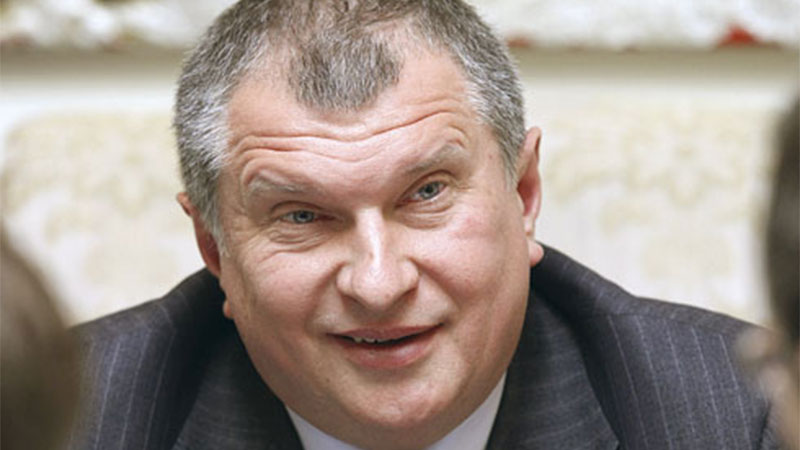
Having access to the most intimate information about their clients, investment banks could be instrumental in tightening control both over business and corrupted officials. No surprise that nowadays all major Russian companies prefer to work through their own investment firms. Igor Sechin recently hired several prominent bankers in order to create one for his Rosneft. Likewise, Gazprombank is in charge for most of its parent company financial transactions.

Open and competitive financial markets could have foster the diversification of the oil-dependent Russian economy by enabling the flow of money from cash rich natural resource industries to new sectors of the economy. Alas, Russian investment banking is becoming both fragmented and monopolized. The quality and availability of financial services for Main Street will deteriorate, limiting the investment and economic growth.

Bloomberg

  • Share/Bookmark

Banking Crisis threatens Russian economy

October 3rd, 2012 No comments

September’s research of Gaidar Institute for Economic Policy analyses the rebound of Russian economy after 2008-2009 crisis. The institute concludes that the economic growth model of 2011-2012 doesn’t work anymore and warns of the threat of a new banking crisis.

Central Bank Chairman Sergei Ignatiev needs to choose between supporting economic growth and preventing banking crisis

Consumer spending was the major contributor to the economic growth in Russia during the last two years. More than quarter of household consumption was financed by consumer credit. However, banks don’t have resources for further expansion. Their clients prefer buying dollars and transferring them abroad instead of depositing money in Russian banks. The Bank of Russia became the major provider of liquidity, but recently it tightened its monetary policy.

The inevitable contraction of consumer credit will lead to the economic slowdown. Furthermore, several indicators point to the mounting risk of a full-scale banking crisis. The share of liquid assets in total banks assets has dropped below the level of September 2008, when a previous banking crisis happened. At the same time the “credit deficit” – the difference between banks’ loans and deposits – almost equals the amount of liquid assets. In sum, Russian banking system is ill prepared for the worsening of economic conditions.

Banks will be one more time bailed out with the government’s funding and boost of liquidity from central bank. However, the loose monetary and fiscal policies won’t trigger the much-needed growth of investments, but will fuel inflation. To speed up the economic growth, the government should commit to structural and institutional reforms, restoring the private property rights and guaranteeing fair competition to all economic agents.

Gaidar Institute

  • Share/Bookmark

WashPost – Show trial: Should ties to Russia be linked to its record on rights?

June 9th, 2010 No comments

EDITORIALS
Wednesday, June 9, 2010

RUSSIA’S GOVERNMENT has calculated that it needs better relations with the West to attract more foreign investment and modern technology, according to a paper by its foreign ministry that leaked to the press last month. Prime Minister Vladimir Putin has recently made conciliatory gestures to Poland, while President Dmitry Medvedev sealed a nuclear arms treaty with President Obama. At the United Nations, Russia has agreed to join Western powers in supporting new sanctions against Iran.

Moscow’s new friendliness, however, hasn’t led to any change in its repressive domestic policies. The foreign ministry paper says Russia needs to show itself as a democracy with a market economy to gain Western favor. But Mr. Putin and Mr. Medvedev have yet to take steps in that direction. There have been no arrests in the more than a dozen outstanding cases of murdered journalists and human rights advocates; a former KGB operative accused by Scotland Yard of assassinating a dissident in London still sits in the Russian parliament.

Perhaps most significantly, the Russian leadership is allowing the trial of Mikhail Khodorkovsky, a former oil executive who has become the country’s best-known political prisoner, to go forward even though it has become a showcase for the regime’s cynicism, corruption and disregard for the rule of law. Mr. Khodorkovsky, who angered Mr. Putin by funding opposition political parties, was arrested in 2003 and convicted on charges of tax evasion. His Yukos oil company, then Russia’s largest, was broken up and handed over to state-controlled firms.

A second trial of Mr. Khodorkovsky is nearing its completion in Moscow, nearly a year after it began. Its purpose is transparent: to prevent the prisoner’s release when his first sentence expires next year. The new charges are, as Mr. Putin’s own former prime minister testified last week, absurd: Mr. Khodorkovsky and an associate, Platon Lebedev, are now accused of embezzling Yukos’s oil production, a crime that, had it occurred, would have made their previously alleged crime of tax evasion impossible.

Mr. Khodorkovsky, who acquired his oil empire in the rough and tumble of Russia’s transition from communism, is no saint, but neither is he his country’s Al Capone, as Mr. Putin has claimed. In fact, he is looking more and more like the prisoners of conscience who have haunted previous Kremlin regimes. In the past several years he has written numerous articles critiquing Russia’s corruption and lack of democracy, including one on our op-ed page last month.

Mr. Obama raised the case of Mr. Khodorkovsky last year, and the State Department’s most recent human rights report said the trial “raised concerns about due process and the rule of law.” But the administration has not let this obvious instance of persecution, or Mr. Putin’s overall failure to ease domestic repression, get in the way of its “reset” of relations with Moscow. If the United States and leading European governments would make clear that improvements in human rights are necessary for Moscow to win trade and other economic concessions, there is a chance Mr. Putin would respond. If he does not, Western governments at least would have a clearer understanding of where better relations stand on the list of his true priorities.

  • Share/Bookmark

Russia as Janus

June 1st, 2010 No comments

Musings continue about the Foreign Ministry’s leaked policy document on engaging with the West to help Russia modernize. This new leaked policy seeks to import Western techonology and expertise to improve Russia’s infrastructure and jump start its techonolgy sector.

While Deripaska looks towards East for future initial public offerings of his other companies, notably EN+ Group, Rusal’s holding company, and OAO EuroSibEnergo, a power utility company. Rusal is the trailblazer Russian IPO on the Hong Kong Stock Exchange, but with it’s dismal performnace its first six months, it could leave a bad taste for other Asian investors. Additionally, institutional money managers are wary of Russian companies with opaque management rules and only promises of profits.

Investors both from the West and from Asia need to see commitment from the Russian government and the Russian business elite that they are serious about developing the technology and financial sectors in Russia. Russian businessman routinely top Forbes list of the world’s wealthiest; they clearly have the means to invest in domestic techonology firms. Russia’s political system as it has concentrated power to the executive branch has the political will to end corruption and strengthen the rule of law and improve its perception among foreign investors. But so far Russian businesman prefer to use their money on overseas investments while Russian politicans strengthen their own power at the expense of the country’s economic development.

  • Share/Bookmark

Round 1: Modernization vs. Corruption

March 16th, 2010 No comments

Out of all the recent articles, Eurasia Daily Monitor summed up the current Russian situation best: Medvedev’s Euro-Modernization Hits the Corruption Wall. The European Union is keen on establishing a more normalized business relationship with Russia and proposed a “Partnership for Modernization.” This partnership empasizes the rule of law and corporate governance as European businesses are wary of the Russian commerical climate. The crucial issue in the EU-Russia business relationship is corruption.

The US State Department issued their annual human rights report last week and described corruption in Russia as

widespread throughout the executive, legislative, and judicial branches at all levels, and officials often engaged in corrupt policies with impunity.

Additionally, TRACE International’s Alexandra Wrage mentioned in a Reuters interview that corruption extracts a high tax on development in emerging market economies. And in comparison to other BRIC countries, the corruption in Russia is especially pervasive,

Corruption in China is an inverted pyramid with most bribery at the top while India is the opposite with corruption rampant at lower levels but tapering off higher up. Russia is a solid block. There is bribery at all levels. There appears to be sense of near-complete impunity, a sense of entitlement.

To underscore the endemic corruption, Russian bloggers have found plans by the Interior Ministry to buy a $800,000 golden bed. With only government-sponsored news available to Russians, bloggers have taken on the role of whistleblowers in a country with few outlets for political discourse. But with only 30% of Russian households with access to the internet, the impact of the bloggers remain muted.

  • Share/Bookmark

Crumbling at the Center

March 12th, 2010 No comments

The Economist argues in the recent article, “Modernising Russia: Another great leap forward?” that President Medvedev’s efforts to modernize Russia by creating a Russian version of Silicon Valley without strengthening institutional weaknesses is the result of an authoritarian regime that trumpets the state as the “only force capable of making Russia great and respected again.”

As the article points out, changes to the existing system threatens not only the power and legitimacy of the existing ruling elite, but their immense wealth as well

Russia’s ruling elite, which consists of a corrupt bureaucracy, the security services and a few oligarchs, lives off the rent from natural resources or administrative interference in the market. Competition and the rule of law undermine this arrangement. Corruption holds it together, and ensures the loyalty of the bureaucracy.

The conflict between real modernization and the vested interests of this bureaucracy is summed up in the fate of Mikhail Khodorkovsky, once Russia’s richest man and now its most famous political prisoner.

Russia’s institutional weaknesses are well known, weak rule of law, endemic corruption, no respect for property rights and governmental favortism in dealing with the private sector and weaken Russia from within. Without political competition and property rights protection, capital investment in Russia will remain anemic.

  • Share/Bookmark