Archive

Posts Tagged ‘Oil and gas’

Russian Industrial Output Contracted by 0.8% in January

February 21st, 2013 No comments

The Siberian oil fields already passed their production peak

According to Rosstat, the governmental statics agency, industrial output in January shrank by 0.8% year over year. Adjusted for seasonality and calendar effects, the output fell by 1.5% comparing with December.

Rosstat reported negative figures for industrial production for the first time since November 2009. Though many analysts explain the figure by combination of several one-time events, the slump in year over year growth rate continues the trend of 2012. Over the past year the pace of industrial expansion slowed down each month. The oil output, crucial for the stability of the Federal budget, dipped in January by 1.7%.

The Russia’s GDP most likely will continue to grow thanks to the expansion of the public sector and growth in the service sector. However, the country’s oil industry won’t be able to contribute to the economic growth anymore, dragging down the economy in the midterm. Hence the entrepreneurial activity is suppressed by the state, there is little room for any new business development in Russia. Any economic growth in such circumstances will be weak and fragile. Alas, Medvedev’s government has no power, no public support to improve the country’s poor investment climate.

Bloomberg

  • Share/Bookmark

Putin’s new victory over Brussels will lead to Gazprom’s demise

December 12th, 2012 No comments

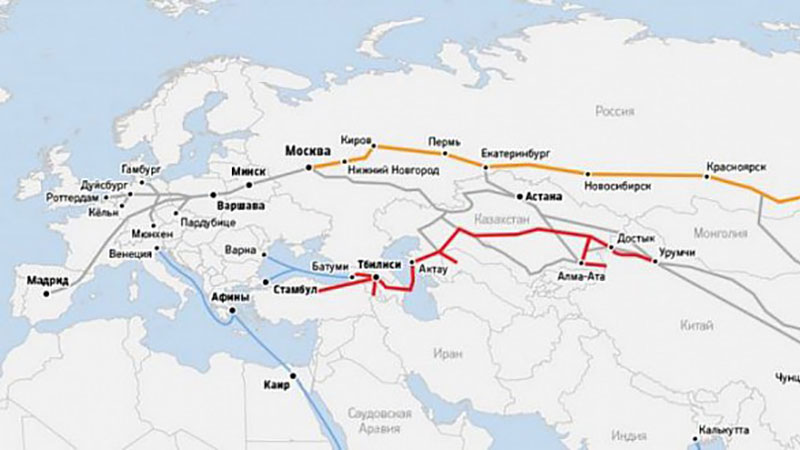
After almost 10 years of negotiations with Turkey and Southern European countries Russia finally outmaneuvered EU. Last week Vladimir Putin gave a start to the construction of South Stream pipeline, which will deliver Siberian gas directly to the Southern Europe bypassing Ukraine. Nabucco, a EU pet-project, is now officially dead as well as hopes of Central Asian countries to export their natural gas to Europe.

The total cost of South Stream is estimated to be around 26 billion dollars. This number can only grow as it happened with other Gazprom’s elephant projects. The company won’t see any additional income from this investment, since Gazprom will just redistribute natural gas from the Ukrainian pipelines to South Stream. Nevertheless, the giant will save up to 2 billion dollars a year, a transit fee that Gazprom currently pays Ukraine. These mediocre savings obviously don’t justify huge and risky investments.

South Stream will destroy the value of Ukrainian pipeline system and Azerbaijan natural gaz reserves

In the absence of any substantial financial benefits, Gazprom can long for broader strategic advantages as a result of South Stream.

First, South Stream will help Gazprom to corner the European market by blocking the export of Central Asian gas to Europe. Though five years ago this was a rational strategy for the Russian energy giant, now it doesn’t make a lot of sense. Liquid natural gas combined with shale gas technologies will make European market more competitive anyway.

Second, South Stream will help to reduce the bargaining power of Ukraine, the largest Gazprom’s customer. After North and South Stream will reach their project capacity, Gazprom will be able to shut down natural gas transit through Ukraine. The situation of 2005-2009 when gas supply to Southern Europe was interrupted because of the Russian-Ukrainian conflict over the transit fees and gas price won’t be possible anymore. Again, this achievement doesn’t look as significant as it did five years ago. Ukraine already pays the highest price for Russian natural gas and rapidly cuts its consumption.

In sum, the project, which looked essential for Gazprom five years ago, now doesn’t bring neither financial nor strategic benefits for the company. However, Gazprom and the Russian government fail to recognize changes on the world energy market and still fight with the ghosts of the past. Influential Gazprom’s contractors won’t allow stopping the construction as well. The drop in natural gas prices combined with hopeless investment projects might destroy the monopoly sooner than EU finishes its antitrust probe against the company.

FT

  • Share/Bookmark

Rosneft’s acquisition of TNK-BP undermines economic foundations of the Putin regime

October 21st, 2012 No comments

State controlled Rosneft acquires TNK-BP, a joint venture between a group of Russian oligarchs and BP. The newly formed company will become the largest publicly traded oil producer, controlling up to 50% of the Russian crude oil output.

The major cause of the Soviet Union collapse was the central planning system’s failure to meet even the basics needs of the country’s population. In contrast, the Putin extraordinary popularity rests on the rapid economic growth of 1999-2007, resulted from the market reforms and privatization of 90s.

BP's CEO Bob Dudley finally exits Russia with money

Now the Putin team destroys the foundations of his regime. The de-facto nationalization and monopolization of the energy sector has already cost a lot to the Russian economy. The country’s oil industry rapid rise stumbled after the de-facto nationalization of YUKOS, once Russia’s biggest and most efficient oil company. During the last ten years state-controlled Gazprom, which has an exclusive access to the world-largest natural gas reserves, has failed to develop any new large natural gas field and faced a decrease in production.

Even if they act in the best public interest, government officials have neither instruments nor proper motivation for supervising the sophisticated corporate structures. As a result, the huge cash flows of state-controlled companies become an easy prey for managers and insiders. They make fortunes on generous contracts and illogical M&A activities of such companies as Russian Railways, Transneft, VTB, Gazprom, Rosneft and many others.

When there is little room for further oil price increases, the production growth is an obvious way to sustain the country’s economic development. The energy sector opening to the international majors and private initiative would have brought new tax revenues and prolonged the Putin team dominant position in the Russian economy and politics. However, it looks like the opportunity to get access to the TNK-BP’s multi-billion cash flows outweighs all rational arguments for a new policy in the energy sector.

FT

  • Share/Bookmark

Putin’s new energy policy

October 8th, 2012 No comments

Novatek's key shareholder Gennady Timchenko knows how to explain the advantages of competition

During the VTB Capital investment forum “Russia Calling!” Vladimir Putin not only criticized Gazprom for corruption, but also stated: “We should change the economy of the company and provide access to transport systems, first of all to gas pipes”.

Russia’s president withdrew his unconditional support of Gazprom at the difficult time for the company. The European Commission attacks the monopoly within an antitrust probe. Igor Artemyev, the long-standing head of Russia’s competition regulator, criticized Gazprom as “an ineffective company” and offered his help to the European authorities. New energy Minister Alexander Novak promised to allow western majors owning oil and natural gas licenses in Russia’s Arctic waters. Meanwhile, Novatek, the second largest natural gas producer in Russia, found a way to export its natural gas, undermining Gazprom’s monopoly on the European market. Gazprom’s margins were simultaneously hit by multi-billion discounts the company had to offer to its largest European clients and almost twofold increase in the mineral extraction tax. The monopoly declares that it will abandon the development of new natural gas fields because of the tax increase, making the government responsible for the projects that Gazprom wasn’t able to develop for many years.

The new tone of the President and bold statements of his ministers might demonstrate the shift in the Kremlin’s energy policy. Though the concept of “energy superpower” maximized Gazprom’s profits in the recent years, it undermined Russia’s energy industry long-term competitiveness at the time of rapid changes in the world’s energy market.

New pragmatic policy has its influential beneficiaries. Among them is Novatek, a raising natural gas producer, where Putin’s old friend Gennady Timchenko owns 25% stake. Natural gas ambitions are also declared by Igor Sechin, another Putin’s old friend and Rosneft’s CEO. In sum, new energy policy will create opportunities for the president’s friends, boost government’s income and, perhaps, improve relationships with the European partners. It remains to be seen whether competition among Putin’s friends is enough to foster economic growth in Russia.

Gazeta.ru

  • Share/Bookmark

Russia’s investment climate cools while Sino-Russian pipeline dispute heats up

April 27th, 2011 No comments

HSBC is the latest foreign bank to pull out of Russia. Less than two years ago, HSBC targeted $200 million towards its Russian retail expansion only to have it close, following fellow Anglo bank Barclays that removed its retail banking presence from Russia in February. According to HSBC’s statement by Russia Chief Executive Officer Huseyin Ozkaya,

it’s clear that the strongest opportunity for HSBC in Russia lies in servicing corporate and institutional clients.

But it’s far from clear that Russia is a good place for institutional clients. In a recent Emerging Markets Private Equity Association study, Russia’s attractiveness for private equity deals was ranked lower than the other BRIC countries, Brazil, China and India and even lower than the Middle East and African countries. Carlyle co-founder David Rubenstein said in Berlin last month,

Russia has not proven to be a place where Western private-equity investors can have the returns and realize the profits commensurate with the risks they’ve had to take.

This is reflected in the amount of private equity investment dollars that flow to Russia. Over the last three years, Russia received $1.4 billion in private equity investment, but that pales to the amounts that China ($28.6 billion), India ($15 billion) and Brazil ($5 billion) received.

China’s economic clout is also seen in other ways in its interactions with Russia. Transneft, the Russian pipeline company has accused China National Petroleum Company (CNPC) of violating the contract that established the Russia-China Crude Pipeline. The contract indicated that China would pay market prices for the oil, but now they are seeking an adjustment on the price as well as double the amount of oil as previously agreed upon. Despite Transneft spokesman Igor Dyomin’s recent comments about China’s lower price demand, Chinese Foreign Ministry spokesman Hong Lei insists all is going well with the pipeline. Only time will tell which side will prevail.

  • Share/Bookmark

Medvedev style modernization

April 19th, 2011 No comments

Over the past week the plug seemed to be pulled on the BP-Rosneft deal, only to have the Kremlin step in and resuscitated it with a deadline extension to the middle of May. Despite government meddling in this case, there have been other signs that President Medvedev has moved further away from Putin’s managed democracy and the rule of law are taking hold.

Pavel Felgenhauer writes in the the Eurasia Daily Monitor

Russia’s tandem rulers – President Dmitry Medvedev and former president and current Prime Minister Vladimir Putin – continue to profess their friendship, but these statements are increasingly unconvincing as the presidential elections that will install a new head of state for six years come closer. In Russia elections are shamelessly rigged and results prearranged by a corrupt bureaucracy, so the nomination of an official candidate is indeed the election per se, while the casting of the popular vote is a public relations exercise, mostly intended to appease foreigners and gain international legitimacy. The present tandem arrangement with Putin as the all-powerful prime minister officially sitting in the backseat with Medvedev performing the role of a largely figurehead president cannot continue much longer, certainly not for another six years, as it is already beginning to visibly crack.

Last year, President Medvedev signed into law that those charged with economic crimes should not have to face severe pre-trial detention, however, Russia’s best known political prisoner Mikhail Khodorkovsky has been in pre-trial detention since the start of his second trial. In an appearance before Russia’s Supreme Court, Khodorkovsky won his detention appeal.

The decision was a moral victory for Khodorkovsky, who was sentenced to remain in prison until 2017 in a December ruling condemned by Western governments and rights groups, but it will not lead to his release.

Are these signs that Medvedev’s power is ascending? Ordering top government officials to step down from their directorships of large Russian owned companies has not drawn comment from Putin, who set up the system. Perhaps this is a glimpse of modernization in action, Medvedev-style.

  • Share/Bookmark

Surging oil prices doesn’t alleviate Russia’s economic challenges

March 1st, 2011 No comments

Reuters summarizes the challenges in doing business in Russia with:

Russia is one of the world’s most lucrative markets but is heavily dependent on energy and commodity exports, plagued by corruption and its political stability rests on one man, Prime Minister Vladimir Putin.

Even with rising oil prices, Russian Finance Minister Alexei Kudrin has forecasted a budget deficit of 2% for 2011. With Middle East unrest as a backdrop, the Kremlin has even stronger incentives to maintain and increase social spending and state pensions.

It is interesting that Reuters links the legitimacy of Putin’s United Russia party to economic growth. Markets hate uncertainty, so despite the lack of democracy in Russia, Putin’s leadership is an economic program that the markets are used to.

Putinomics, however, extracts a heavy toll on the Russian economy. The capital seepage leaking out of the legitimate economy through corruption and the lack of rule of law not only drives away investment (capital outflows were at an all time high in 2010) but levies a heavy toll on Russian investments. Russian energy companies trade at a 40-50% discount from US companies.

Transparency International and Revenue Watch Institute released a study today on oil and gas companies and finds that they must do more in their anti-corruption measures.

The companies evaluated represent 60 percent of global oil and gas production. By disclosing anti-corruption measures and key organizational and financial data, especially on a country-by-country level, companies demonstrate their commitment to stop the misappropriation of revenues. In particular, detailed publication of fiscal payments allows citizens to hold governments to account.

  • Share/Bookmark
Categories: Energy Tags:

Igor Sechin – Russia's New Decider?

December 29th, 2009 No comments

In a recent Newsweek article, “Sechin Evolution into Reportedly Number Two Man in Russian Government Examined,” Vice Premier Igor Sechin is revealed to be the true power broker in the Russian White House, “the country’s main manager” and “expanding…spheres of influence.” Additionally, IHS Global Insight recently reported:

…that Deputy Prime Minister, Igor Sechin, has reminded investors that new amendments to the law on foreign investment in state–controlled strategic mineral fields are not designed to relinquish state control over the strategic assets but rather to offer an asset-swap to gain a foothold in Russia’s natural resources industry. Sechin’s comments are a stark reminder why the investors are wary of venturing into Russia in the first place. The Kremlin needs to do more to assure the foreign investors, already guarded by the infamous Yukos and BP nationalisation cases, that they will be offered fair compensation and will have a clear explanation of what constitutes strategically important resources. IHS Global Insight Daily Analysis, Russian Prime Minister Seeks Foreign Investors’ Advice to Improve Investment Law, by Lilit Gevorgyan, 23 December, 2009

Indeed, with Sechin as Russia’s Vice Premier for Industry and Energy, the risk of corporate raiding by government officials remains high and President Medvedev’s talk of ending legal nihilism, will be just that, talk.

  • Share/Bookmark

Russia Must Face Up to Alternative Energy – Mikhail Khodorkovsky

November 25th, 2009 No comments

Mikhail Khodorkovsky shares his thoughts with NEFTE Compass on the future of Russia’s oil reserves, the need for Russia to develop alternative energy technologies and Russia’s role in the shifting oil and gas geopolitical landscape in light of alternative energy developments. Khodorkovsky posits that countries will lessen dependence on one supplier or a group of suppliers as more competition in the form of alternative energies begin to play a role. These changes will not only bring about new technological and economic realities, but improve and preserve human life as well.

Russia may very well experience an obvious reduction in the role of rents from the realization of hydrocarbons in the country’s budget. Russia needs to diversify its economy given the competitive challenges posed by a growing China, and, in the future, India.

NEFTE Compass is a leading weekly oil and gas publication focused on Russia, Eastern Europe, Central Asia and the Caspian Sea.

  • Share/Bookmark