

Archive

Posts Tagged ‘Rosneft’

Rosneft’s acquisition of TNK-BP undermines economic foundations of the Putin regime

October 21st, 2012 No comments

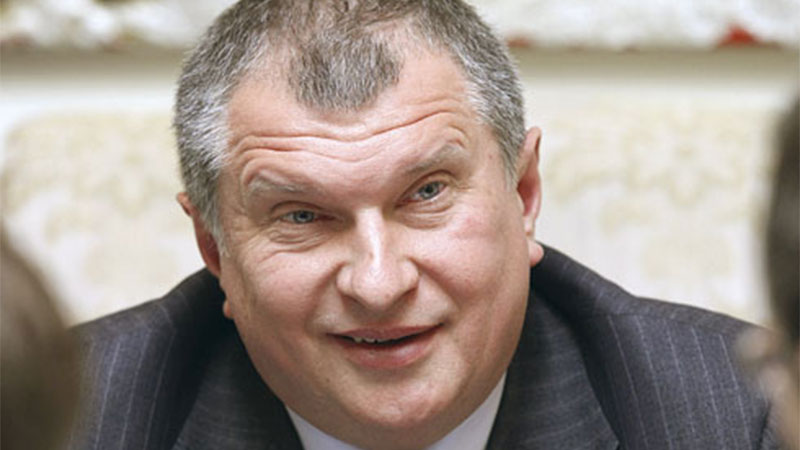
State controlled Rosneft acquires TNK-BP, a joint venture between a group of Russian oligarchs and BP. The newly formed company will become the largest publicly traded oil producer, controlling up to 50% of the Russian crude oil output.

The major cause of the Soviet Union collapse was the central planning system’s failure to meet even the basics needs of the country’s population. In contrast, the Putin extraordinary popularity rests on the rapid economic growth of 1999-2007, resulted from the market reforms and privatization of 90s.

BP's CEO Bob Dudley finally exits Russia with money

Now the Putin team destroys the foundations of his regime. The de-facto nationalization and monopolization of the energy sector has already cost a lot to the Russian economy. The country’s oil industry rapid rise stumbled after the de-facto nationalization of YUKOS, once Russia’s biggest and most efficient oil company. During the last ten years state-controlled Gazprom, which has an exclusive access to the world-largest natural gas reserves, has failed to develop any new large natural gas field and faced a decrease in production.

Even if they act in the best public interest, government officials have neither instruments nor proper motivation for supervising the sophisticated corporate structures. As a result, the huge cash flows of state-controlled companies become an easy prey for managers and insiders. They make fortunes on generous contracts and illogical M&A activities of such companies as Russian Railways, Transneft, VTB, Gazprom, Rosneft and many others.

When there is little room for further oil price increases, the production growth is an obvious way to sustain the country’s economic development. The energy sector opening to the international majors and private initiative would have brought new tax revenues and prolonged the Putin team dominant position in the Russian economy and politics. However, it looks like the opportunity to get access to the TNK-BP’s multi-billion cash flows outweighs all rational arguments for a new policy in the energy sector.

FT

  • Share/Bookmark

Putin’s new energy policy

October 8th, 2012 No comments

Novatek's key shareholder Gennady Timchenko knows how to explain the advantages of competition

During the VTB Capital investment forum “Russia Calling!” Vladimir Putin not only criticized Gazprom for corruption, but also stated: “We should change the economy of the company and provide access to transport systems, first of all to gas pipes”.

Russia’s president withdrew his unconditional support of Gazprom at the difficult time for the company. The European Commission attacks the monopoly within an antitrust probe. Igor Artemyev, the long-standing head of Russia’s competition regulator, criticized Gazprom as “an ineffective company” and offered his help to the European authorities. New energy Minister Alexander Novak promised to allow western majors owning oil and natural gas licenses in Russia’s Arctic waters. Meanwhile, Novatek, the second largest natural gas producer in Russia, found a way to export its natural gas, undermining Gazprom’s monopoly on the European market. Gazprom’s margins were simultaneously hit by multi-billion discounts the company had to offer to its largest European clients and almost twofold increase in the mineral extraction tax. The monopoly declares that it will abandon the development of new natural gas fields because of the tax increase, making the government responsible for the projects that Gazprom wasn’t able to develop for many years.

The new tone of the President and bold statements of his ministers might demonstrate the shift in the Kremlin’s energy policy. Though the concept of “energy superpower” maximized Gazprom’s profits in the recent years, it undermined Russia’s energy industry long-term competitiveness at the time of rapid changes in the world’s energy market.

New pragmatic policy has its influential beneficiaries. Among them is Novatek, a raising natural gas producer, where Putin’s old friend Gennady Timchenko owns 25% stake. Natural gas ambitions are also declared by Igor Sechin, another Putin’s old friend and Rosneft’s CEO. In sum, new energy policy will create opportunities for the president’s friends, boost government’s income and, perhaps, improve relationships with the European partners. It remains to be seen whether competition among Putin’s friends is enough to foster economic growth in Russia.

Gazeta.ru

  • Share/Bookmark

Putin says to investors: Trust me

June 16th, 2011 No comments

St. Petersburg

As the St. Petersburg Economic Forum gets underway, Prime Minister Putin is telling investors to trust him and put away their wariness of heightened risk because of corruption and weak rule of law in Russia. Russian authorities are pulling out all the stops to encourage much needed foreign investment. Deputy Economy Minister Stanislav Voskresensky, Putin’s director of foreign investors had this advice:

Do not scratch your head and wait: Russia is open for business and the potential profits are huge.”

Russia needs to offer high rewards for investing there as its attractiveness has faded despite recent strong commodity prices. Recently Chevron ended its partnership with Rosneft in the Shatsky Ridge deal in the Black Sea. Russian authorities loathe to cede any profits to multinationals, but the Shatsky deal was a concession to the fact that Russia cannot conduct offshore exploration without outside assistance.

Capital outflows have reached record heights from foreign and domestic capital. Over $55 billion has left Russia over the past eight months according to the International Monetary Fund.

Mikhail Khodorkovsky, former CEO of YUKOS estimates that due to graft in the economy, oil would have to be $200 a barrel before Russia can match the growth of the BRIC powerhouses China and India.

Economic reforms require 100 percent guarantees for private property and an effective, lawful state,” Khodorkovsky, 47, said in written answers to questions relayed through his lawyers. “Under the current political and economic model, to get a 10 percent growth rate for the Russian economy the oil price would have to remain solidly above $200 per barrel.

The World Justice Project released their 2011 Rule of Law Index and had this to say about Russia’s situation:

Russia shows serious deficiencies in checks and balances among the different branches of government (ranking 55th), leading to an institutional environment characterized by corruption, impunity, and political interference. Regulations are not always enforced (ranking 52nd), and civil courts, although accessible, are corrupt and inefficient. Crime rates in Russia are not as high as those in other middle- income countries (ranking 8th out of 19), and the criminal justice system is relatively effective (23rd). Violations against some fundamental rights, such as freedom of opinion, freedom of association, and arbitrary interference with privacy are areas of concern. [Read the full report here.]

With all these warning signs investors are right to be cautious about Russia. The market efficiency hypothesis in economics states that financial markets are “informationally efficient”. This hypothesis explains why Russia lags China and India in foreign investment and why until Russia makes comprehensive and visible changes to its legal and judicial systems, even the promise of excess market returns by the Prime Minister will not convince investors.

  • Share/Bookmark

Bulldogs, WTO and the Arctic Circle

May 9th, 2011 No comments

We previously wrote about record capital flight out of Russia due to political uncertainty. Both the New York Times and the Washington Post have articles covering this topic. While Kathy Lally at the Post relies on Olga Kryshtanovskaya, a member of Putin’s United Russia party, for her main assertions that there is no competition and it is all a show, Ellen Barry at the Times reports that something more substantive is in progress. Barry refers to a Churchill Winston remark that refers to the Kremlin transfer of power as bulldogs fighting under a carpet,

An outsider only hears the growling, and when he sees the bones fly out from beneath, it is obvious who won.

Barry doesn’t try to predict the winner but Prime Minister Putin has been in the headlines by reprimanding Russian trade officials who were seeking to comply with World Trade Organization’s rule before ascension. James Bacchus, a former chief judge for the World Trade Organization wrote,

Putin’s Russia is something considerably less than an open society. There is evidence aplenty of his decided disdain for the rule of law. A commitment to uphold the rule of law is implicit in signing the WTO treaty. Although not mandated in so many words by the treaty, conscientious allegiance to the rule of law is inherent to a national commitment to comply consistently with WTO rules.

Putin has likened the prolonged WTO accession process to an “ambush” of Russian economic interests. Evidently, he wants Russia to be able to enjoy the benefits without bearing the burdens of being in the WTO. He seeks the tariff concessions and the safeguards against trade discrimination that come with WTO membership, but he does not seem to want WTO commitments to impede unduly on his continued ability to impose the whims of what often seems an arbitrary rule.

Despite Putin’s omnipresence in Russian politics and economy, he was uncharacteristically quiet in the BP-Rosneft deal. BP trying to regain its footing after the Gulf Oil spill entered into a deal with Rosneft while ignoring their existing partners in Russia, Alfa-Access-Renova (AAR). After legal contests in London, AAR has won a major concession, Arctic exploration.

  • Share/Bookmark

Medvedev style modernization

April 19th, 2011 No comments

Over the past week the plug seemed to be pulled on the BP-Rosneft deal, only to have the Kremlin step in and resuscitated it with a deadline extension to the middle of May. Despite government meddling in this case, there have been other signs that President Medvedev has moved further away from Putin’s managed democracy and the rule of law are taking hold.

Pavel Felgenhauer writes in the the Eurasia Daily Monitor

Russia’s tandem rulers – President Dmitry Medvedev and former president and current Prime Minister Vladimir Putin – continue to profess their friendship, but these statements are increasingly unconvincing as the presidential elections that will install a new head of state for six years come closer. In Russia elections are shamelessly rigged and results prearranged by a corrupt bureaucracy, so the nomination of an official candidate is indeed the election per se, while the casting of the popular vote is a public relations exercise, mostly intended to appease foreigners and gain international legitimacy. The present tandem arrangement with Putin as the all-powerful prime minister officially sitting in the backseat with Medvedev performing the role of a largely figurehead president cannot continue much longer, certainly not for another six years, as it is already beginning to visibly crack.

Last year, President Medvedev signed into law that those charged with economic crimes should not have to face severe pre-trial detention, however, Russia’s best known political prisoner Mikhail Khodorkovsky has been in pre-trial detention since the start of his second trial. In an appearance before Russia’s Supreme Court, Khodorkovsky won his detention appeal.

The decision was a moral victory for Khodorkovsky, who was sentenced to remain in prison until 2017 in a December ruling condemned by Western governments and rights groups, but it will not lead to his release.

Are these signs that Medvedev’s power is ascending? Ordering top government officials to step down from their directorships of large Russian owned companies has not drawn comment from Putin, who set up the system. Perhaps this is a glimpse of modernization in action, Medvedev-style.

  • Share/Bookmark

BP-Rosneft Deal on Hold Indefinitely, Investors in Russia Told to Study Kremlinology

April 8th, 2011 No comments

In London, an injunction prohibiting the share-swap agreement between BP and Rosneft was issued indefinitely. The group Alfa Access Renova (AAR) had an agreement with BP as their investment partner in Russia. BP, still reeling from the Gulf Oil disaster looked to the deal with Rosneft to expand their exploration into the Arctic Circle. BP’s shares have gained 2.6 percent so far this year but still trade well below their value of before the Gulf Oil Spill. The injunction is likely to give AAR more leverage, and money, from any resulting BP-Rosneft deal.

WSJ’s Heard on the Street urged potential investors in Russia to study Kremlinology, the study of the murky underbelly of the Russian government. When BP made the deal with Rosneft, it no doubt received strong support from the Russian government since Igor Sechin is both chairman of Rosneft, deputy prime minister and close confidante of Prime Minister Vladimir Putin. Despite these close ties, the Kremlin has not used its muscle to lean on AAR to forgo their legal battles against BP and Igor Sechin is about to lose his chairmanship at Rosneft.

Despite these and other efforts by President Dmitry Medvedev to make Russia more enticing to foreign investors, critical factors remain:

The country needs to attract more foreign direct investment: It fell 13% to $13.8 billion last year, half the level in 2007. Gross domestic product growth could fall to 2.5% to 3% per year in the next 10 years, compared with 6% to 7% in the last decade unless annual foreign direct investment is ramped up toward $75 billion, investment bank Uralsib forecasts. The government wants foreign investors to participate in a planned $35 billion of state-owned company flotations in the next three years. Industries from farming to oil and gas also need foreign expertise to develop.

…so long as former Yukos boss Mikhail Khodorkovsky languishes in jail, many will be sceptical Russia’s legal system is truly independent. Political risk is the reason Russian equities trade at 9.1 times expected 2011 earnings, a 20% discount to their emerging market peers. It would take a brave Kremlinologist to bet on that gap closing.

  • Share/Bookmark

Kremlin’s top dogs tussle for poll position

April 7th, 2011 No comments

Russian politics, Churchill said, is like watching two dogs fighting under a carpet. Lately, however, Russia’s top political dogs have shed the rug and are nipping openly at each other’s heels.

First, Vladimir Putin, the prime minister, likened western military action in Libya to the crusades, before Dmitry Medvedev, the president, told him, in essence, to hold his tongue.

Then, last week, Mr Medvedev ordered ministers to leave the boards of state-controlled companies. That struck at the heart of “Kremlin Inc” – the intertwined political and economic system Mr Putin created. Putin loyalists were affected, including Igor Sechin, a close ally for two decades and linchpin of a planned alliance between Rosneft, the oil company he chairs, and Britain’s BP.

Deep in the corridors of the Kremlin, it is clear the starting gun has been fired for presidential elections just under a year from now. Less clear, with Mr Putin expected to decide which man will be the presidential candidate – and to remain Russia’s most powerful figure, whatever position he holds – is what the dogfights are really about.

They may be an attempt to stimulate interest among Russians who are wearying of tightly controlled politics: Russians are unlikely to erupt into Middle East-style unrest. But a sense of popular disillusionment is adding to nervousness in business and political elites over the looming election, which is stifling domestic investment and contributed to $21bn of capital flight in the first quarter of 2011, despite a buoyant economy.

The jostling may be an attempt to prevent either figure becoming a lame duck. Mr Medvedev’s assertiveness could be a pitch to keep his job or it could be another feint. The Kremlin spent much of 2007, before the last elections, building up the conservative Sergei Ivanov as presidential heir apparent – until Mr Putin chose Mr Medvedev.

Neither side wants to be outdone. Mr Medvedev has positioned himself as the “modernisation” candidate, calling for Russia to develop high-tech industries to reduce reliance on oil. A liberal think-tank, the Institute for Contemporary Development, whose trustees Mr Medvedev chairs, has urged radical reform, including more democracy.

Mr Putin has formed his own task force of freethinking economists, including Vladimir Mau, an academic who worked with post-Soviet reformers Yegor Gaidar and Anatoly Chubais. Their conclusions resemble those presented to the president, minus democratic reform, an area people involved say was kept outside their remit.

Yet the worry for the powers that be is that voters seem jaded. Russian media have reported young professionals emigrating, fleeing the prospect of the same figures remaining in power for years to come.

Opinion polls show support for both men, still high by western standards, has fallen to its lowest for years. The dominant pro-Kremlin United Russia party performed comparatively poorly in regional elections last month.

Pollsters suggest support is waning, above all, among the growing urban middle class, perhaps 15 per cent of the electorate. Blog-reading, property-owning Russians are finally demanding a system responsive to theiraspirations.

A think-tank originally set up by German Gref, Mr Putin’s first economy minister, warned last week of a looming crisis because of the “fast-growing delegitimisation” of today’s leadership among many Russians. The only solution was to introduce more competition and new faces into the system.

The Kremlin has reacted in typical fashion, by toying with turning the shell of a 1990s-era party into a “tame” liberal group that could enter the ossified parliament in elections in December and champion middle-class interests. Talks have reportedly been held with liberal-leaning officials including Igor Shuvalov, a deputy prime minister, about leading the party.

Fringe pro-democracy politicians, outside the Kremlin-approved system, suggest this savvy new middle class would never fall for another “fake” party. They are targeting this electorate themselves.

One leading intellectual, echoing Russians at all levels, agrees that rampant corruption, now at the level of a “kleptocracy”, is a central issue. High natural resource revenues may see the leadership through the next elections, and buy support for a while yet. But within five or six years, he says, “change must come. If it doesn’t come from the top, it will come from below.”

The Financial Times Limited 2011

  • Share/Bookmark

BP Chief Buys Back in to Russia Despite Prior Threats from Rosneft’s Sechin

February 2nd, 2011 No comments

Russian Deputy Prime Minister Igor Sechin (left) with BP Chief Executive Robert Dudley and his predecessor Tony Hayward in August 2010 Photo: AP

It’s well known how Putin, Inc. treats its enemies, but the latest WikiLeaks revelations offer startling new details on the rough treatment it accords even its friends. The Telegraph published secret US diplomatic cables showing that current BP Chief Bob Dudley was tossed from his prior post leading the energy company’s Russian unit, TNK-BP, following a boardroom “coup” in 2008, and decided to “move around” from country to country” amid threats orchestrated by Rosneft Chairman Igor Sechin.

On January 14, 2010, Dudley and Sechin joined in praising their latest transaction under which BP would swap five percent of its shares, worth about $7.8 billion, for a 9.5 percent stake in state-controlled Rosneft. Perhaps, as the Telegraph reports, Dudley was forced to set his fears aside and cut a deal with his enemy because BP finds it necessary to look for new business ventures with Putin in light of American anger over the firm’s oil spill in the Gulf of Mexico last year.

  • Share/Bookmark
Categories: Energy Tags: , , ,

Top Ten Reasons to Avoid Russia

January 31st, 2011 No comments

Russia Profile reported on Medvedev’s speech at Davos to convince world and business leaders that Russia is ready to do business again. However, Tai Adelaja notes that

Despite the horrendous terrorist attacks, experts say the only bug in the president’s ointment is the case of Mikhail Khodorkovsky, the jailed former billionaire head of Yukos Oil, which continues to cast a shadow on the rule of law and leave a negative impact on Russia’s reputation abroad.

Adelaja describes Medvedev’s top ten reasons to invest in Russia. Here are some reasons to disagree.

Number one: Russia has slashed the number of its strategic companies fivefold. It is no secret that Russia experienced record capital outflows in 2010 and despite rising oil prices faces huge budget gaps. The Kremlin as its self interest in mind when it sheds strategic assets. Putin’s government has a history of opening up businesses to investments to allow others to turnaround the company only to come in at the end to take the company away through trumped up taxes and other phantom violations.

Number two: Russia is set to embark on a large-scale sell-off of state assets in efforts to modernize its country. The Russian government is expected to sell $32 billion in assets by 2013. Foreign investors should remember that some of those state assets were acquired by the state through expropriation. Rosneft’s major assets came after the dismantling of Yukos; now Russian officials are asking investors to risk their capital in Russia again.

Number three: President Medvedev said is poised to create a “special sovereign fund” to attract foreign capital. This was written about in an earlier post. With corruption at all levels in Russia continuing to climb, it was a contributor to the attack at the Domodedovo airport on January 24, Russia is now the lowest ranked developing country in Transparency International’s Corruption Perception Index. Out of 178 countries, Russia is ranked 154th. With capital leakage out of the Russian economy at all levels, it is clear that the special sovereign fund will be a tool for foreign investors to give money to Russian officials. Prime Minister Putin, the leader of the power tandem, has built himself a $1 billion palace with money milked from the power vertical he created. Below are some pictures, provided by RuLeaks, Russia’s version of WikiLeaks.

For more pictures click on photo.

Reason four: Medvedev reiterated that Russia will refrain from imposing a special tax on banks and the financial sector in an effort to attract addtional capital into the country. Russia needs to do all it can to attract foreign investment. In 2010, $38 billion in capital flight was from not only foreign investors but Russian ones as well seeking higher returns for their investment. The Russian stock market, despite being in the so-called BRIC powerhouse and overweighted in emerging markets indices, has lagged the other countries in performance and carries a 30% discount in valuations from other emerging economies.

Reason five: the Kremlin is pressing ahead with efforts to transform Moscow into one of the top-ten global financial centers as part of a drive to diversify the economy away from energy exports. President Medvedev announed in May 2010 that Alexander Voloshin, chairman of Russia’s metals giant Norilsk Nickel, will be the newest member of a presidential council on financial reform and lead the conversion of Moscow into a global financial powerhouse. As we mentioned in an earlier post, Russia is not yet a member of  International Organization of Securities Commissions (IOSCO), which is a minimum requirement for international financial centers. Of greater concern is why financial centers appear and grow, to efficiently allocate capital. But with even Russian investors shunning their exchange for London, New York or Hong Kong and capital outflows reaching record numbers, it is difficult to see how Moscow can differentiate itself and maintain international market standards.

Reason six: Medvedev reaffirmed Russia’s ambition to join the World Trade Organization (WTO) and the Organization for Economic Cooperation and Development (OECD). President Medevedev has proven himself to be ambitious in words but lacking in execution. From his anti-corruption commission to fighting the terrorists who attacked the Moscow airport, Medvedev is the more articulate of the leadership tandem, but he is not the one who holds the power. Medevedev recently admitted that there has been no progress in the country’s anti-corruption progress.

Reason seven: Medvedev vowed to continue the implementation of energy efficiency programs, stressing that the state would also enourage more partnerships in the energy sector. Rosneft, the 75% state owned oil producer recently announced partnerships with BP and Exxon Mobil. BP seemed to have learned from their previous scuffles with Russian authorities that political power trumps business ones. So it has decided to leave its long-time Russia partner TNK and $990 million in dividends to join forces with Putin and Igor Sechin at Rosneft.

Reason eight: Russia is presently developing a mechanism that would help it share technology – especially military technology – with other nations.  This seems to be another tactic for selling state assets as the Kremlin tries to find additional sources of capital, even as the price of oil moves past $90 a barrel.

Reason nine: Russia continues to invest heavily in its human resources, including trying to educate future businessmen and officials abroad.  President Medvedev said at Davos, “Our task is to make Russia more attractive to foreign experts to work in.” Expat workers need to remember Yukos and its audit firm, PWC. During the politically motivated second trial of Mikhail Khodorkovsky, PWC officials were pressured by Kremlin officials to rescind their audit certification of oil giant Yukos to prove the prosecutor’s case. 

Reason ten: Russia is also pushing to interest investors in projects related to the development of sports and large athletic events in preparation for the Olympic Games. Russia is hosting the 2014 Winter Games and corruption is roaring its head as the Sochi Winter Games in 2014 is already the most expensive by far. Just today, the constructiion chief for the Sochi Olympics, Taimuraz Bolloyev stepped down as President Medvedev announced fraud investigations.

  • Share/Bookmark