

NPR: Behind Bars, Russian Tycoon Makes Bid For Freedom
“The Kremlin says Russia is a country of great opportunity. But my trial demonstrates that it is also a country of great risks.” – Mikhail Khodorkovsky
Russian President Dmitry Medvedev looks through 3D glasses at an exhibition at the economic forum in St. Petersburg, Russia, Saturday, June 19, 2010. (AP Photo/Dmitry Lovetsky)
Just a few weeks ago Putin was front and center with his visits to Istanbul and Paris, negotiating foreign policy disputes over UN sanctions against Iran. He even made comments about his tandem leadership with Medvedev that Kremlinologist have interpreted to mean that Putin as no choice but take over the reins in 2012, lest Medvedev actually execute his modernization plans by reducing 160,000 bureaucrats and nearly 300,000 policemen. Of course not all of these government employees have profited from Putin’s rein at the helm but they benefit from the existing “old” system (“budget inefficiency and a resource-based economy” as Arkady Dvorkovich, Medvedev’s top economic advisor put it.)
What a difference a few weeks make.
This week President Medvedev is visiting Silicon Valley to drum up support for a Russian Silicon Valley in Skolkovo outside Moscow. Despite a more promising outlook for Russia’s growth this year, in order for Medvedev’s modernization to be realized, laws must be enacted and enforced.
Another hinderance to Medvedev’s efforts is widespread corruption in the country, equivalent to a third of the country’s GDP annually. The death of Sergey Magnitsky while in pre-trial detention hangs like a cloud. Today, Magnitsky’s business partner Jamison Firestone released a video documenting what the government officials who are responsible for Magnitsky’s death are doing with their ill-gotten fortunes.
Beyond the Magnitsky tragedy the Khodorkovsky trial is a symbol of the lack of property rights in Russia and is costing Russian companies a risk premium as foreign investors demand greater compensation for this political risk.
Leon Aron, director of Russian studies at the American Enterprise Institute wrote in the Los Angeles Times that:
The road to a Russian Silicon Valley starts not in California, Mr. President. It begins with unlocking the door to Mikhail Khodorkovsky’s jail cell.
This is a critical time for Russia’s development as an emerging market. It remains to be seen if Medvedev’s modernization initiatives will be allowed to proceed and allow Russia to develop in an ever crowded global economic playing field or will the presidential election of 2012 reaffirm the Kremlinologists prediction that Putin will rein in liberalizing efforts and lead Russia down the path of increased centralization in government and government oversight of business and trade.
Reuters recently released an article outlining three key risks in Russia: the variable price of oil, political shake up in the Kremlin and further insurgency attacks. Though the world’s largest energy producer, Russia’s manufacturing, construction and retail industries continues to contract as domestic consumption and foreign investment continues to lag, increasing the economy’s dependence on oil prices for growth.
Prime Minister Vladimir Putin remains popular and the driver behind the co-governance team with President Dmitry Medvedev. Despite highlighting their differences and indicating Medvedev’s intentions of political and judicial reform, Reuters notes that Russian markets would rebound only if Putin remained in place. The maintenance of the status quo despite Russia’s world renown for government corruption and weak rule of law seems curious. With foreign investors, such as IKEA, Hermitage Capital, and now HBK investments scaling back or pulling out of Russia due to corruption and extortion, why would the markets value Russian companies more if the status quo remained?
And how does the continued expropriation of private business by government officials add to Russia’s economic capital?
The extraction of Russia’s economic and natural resources by the politically connected few leads to only self-enrichment. Perhaps this self-enrichment would be tolerable if the proceeds were reinvested in Russia and the Russian people, but this is rarely the case. What Russia needs is investment to update oil and pipeline infrastructure, capital to encourage innovation and a stronger rule of law to benefit all Russian people.
Russia’s most famous political prisoner, Mikhail Khodorkovsky began his spirited defense yesterday against his Kafka-esque second trial. The government charged Khodorkovsky and his business partner Platon Lebedev with stealing 2.5 billion barrels of YUKOS’s crude oil or a third of the United States’ entire annual consumption of oil.
The trial is also viewed domestically and abroad as a test of Medvedev’s commitment to ending “legal nihilism” and his power and control within the Kremlin. Medvedev even started a national anti-corruption drive this March. According the Associated Press,
The trial is considered a test of whether President Dmitry Medvedev, himself a lawyer, is serious about reforming Russia’s judicial system. In other cases, judges have come forward to complain they face political pressure.
Only time will tell if Medvedev makes good on his words.
Despite a recent article linking Russian Medvedev’s liberalization efforts as gloss on Putin’s authoritarianism, there remains a way for political outsiders, Russians and foreign investors to effect change in Russia, and that is through company ownership. With no political opposition and cronies heading up the country’s largest companies, the current political structure is in place to maintain Russia as an ATM for the political elite. According to Transparency International Russia,
Since Putin came to office in 2000, Russian officials are estimated to have skimmed some $200 to $300 billion a year from the economy.
The most important job of the Russian government is to ensure that all the stolen money remains hidden and that the system aiding and abetting the pilfering of national assets remains in place. So, even though 93% of Russians believe that the government is not doing enough to combat corruption, Medvedev will not enact meaningful reform and rock the boat he helped build with Putin.
One of the only ways to make Russian political and business elite to take notice, is shareholder activism. By using his minority ownership of state-run companies, Alexei Navalny has shone the spotlight on the mismanagement and embezzlement by government officials. Foreign investors in Russia can do the same by demanding a greater percentage of ownership and management input from Russian companies that seek to tap into international capital markets. From this ownership position, accountability and transparency can start to take root in the Russian economy.
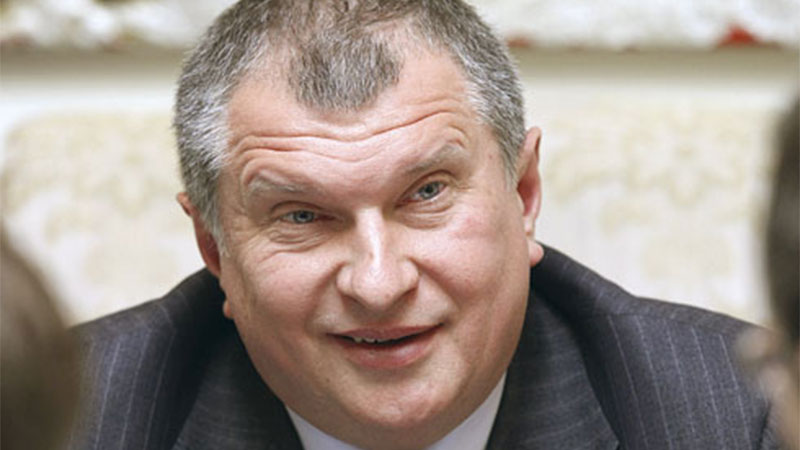
In a recent Newsweek article, “Sechin Evolution into Reportedly Number Two Man in Russian Government Examined,” Vice Premier Igor Sechin is revealed to be the true power broker in the Russian White House, “the country’s main manager” and “expanding…spheres of influence.” Additionally, IHS Global Insight recently reported:
…that Deputy Prime Minister, Igor Sechin, has reminded investors that new amendments to the law on foreign investment in state–controlled strategic mineral fields are not designed to relinquish state control over the strategic assets but rather to offer an asset-swap to gain a foothold in Russia’s natural resources industry. Sechin’s comments are a stark reminder why the investors are wary of venturing into Russia in the first place. The Kremlin needs to do more to assure the foreign investors, already guarded by the infamous Yukos and BP nationalisation cases, that they will be offered fair compensation and will have a clear explanation of what constitutes strategically important resources. IHS Global Insight Daily Analysis, Russian Prime Minister Seeks Foreign Investors’ Advice to Improve Investment Law, by Lilit Gevorgyan, 23 December, 2009
Indeed, with Sechin as Russia’s Vice Premier for Industry and Energy, the risk of corporate raiding by government officials remains high and President Medvedev’s talk of ending legal nihilism, will be just that, talk.
Via the EU-Russia Centre, Der Welt published an article on why Mikhail Khodorkovsky remains significant to Russia’s economic development. According to the article “at least one third of the population expressed according to the survey Institute Levada-Center at the beginning of the conviction that people like Khodorkovsky could help with their know-how of the country in crisis.”
The full article translated below via Google Translate:
Khodorkovsky’s long shadow
Yukos was once an example to be established early on ethics and years later Vladimir Putin again lives in fear of the dead and a group jailed billionaire
Eduard Stein
December 2009, 04:00 Clock 14h
For some reason, Vladimir Putin, sensing a need for clarification. After six years of evasive answers and arcane information about the rise and fall of the government-imposed oil company Yukos was Russia’s most powerful man on television two weeks ago suddenly on the offensive. For years, curious person urged the former President and current Prime Minister, a plausible explanation. Vain. Finally, it was a dish that had sent the once-largest oil company in the country several years ago in the bankruptcy, said Putin and his top officials free of the responsibility: Finally, the court on a repeated sentence or the release would be the Mikhail Khodorkovsky, once Russia’s richest decide.
But it was still Putin himself, who forestalled suddenly in the course of his TV Question Time the court and in unexpected detail, commented on the case. What should spontaneously appear, therefore, ultimately came more through-composed. Do not go there about when to release for whom, “said the Prime Minister go there so that repetition of such economic crimes. They also maintained that the money from the auction of Yukos assets RULE in social housing has been set, “Putin said to the astonished spectators”. Then, to dare the legal tightrope: the ex-security chief of Yukos, Alexei Pitschugin, who has been convicted of three contract killings in 2007 to life imprisonment without the guilt, “has clearly acted in the interest of and on behalf of the owner.
Since Putin knows his opponent over the court, “said Mikhail Khodorkovsky, who himself was never accused of murder, from prison. You may still call upon the Premier to give evidence.
In seven days on the beginning of the Causa Yukos, the topic is thus again a household word. For years, the Russian authorities had hoped that the interest in his most prominent prisoner, who was once estimated at 15 billion U.S. dollars assets, more and more abated. And in the end perhaps totally dies. Too much the case had tarnished the image of the rulers and the country already. No other matter beyond the Chechen war had made the perceptive world opinion against Russia’s development under Putin. No subject had clearly signaled observers abroad that began with Putin after a decade of attempts in a market economy and democracy in a new era of statism and the authoritarian power vertical in Russia.
None other than 25 October 2003 was so obvious. Early in the morning landed on that day a Russian Tupoljew with Khodorkovsky aboard in the Siberian city of Novosibirsk. A few minutes later, the domestic intelligence service FSB special forces stormed the plane. “When I saw the siege was everything to me clearly,” to the then forty-year multi-billionaire said.
Already months before a string of incidents had indicated that was the most modern and most efficient oil company in the country with his boss and major shareholder in the crosshairs of investigators. What followed after the arrest, was an unprecedented geheimdienstgeschulten tug of war between the Kremlin and the relentless head of a mega company with 105,00 employees. At the end Khodorkovsky was convicted of fraud and tax evasion in 2005 with eight years imprisonment in the remotest Siberia. Subsequently, Yukos was filleted and mostly incorporated into the state oil company Rosneft, which rose to the market leader.
Since the spring of this year, Khodorkovsky is in Moscow again in court. Shake about the new indictment not only Putin’s critics around: the tycoon is the whole Yukos flow have been stolen. Previously he had been convicted solely because of tax evasion for the Yukos oil. Now the prosecutor has accused him of having illegally sold oil worth 20 billion euros. In extreme cases, this latest charge threaten to bring more than 20 years in prison.
One should remember the Mafia boss Al Capone, the “30 year old was formally sentenced in the U.S. for tax fraud – but in reality for all crimes he committed,” Putin initiated at the end of November in France. His answers to answer the questions about Khodorkovsky was drastic. He likened his rival on this occasion with the U.S. billion fraudster Bernard Madoff, who was sentenced to 150 years in prison. Nobody has felt the injustice and “even a beep given by itself,” complained Vladimir Putin. Why just the other Causa Khodorkovsky with a measure would be measured?
Because it was politically motivated to be Khodorkovsky’s lawyers never tires of stressing. That’s what Putin himself admitted behind closed doors, said a few months ago, none other than Mikhail Kasyanov, the beginning of the affair, Prime Minister under Putin. The former president had echauffiert about the fact that Khodorkovsky without permission of the Kremlin’s next Liberal parties also began to sponsor the Communists,’ said Kasyanov. Immediately after his assumption of office, Putin had called all the oligarchs to abide by political non-interference. All other tycoons, who like Khodorkovsky, seized during the privatizations of the 90s to questionable nature and at bargain prices, huge fortunes under the nail, and great power within the state itself, had understood Putin’s message – and Khodorkovsky was warned. The wealth had gone to his head and caused a feeling of integrity, he would tell later companions. “Was Chodor,” as his intimates call him, just a strong person with principles to keep his followers against it.
Khodorkovsky has indeed has strong international support. Unlike court proceedings, the lobbying machine of the volatile Yukos billionaire runs very fast. Together with lawyers, they instigated in an information war with the Kremlin, which they have won very early on. In early December, they also achieved a real part of success: An international arbitration tribunal in The Hague ordered former Yukos shareholders to legal action against the Russian government because it had allowed, despite binding to the International Energy Charter, the expropriation of the Group. As the claim will be circulated to the shareholders of 100 billion U.S. dollars.
“In the end, the European Court, but not 10,000 dollars compensation claim,” warns Alexei Makarkin of the Moscow Center for Political Technologies to realism in a new information war. But also includes Makarkin – such as Khodorkovsky’s supporters – not that Putin’s attacks against the detainee associated with the decision of the Court of Holland and the prime minister had once built a defensive line.
For just as likely, but observers think that is on the rise in the Russian government panic because the politicians are afraid because of the absurdity of the charge in the current second trial in Moscow for an acquittal.
Domestically, such a defeat would have to get over, however. The nation does not feel any great sympathy for Khodorkovsky. But at least one third of the population expressed according to the survey by the Institute Levada-Center at the beginning of the conviction, that people think Khodorkovsky could help with their know-how of the country in crisis. “If Khodorkovsky was set free, he would become perhaps less economically, but socially active,” says Sergei Guriev, rector of New Economic School in Moscow: “As a moral authority he could collect a lot of people around.”
An acquittal would have still another effect: When would this year have a pregnant Yukos lawyer suffering from AIDS and the former deputy leader of the group have been released from prison, the verdict further evidence of potential investors that the new president, Dmitry Medvedev, with the modernization seriously. “It would be a sign that the country does not drift to a halt,” says Guriev.
But that when it comes to power, the investment climate for the governance of secondary, Makarkin said: “Being a strong character Khodorkovsky is ready to fight. Putin has made clear with his recent statements that he did not want to see him in freedom.”