

Archive

Posts Tagged ‘World economic forum’

Top Ten Reasons to Avoid Russia

January 31st, 2011 No comments

Russia Profile reported on Medvedev’s speech at Davos to convince world and business leaders that Russia is ready to do business again. However, Tai Adelaja notes that

Despite the horrendous terrorist attacks, experts say the only bug in the president’s ointment is the case of Mikhail Khodorkovsky, the jailed former billionaire head of Yukos Oil, which continues to cast a shadow on the rule of law and leave a negative impact on Russia’s reputation abroad.

Adelaja describes Medvedev’s top ten reasons to invest in Russia. Here are some reasons to disagree.

Number one: Russia has slashed the number of its strategic companies fivefold. It is no secret that Russia experienced record capital outflows in 2010 and despite rising oil prices faces huge budget gaps. The Kremlin as its self interest in mind when it sheds strategic assets. Putin’s government has a history of opening up businesses to investments to allow others to turnaround the company only to come in at the end to take the company away through trumped up taxes and other phantom violations.

Number two: Russia is set to embark on a large-scale sell-off of state assets in efforts to modernize its country. The Russian government is expected to sell $32 billion in assets by 2013. Foreign investors should remember that some of those state assets were acquired by the state through expropriation. Rosneft’s major assets came after the dismantling of Yukos; now Russian officials are asking investors to risk their capital in Russia again.

Number three: President Medvedev said is poised to create a “special sovereign fund” to attract foreign capital. This was written about in an earlier post. With corruption at all levels in Russia continuing to climb, it was a contributor to the attack at the Domodedovo airport on January 24, Russia is now the lowest ranked developing country in Transparency International’s Corruption Perception Index. Out of 178 countries, Russia is ranked 154th. With capital leakage out of the Russian economy at all levels, it is clear that the special sovereign fund will be a tool for foreign investors to give money to Russian officials. Prime Minister Putin, the leader of the power tandem, has built himself a $1 billion palace with money milked from the power vertical he created. Below are some pictures, provided by RuLeaks, Russia’s version of WikiLeaks.

For more pictures click on photo.

Reason four: Medvedev reiterated that Russia will refrain from imposing a special tax on banks and the financial sector in an effort to attract addtional capital into the country. Russia needs to do all it can to attract foreign investment. In 2010, $38 billion in capital flight was from not only foreign investors but Russian ones as well seeking higher returns for their investment. The Russian stock market, despite being in the so-called BRIC powerhouse and overweighted in emerging markets indices, has lagged the other countries in performance and carries a 30% discount in valuations from other emerging economies.

Reason five: the Kremlin is pressing ahead with efforts to transform Moscow into one of the top-ten global financial centers as part of a drive to diversify the economy away from energy exports. President Medvedev announed in May 2010 that Alexander Voloshin, chairman of Russia’s metals giant Norilsk Nickel, will be the newest member of a presidential council on financial reform and lead the conversion of Moscow into a global financial powerhouse. As we mentioned in an earlier post, Russia is not yet a member of  International Organization of Securities Commissions (IOSCO), which is a minimum requirement for international financial centers. Of greater concern is why financial centers appear and grow, to efficiently allocate capital. But with even Russian investors shunning their exchange for London, New York or Hong Kong and capital outflows reaching record numbers, it is difficult to see how Moscow can differentiate itself and maintain international market standards.

Reason six: Medvedev reaffirmed Russia’s ambition to join the World Trade Organization (WTO) and the Organization for Economic Cooperation and Development (OECD). President Medevedev has proven himself to be ambitious in words but lacking in execution. From his anti-corruption commission to fighting the terrorists who attacked the Moscow airport, Medvedev is the more articulate of the leadership tandem, but he is not the one who holds the power. Medevedev recently admitted that there has been no progress in the country’s anti-corruption progress.

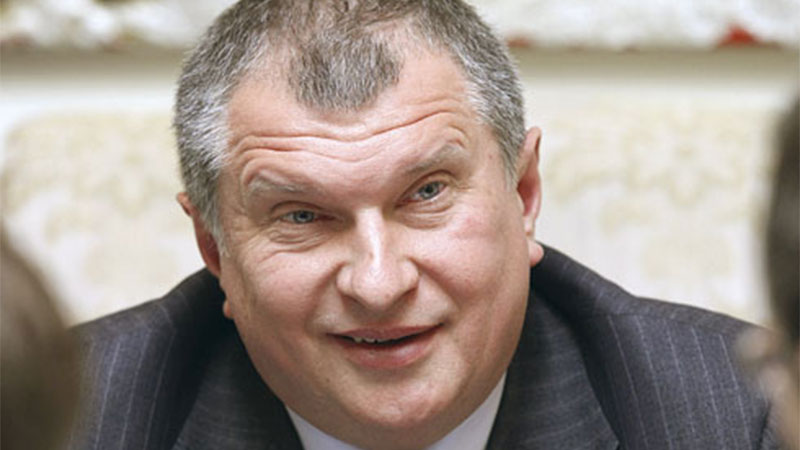
Reason seven: Medvedev vowed to continue the implementation of energy efficiency programs, stressing that the state would also enourage more partnerships in the energy sector. Rosneft, the 75% state owned oil producer recently announced partnerships with BP and Exxon Mobil. BP seemed to have learned from their previous scuffles with Russian authorities that political power trumps business ones. So it has decided to leave its long-time Russia partner TNK and $990 million in dividends to join forces with Putin and Igor Sechin at Rosneft.

Reason eight: Russia is presently developing a mechanism that would help it share technology – especially military technology – with other nations.  This seems to be another tactic for selling state assets as the Kremlin tries to find additional sources of capital, even as the price of oil moves past $90 a barrel.

Reason nine: Russia continues to invest heavily in its human resources, including trying to educate future businessmen and officials abroad.  President Medvedev said at Davos, “Our task is to make Russia more attractive to foreign experts to work in.” Expat workers need to remember Yukos and its audit firm, PWC. During the politically motivated second trial of Mikhail Khodorkovsky, PWC officials were pressured by Kremlin officials to rescind their audit certification of oil giant Yukos to prove the prosecutor’s case. 

Reason ten: Russia is also pushing to interest investors in projects related to the development of sports and large athletic events in preparation for the Olympic Games. Russia is hosting the 2014 Winter Games and corruption is roaring its head as the Sochi Winter Games in 2014 is already the most expensive by far. Just today, the constructiion chief for the Sochi Olympics, Taimuraz Bolloyev stepped down as President Medvedev announced fraud investigations.

  • Share/Bookmark

Crumbling at the Center

March 12th, 2010 No comments

The Economist argues in the recent article, “Modernising Russia: Another great leap forward?” that President Medvedev’s efforts to modernize Russia by creating a Russian version of Silicon Valley without strengthening institutional weaknesses is the result of an authoritarian regime that trumpets the state as the “only force capable of making Russia great and respected again.”

As the article points out, changes to the existing system threatens not only the power and legitimacy of the existing ruling elite, but their immense wealth as well

Russia’s ruling elite, which consists of a corrupt bureaucracy, the security services and a few oligarchs, lives off the rent from natural resources or administrative interference in the market. Competition and the rule of law undermine this arrangement. Corruption holds it together, and ensures the loyalty of the bureaucracy.

The conflict between real modernization and the vested interests of this bureaucracy is summed up in the fate of Mikhail Khodorkovsky, once Russia’s richest man and now its most famous political prisoner.

Russia’s institutional weaknesses are well known, weak rule of law, endemic corruption, no respect for property rights and governmental favortism in dealing with the private sector and weaken Russia from within. Without political competition and property rights protection, capital investment in Russia will remain anemic.

  • Share/Bookmark

Corruption Driving Investors Out of Russia, Browder Says

February 3rd, 2010 No comments

Keeping Khodorkovsky in Prison Hurts Business

Bill Browder of Hermitage Capital, whose attorney Sergei Magnitsky died in Russian custody last November was interviewed by Reuters TV about doing business in Russia.

From my own perspective, for every investor that’s there – there are probably 20 that are not there for reasons of Khodorkovsky, what happened to Sergei [Magnitsky] and other things.


  • Share/Bookmark

ANALYSIS: Davos Conversations on Doing Business in Russia

February 2nd, 2010 No comments

At World Economic Forum this year, Russian officials headed by Finance Minister Alexei Kudrin were no where to be seen. Ian Bremmer, head of the foreign policy think tank Eurasia Group blogged that

Russia as a topic generally comes across as a negative in global circles–revisionist geopolitics, resource nationalism, and strongly authoritarian (albeit charismatic, in a fashion) domestic leadership.

Those negative sentiments were backed up by 75% of Russian businessmen attending Davos and predicting another year of stagnation or further economic decline.  This mood was backed up by dismal economic numbers in 2009. The Russian economy shrank 7.9%, the most in 15 years and analysts forecast the economy to shrink by 8.5% in 2010.

Although President Dmitry Medvedev keeps up the positive drumbeat on foreign investment in Russia, business leaders are more circumspect, expressing concerns over instiutional corruption stifling economic development and entrepreneurial spirit. German Gref, CEO of Russia’s largest bank Sberbank talked about

…the mood of fear gripping the private sector since the state take over oil major YUKOS several years ago.

Former YUKOS CEO Mikhail Khodorkovsky wrote in last week’s New York Times op-ed piece that Russia only exports gas and corruption and its refusal to see the limits of a state-controlled petro-economy is taking Russia down the path to becoming

a classic third-world style, raw materials-based economy, where corruption is the norm rather than the exception and there is no working system of democratic and social institutions.

  • Share/Bookmark

CREF Chairman’s Open Letter to World Economic Forum Attendees

January 25th, 2010 No comments

Dear World Economic Forum Attendee:

As you prepare to attend the World Economic Forum, keep in mind that in a cramped court room just a few blocks from the Kremlin a drama is playing out that will have profound implications for the future of economic and political freedom in Russia. That country’s former leading business leader, YUKOS Chairman Mikhail Khodorkovsky, is undergoing a bizarre second trial on fabricated charges after he criticized Vladimir Putin for failing to abide by the rule of law. Sentenced to eight years, Khodorkovsky now faces an additional 22 years in a Siberian prison camp.

This Kafkaesque proceeding embodies everything that stands in the way of Russia achieving stability, growth, prosperity and Democracy for its people. GDP surges and plummets with oil prices, inflation and unemployment each exceed 10 percent, while the average salary is about $500 a month.  Respected companies like Ikea, the Swedish home furnishings giant, have been forced to declare a moratorium on investment in Russia, frustrated by Russian officials’ disregard for contractual obligations and fair play.

As a U.S. Senator, President Obama sponsored a bi-partisan resolution supporting Khodorkovsky after the first prosecution, stating that the case raises “troubling questions about the impartiality and integrity of the judicial system in Russia,” and that the imprisonment represents “a violation of the norms and practices of Russian law.” Other leaders from Italy, Germany, and European organizations joined in extending their support for Mr. Khodorkovsky.  Courts from Switzerland, the United Kingdom, the U.S., Netherland, Lithuania, and Cyprus, among others, have dismissed elements of the YUKOS affair.

The Russian government’s contempt for the Rule of Law and the simultaneous proliferation of corruption remains a huge impediment to direct foreign investment for this key player in the world economy. Both US and Russian officials have publicly acknowledged Russia’s weak property rights and rampant corruption as reasons to avoid doing business in Russia.

Russian First Deputy Prime Minister Igor Shuvalov said at an international conference on January 21, 2010, “Investment…is possible only with solid protection of private property rights. Therefore this problem is directly linked to the course of modernization.” On January 12, 2010 US Ambassador to Russia John Beyrle stated, “Russia is still a very tough place to do business. The combination of bureaucratic and administrative obstacles intertwined with pervasive corruption in Russia still constitutes a pretty significant risk premium for American investors and American businessmen who want to enter the Russian market or grow their businesses.”

Russian attorney Sergei Magnitsky was arrested in November 2008 after defending Hermitage Capital against expropriation by government officials. After being denied medical treatment during his year-long incarceration, Magnitsky died in Russian custody last November. If this can happen to Khodorkovsky and Magnitsky, what investor or corporation seeking to do business in Russia is safe? Why invest in Russia as long as Khodorkovsky is behind bars?

According to Russian government studies and US State Department statistics, it’s estimated that corrupt officials rob the Russia people of an estimated $300 billion annually, a sum equal to 18% of the country’s gross domestic product. The response to the newly-adopted package of anti-corruption legislation initiated and promoted by President Medvedev and passed by the Duma in December 2008, has been tepid at best. Medvedev recently admitted publicly that corruption is still endemic in Russia. The excessive role of government in the economy and business sector, which spurs the supply side of corruption, aggravates the problem.

As 2010 begins, signs of Russia’s complacency have become larger and the world stage is beginning to notice. The Khodorkovsky trial and continued politicization of the courts and trade illustrate the increasingly hostile nature of the Russian business environment.

Additional information can be found on our briefing “Russian Roulette: Current Investment Risks in Russia.”

Best regards,
Pavel Ivlev

  • Share/Bookmark