Archive

Archive for the ‘Uncategorized’ Category

Putin loyalist Andrey Kostin says Khodorkovsky should be released

July 10th, 2012 No comments

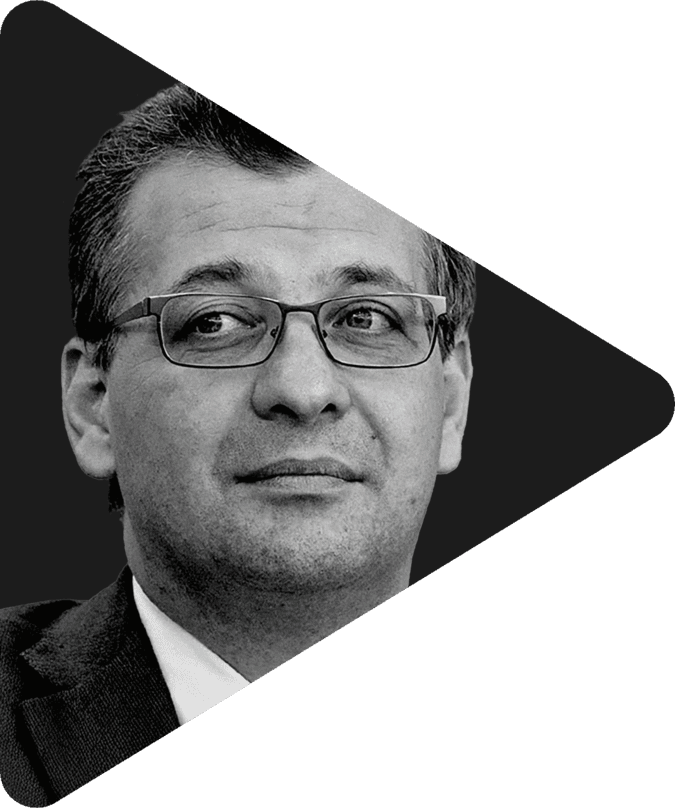
VTB President Andrey Kostin

In a BBC interview with Stephen Sackur, President of VTB Bank Andrey Kostin says that when it comes to former Yukos chairman Mikhail Khodorkovsky’s time in prison, “enough is enough.”

When pressed by Sackur, the Russian banker somewhat surprisingly (given his ties to Putin) says that Khodorkovsky should be set free and agrees with the interviewer that his release would be symbolically important, giving confidence to foreign investors.

To watch the whole interview, click here: http://news.bbc.co.uk/2/hi/programmes/hardtalk/9736303.stm.

  • Share/Bookmark
Categories: Uncategorized Tags:

Rouble falls the three-year lows amid eurozone and oil fears

June 4th, 2012 No comments

Lenin looks concerned with the rouble's recent performance

The AFP is reporting that the rouble reached a new three-year low Monday as worries increased regarding the eurozone crisis and falling oil prices.

Problems in the eurozone have compelled investors to flee to safer currencies, and investors remain concerned about capital flight from Russia, as some $35 billion left the country during the first quarter.

Urals blend crude was down to $96 a barrel Monday. For Russia to be able to balance its federal budget, oil prices must reach between $110-$120 a barrel.

  • Share/Bookmark

TNK-BP may be losing its BP

June 1st, 2012 No comments

The New York Times is reporting that BP is looking to sell its 50 percent stake in TNK-BP, its joint Russian venture, for upwards of $30 billion. ”Disputes with BP’s Russian billionaire partners in the joint venture and threats of legal action had cast a shadow over the investment,” write Julia Werdigier and Andrew Kramer.

TNK-BP chairman Mikhail Fridman resigned earlier in the week, suggesting trouble in the company - a sentiment echoed by a statement issued Friday by Alfa Access Renova, or AAR, which is BP’s Russian partner in TNK-BP:

It has become apparent that the parity ownership structure has become inoperable given fundamental differences over strategy and governance between A.A.R. and BP.

Analysts were not all that surprised about news of the impending sale, given the difficulties Western companies often have doing business in Russia.  Jefferies & Co. analyst Iain Reid told the Times that in Russia, “Corporate governance and trust has collapsed, [TNK-BP] is not paying dividends, and they can’t take broad decisions. It’s probably more trouble than it’s worth at the moment.” Read more here.

  • Share/Bookmark

Yea or nay on privatization?

May 31st, 2012 No comments

This week, Vladimir Putin called on the government to come up with a plan to sell minority stakes in Rosneft and Gazprom but then allowed Rosneftegaz, a holding company chaired by Igor Sechin with a 75 percent stake is Rosneft, ”to buy up shares of other state-owned energy companies that had been earmarked for privatization,” reports the Wall Street Journal.

So which is it?

Investors were eminently confused. ”It’s not clear yet what final shape this will take,” Troika Dialog analyst Valery Nesterov told the Journal.

Read more here.

  • Share/Bookmark
Categories: Uncategorized Tags:

Kasparov on “The Myth of a U.S.-Russia Strategic Partnership”

May 21st, 2012 No comments

Garry Kasparov

United Civil Front leader Garry Kasparov writes in the Wall Street Journal today that given Vladimir Putin’s repression of his own people and the way he cozies up to dictators (Chavez, Assad, Lukashenko), the U.S. should not be interested in a strategic partnership with the Kremlin.

Rather, he writes, U.S. lawmakers should do what they can to promote human rights in Russia, namely through the  passage of the Sergei Magnitsky Rule of Law Accountability Act, which would “bring visa and asset sanctions against Russian government functionaries culpable of criminal and human rights abuses.”

Read Kasparov’s entire op-ed here.

  • Share/Bookmark

Analysts anxious about Putin’s cabinet picks

May 11th, 2012 No comments

Natalia Orlova

The Moscow Times reports that market analysts in Russia are anxiously awaiting President Vladimir Putin’s picks for cabinet before prognosticating about the Russian economy.

Investors are waiting to see if Putin’s choices for top economic posts are serious about implementing the reforms necessary — stopping corruption, respecting property rights,  tamping down the bureaucracy – to instill confidence in both domestic and foreign investors.

Alfa Bank chief economist Natalia Orlova told The Moscow News’ Natasha Doff:

The litmus test will be the announcement of a new cabinet and how committed the new team will be to reform. Putin has presented his goals, but the question of who will make sure the goals are implemented depends on the composition of the cabinet.

Deutsche Bank economist Yaroslav Lissovolik added: ”A specific list of priorities that may encapsulate a short-term reform program [...] is the biggest question mark for investors and it is something that will probably ultimately decide the overall vector of the stock and financial markets this year.”

After last December’s rigged Duma elections and post-election protests, investors pulled out of the market in droves, citing political uncertainty.

  • Share/Bookmark
Categories: Uncategorized Tags:

CREF’s Ivlev and Misamore respond to Exxon-Rosneft deal

April 30th, 2012 No comments

On Monday, April 16, ExxonMobil and Rosneft signed a strategic agreement that will open American domestic oil and gas fields to Russian investment. As part of the deal, Rosneft will have a 30% stake in Exxon projects in the Gulf of Mexico, western Texas and in Canada.

Earlier, the offshore exploration partnership had announced that it would invest upward of $500 billion in developing Russia’s vast energy reserves in the Arctic and Black Sea, where hydrocarbon reserves are estimated at about 85 billion barrels in oil-equivalent terms.

“Today really is a historic day,” said Rex Tillerson, CEO of Exxon Mobil, at the signing ceremony. “It marks the beginning of a new and broader relationship between our companies.” Igor Sechin, former Rosneft chairman and the architect of the deal, pointed out that the enormous potential for the U.S.-Russia cooperation could help the countries “overcome [their] over-politicized relationship.”

While the oil majors celebrated these achievements, some analysts pointed out that the deal represents Rosneft’s official legitimization of the assets stolen from Yukos and its shareholders, including hundreds of American investors.

Founder of the Committee for Russian Economic Freedom Pavel Ivlev has criticized Exxon’s decision to work with Rosneft. In his statement, quoted by the Financial Times, he said: “As it becomes a key partner to a Kremlin-run concern, Exxon can either play a formative role in pushing for much-needed rule of law protections in Russia or it will bear responsibility for abetting the Putin regime as it launders its ill-gotten gains and seeks to expand its personal wealth at the expense of the Russian people.”

Former Yukos CFO and CREF’s expert Bruce Misamore responded to the news with an op-ed in the Moscow Times. “Exxon is investing with a company whose largest assets were stolen from Yukos shareholders by the Russian government. What is ‘legitimate’ about theft? […] There is no doubt that [former Yukos] shareholders would not agree with the Kremlin’s toadies that any form of ‘legitimization’ whatsoever has occurred,” he wrote.

In a letter to the editor of the Washington Times, Misamore also noted that in September 2011, the European Court of Human Rights ruled that the tax and legal actions that led to Yukos’ forced bankruptcy were illegal. Today, former Yukos assets comprise up to three-quarters of Rosneft’s value.

According to Misamore, “The court has asked both sides to begin “just satisfaction” negotiations, which, in effect, means a price tag will be placed on Russia’s penalty. Yukos will soon submit its significant request for reparations, and the ball will then be firmly in Russia’s court.”

In other words, Exxon and other foreign investors must be very brave to be doing business with the Kremlin. They seem well aware of the risks. They should keep in mind that if justice is restored and the stolen assets are ever returned to Yukos, the reparations for its shareholders could be collected from Rosneft’s partners.

  • Share/Bookmark
Categories: Uncategorized Tags:

Can corruption in Russia ever be defeated?

March 27th, 2012 No comments

Russian news agency Interfax reports that the vast majority of Russians believe the amount of corruption in Russia to be excessive, but they also feel that the nation’s leaders cannot or will not do enough to stop it.

Some 81 percent of the respondents to a national poll conducted mid-March said the level of corruption in the country is “high,” up from 75 percent in 2010. Forty-three percent believe corruption cannot be eradicated, as opposed to 39 percent who said it can be eliminated one day.

Meanwhile more than a third (35 percent) of the Russian electorate said they could not judge the work of President Dmitry Medvedev after nearly four years. (Imagine a third of the U.S. population not being able to judge a president’s job after even four months.)

Even more telling, 72 percent of the respondents said they saw no difference between the policies of Medvedev and his presidential predecessor / successor, Vladimir Putin.

Read more about the polls here.

  • Share/Bookmark
Categories: News, Putin, Uncategorized, corruption Tags:

Khodorkovsky parole note drives Russian stock gains

March 26th, 2012 No comments

A report from Deutsche Bank saying former Yukos chief Mikhail Khodorkovsky has a 50-50 chance of early release is being cited as a primary cause for Monday’s bullish market in Russia, as the benchmark MICEX index rose more than 1.5 percent.

Mikhail Khodorkovsky

Deutsche Bank’s head of research and strategy for Russia Yaroslav Lissovolik wrote in a note that the odds of Khodorkovsky being granted parole are “significantly higher than any time in the past,” according to Bloomberg News.

“Releasing Khodorkovsky would boost Russian stocks five percent to 10 percent,” he added. The chief strategist at Troika Dialog also said he puts the odds of an early release for Khodorkovsky at 50-50.

Earlier this month Russia’s Presidential Council on Human Rights urged President Dmitry Medvedev to pardon Khodorkovsky ahead of Prime Minister Vladimir Putin’s inauguration, scheduled for May 7.

Medvedev did order Prosecutor General Yuri Chaika to review the guilty verdicts against Khodorkovsky. Chaika has until April 1 to present his findings.

  • Share/Bookmark

Guest post: Foreign investment should be wary of Putin’s return, by James Kimer

March 12th, 2012 No comments

Vladimir Putin’s inevitable return to the throne in Russia shouldn’t have come as a surprise to the business community, but nevertheless markets are showing some early signs of unease in response to the election result. 

Although shares began the week with a slight rise, the violent arrests of hundreds of protesters caused the RTS Index to sag by 4.4%, while U.S.-traded shares slid the most in three months.  Bond market yields on Russia’s 2020 dollar bonds fell to their lowest since they were issued in April 2010, while the ratings agency Fitch announced that it would re-evaluate its outlook for the country.

These developments are in many ways counterintuitive.  Money doesn’t care about democracy, human rights, or freedom of expression; it is instead attracted to stability, predictability, and opportunities for growth.  On the surface, having 16 continuous years of the same leader in Russia would seem like the definition of stability, but upon closer examination, there is actually very little continuity of the 2000-2007 boom that brought Russia into the ranks of the BRIC economies.

First, there have been key changes in the administration’s staff, with the notable departure of Finance Minister Alexei Kudrin, the individual who has been credited with building up Russia’s foreign reserves.  Mr. Kudrin was not removed from his post over performance, but instead tendered his resignation last fall because the Kremlin continually ignored his warnings that the administration was over-exposed.

Alexei Kudrin

“Over several months, despite my numerous objections, public and otherwise, decisions were taken regarding budget policy which undoubtedly increased the risks to budget execution,” Kudrin wrote in his resignation statement last September.   “These risks [would] spread inexorably to the whole national economy.”

Unfortunately, there is little indication that the Russian government has heeded Kudrin’s warnings, and have instead further over-extended fiscal commitments while remaining overwhelmingly dependent on oil prices and subject to future price swings.

Because of the deepening unpopularity of Vladimir Putin prompted by the protest movement, he was compelled to extend extravagant populist spending promises in order to shore up support for the election, including pay raises for all public sector workers.

Although in a recent speech, Putin said that his new spending promises would not exceed 1.5% of annual GDP, independent sources say otherwise.  An independent assessment by Capital Economics calculates the total bill for election-related promises will be even higher, reaching 4.8 trillion roubles ($165 billion) per annum, or 4-5% of GDP.  Meanwhile, Fitch Ratings points out that the new defense, healthcare, public wages spending are unsustainable:  “If delivered, these increases could cost $160 billion, or 8% of projected gross domestic product (GDP), over his six-year term (…) pushing up the fiscal breakeven oil price to around $117 per barrel for 2012.”  These unfunded fiscal commitments will soon put significant pressure on the stabilization fund, which will quickly gnaw away at investor confidence.

If foreign investors believe that another go-around with Vladimir Putin means a reduction in political risk, they should run the numbers.  In January and February of this year, spending rose by 37% compared to a year earlier. That’s more than twice the 14% increase previously budgeted for 2012 – itself more than double expected inflation of 6%, while the implied expectation that oil stay well above $117 a barrel represents a seriously risky bet.

During the presidency of Dmitry Medvedev, who, despite being constrained by the looming veto of the prime minister, there was an emphasis placed on economic modernization, as the government pursued policies to build innovation capacity, higher education, technical training, and special tax incentives to attract research and development investments.  Under Putin, we can expect such efforts to diversify the economy to be halted and reversed, while dependency on oil exports deepens even further.

Justin Burke of EurasiaNet has argued that Putin has had very little success in moving Russia away from oil.  During his tenure, “The performance of knowledge-based economic sectors have experienced declines,” he writes.  “The share of equipment and machinery, for example, fell from 10.9 percent of all exports in 1999 to 4.5 percent in 2011. Meanwhile, exports of chemical products declined from 8.5 percent of overall exports in 1999 to 6 percent in 2011.”

Adding to these basic structural challenges, most analysts believe that Putin’s strident anti-American and anti-Western outlook will contribute to a deterioration of diplomatic relations among trade partners, further reducing its opportunities to reach new markets through its new status as a World Trade Organization member.

Many bankers maintain a rosy outlook on Putin’s ability to competently manage the economy, however, these same analysts concede a direct tie between their confidence in the Russian economy and the strength of the protest movement, which alone should be cause for concern.

In an environment of growing opposition, unpunished corruption, and unsustainable fiscal exposure, the investment community would be wise to revisit the “stability narrative” and realize that today’s Russia is a different world from the last Putin administration.

James Kimer is president of K Social Media Solutions.

  • Share/Bookmark