Archive

Archive for February, 2011

Deputy Russian PM Sechin Sees Weakness as Investment Strength in Russia

February 24th, 2011 No comments

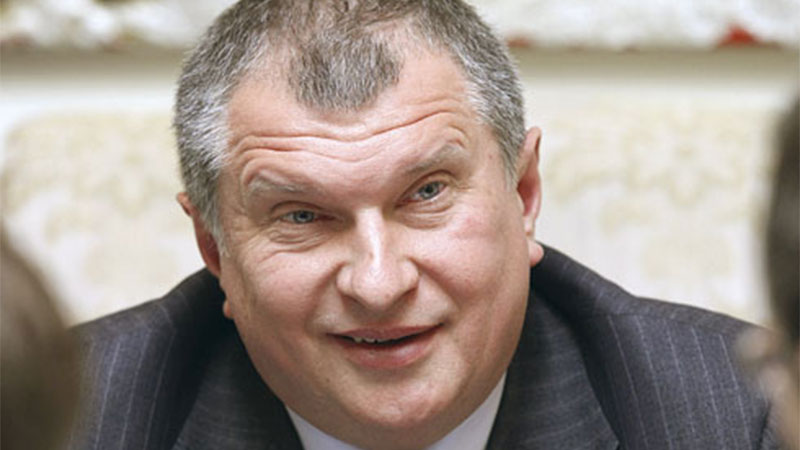
Deputy Prime Minister Igor Sechin, Russia’s top energy official and one of Prime Minister Vladimir Putin’s closest political allies, offered valuable insight into the nation’s investment climate during a rare interview with the Wall Street Journal. Sechin portrayed the risks that fueled an estimated 25 percent decline in direct foreign investment last year as strengths. Remarkably, Sechin asserted that the controversies involving Yukos, Hermitage Capital Management and the troubled BP/OAO Rosneft deal prove Russia is a safe bet for investors. Hermitage CEO William Browder responded that Sechin’s assessment will further erode investor confidence.

The risk of losing one’s business in Russia today is real. But it is not the greatest risk investors face. Investors in Russia risk losing their lives.

  • Share/Bookmark

Medvedev’s “Drinking Problem”

February 23rd, 2011 No comments

Russian Productivity Lags as Alcohol Consumption Soars

Russian President Dmitry Medvedev, PHOTO: AFP

Along with the corruption and red tape, Western corporations mulling risk premiums on investments in Russia have long discounted the impact excessive alcohol consumption has had on plummeting worker productivity. But despite decades of sobriety campaigns, the Kremlin now estimates that Russians consume 32 pints of pure alcohol per capita per year, more than double the World Health Organization’s recommended maximum. Andrew Osborn of the Telegraph reports that an estimated 500,000 people die for alcohol-related reasons in Russia every year, something President Dmitry Medvedev has dubbed “a national disaster.”

So along with battling bribery, modernizing operations, simplifying regulations and creating reliable infrastructure, add reducing the number of alcohol-related “sick days” to President Medvedev’s daunting to-do list as he fights to lure crucial outside investment.

  • Share/Bookmark

NEWS: Russia finance minister warns economic change not possible without political change

February 18th, 2011 No comments

Russia's Finance Minister Aleksei Kudrin

On Wednesday Prime Minister Vladimir Putin, the unspoken leader of the power tandem in Russia, met with leading economic experts to discuss Russia’s socio-economic development for 2020. According to Russia Profile:

The need for diversification of its resource-based economy has weakened the government’s tight control over the country’s vast resources…Putin, who has used such control in the past to provide a semblance of economic and political stability, now wants experts to put a more modern and efficient strategy in place.

And then in a speech today at the Krasnoyarsk Economic Forum, Russia’s finance minister Aleksei L. Kudrin said that executive management of the government has been “very weak” and said that economic change is not possible without political change. “Just and fair” elections being essential in reestablishing trust with the investment and business communities. 

While avoiding the word corruption, Kudrin describes Russia’s economic policies as being determined by relationships, not the rule of law. He goes on saying,

There seem to be rules of the game, but then it turns out they are circumvented. Instead of upholding the letter of the law, we do whatever we want. As a result, we have a very weak system of management. Questions about mergers and acquisitions, or access to resources are often solved in officials’ offices. We must get away from this unsound practice.

Some experts think that Kudrin’s words demonstrates support behind Medvedev’s modernization efforts, but the inner workings of the Russian government have never been more opaque then it is now.

  • Share/Bookmark

NEWS: European Parliament pass Joint Resolution on the Rule of Law in Russia

February 17th, 2011 No comments

A joint resolution from the European Parliament was published yesterday and successfully adopted by the European Parliament this afternoon, the subject of which was “The Rule of Law in Russia.”

The EU Parliament points out that Russia, as a member of the Council of Europe, has signed up to fully respecting European standards as regards democracy, fundamental and human rights and the rule of law.
The motion urges the EU President to forward the resolution to the Council, the Commission, the governments and parliaments of all member states including the Russian Federation.

Watch the debate that preceded the passing of this motion and see the EU Parliament resolution below.

EU Parliament’s Resolution on the Rule of Law in Russia

  • Share/Bookmark

Kremlin and the Capital Markets

February 14th, 2011 No comments

Arkadi Gontmakher, the owner of Global Fishing Inc., based in Bellevue, Washington, was the largest importer of the Russian crab in the United States. Gontmakher was arrested in Moscow in 2007 when he was arrested and charged with poaching, money laundering and organizing a criminal organization. After being acquitted in December 2010, he was rearrested and charged with the same charges again. The Washington Post describes his situation this way:

Gontmakher was caught up in a criminal justice system that makes doing business here a high-risk enterprise – one in which those in power, or with access to power, routinely use the police and courts to crush their commercial rivals, and in which being tried twice for the same crime is a matter of course, if that’s what it takes to keep someone out of circulation. 

This hand’s on approach to managing the economy is also shown through the capital markets. The Russian leadership of Vladimir Putin, Dmitry Medvedev and Igor Sechin have all called for increased foreign investment and strategic asset sales to boost the economy. Of the four companies that announced IPOs to close last week, only one, VTB, the state-owned bank came to the market. The other three, all private sector companies, Severstal, Chelpipe and HMS all abandoned their IPOs due to poor market conditions.

Here is the Financial Times’s assesment of Russia’s capital markets:

Russia’s private entrepreneurs have to take their chances when they know the Kremlin is in the market. The fact that three non-state issues were pulled reflects badly on the sellers and their advisers – the prices they sought were clearly too high. But the Kremlin should be concerned about the damage done to Russia’s reputation in the market.

  • Share/Bookmark

Top Ten Reasons to Rethink Investments in Russia

February 11th, 2011 No comments

Reason One: Chances are you and your clients will lose money.

Russia is “one of the world’s riskiest locations for business to invest in,” according to a survey of 196 nations by U.K risk-assessment company Maplecroft. Russia is the 10th-riskiest country for investors, sliding from 15th last year to place between Pakistan and the Central African Republic, concluded Maplecroft’s annual Political Risk Atlas released in December 2010.  Brazil, India and China, which along with Russia make up the so-called BRIC group of leading emerging-market economies, are ranked 94th, 26th and 62nd, respectively. Russia’s “poor performance is compounded by its ‘extreme risk’ ratings for its business environment, corporate governance and the endemic nature of corruption, which is prevalent throughout all tiers of government,” Maplecroft said.

Reason Two: Russia is the world’s most corrupt major economy.

Little surprise that Russia is also the world’s most corrupt major economy, according to Transparency International’s 2010 Corruption Perceptions Index issued in October, sliding to the 154th spot of 178 countries and placing it alongside Tajikistan and Kenya.

Reason Three: Even President Medvedev says conditions are “very bad.”

Following the conviction of former Yukos CEO Mikhail Khodorkovsky on a second round of trumped up charges in December 2010, President Dmitry Medvedev noted that only 14 companies went public on his country’s market in 2010. “This is nothing to be proud of,” Medvedev told business leaders. “Part of the problem is, of course, is our investment climate, which is bad. Very bad.”

Reason Four: It’s not worth the hassle and you could wind up in jail or worse

The conviction of former Yukos Chairman Mikhail Khodorkovsky’s on a second round of trumped up charges in December 2010 may have “unintended repercussions” for business in Russia, state-controlled VTB Capital said Dec. 31.The “most disturbing detail” was the court’s rationale for the verdict, VTB said. Charges based on Yukos’s use of internal transfer pricing, which redistributes cash flows among units of a holding company, creates a precedent that leaves other businesses open “to attack.” Meanwhile, lawyers in the U.S. are racking up massive billable hours representing corporation and their board members fearing prosecution under tougher Foreign Corrupt Practice Act enforcement. Moreover, CEOs are feeling pressure from board members and shareholder groups to avoid the financial and legal nightmare associated with getting entangled in corruption scandals in Russia and elsewhere. And anyone thinking about investing in Russia ought to remember what happened to corporate counsel Sergey Magnitsky when he tried to defend investor rights in Russia – he died under brutal conditions in a Moscow jail.

Reason Five: Small investors lose, too

Only the the bravest, or most foolhardy, of small investors would consider wading into the Russian swamp, Brian Milner wrote in the Globe and Mail, citing Peter Zeihan of Stratfor, a global intelligence firm based in Austin, Tex. “Russian law, when it comes to portfolio investments, is at best inconsistent,” Zeihan said. “I don’t think we’re ever going to see a rebound of activity to the levels we saw in 2006-07. Too many people have been burned.” Russia, Zeihan said, “is not a global player economically in any way, with the exception of energy sales to Europe. That’s all they’ve got. I don’t mean to say it’s small, but it’s certainly narrow. And the Europeans, to be perfectly blunt, are pretty sick of the Russians. So any time there’s a decrease in demand in Europe, the first importer that gets cut is Russia.” The country, he says, is “in a long, slow twilight. They’re going to have a couple of great years while the Europeans are in a mess. And they have relative strength because the Americans are distracted in the Middle East. But they realize that they’re on borrowed time.”

Reason Six: The Russian equity market’s bad reputation is priced in

There is little doubt that Russia has a poor image and this is probably why its stock market is one of the most lowly-rated of the emerging economies, with an average price-to-earnings ratio of about seven or eight times, the Moscow Times reported.

Reason Seven: Putin’s vendettas hurt the economy and scare away investors

Arkady Dvorkovich, the Duke University-educated aid to Medvedev, said that “a significant part of the international community will have serious questions” about the Khodorkovsky case and that “the assessment of the risks of working in Russia will increase.” Moreover, Roland Nash, co-founder of Verno Capital and a 16-year veteran of doing business in Moscow, told journalist Chrystia Freeland that the Khodorkovsky case had exacted a real, quantifiable economic cost. “The Russian equity market would be worth several hundred billion dollars more if it weren’t for the critical Western perception of Russia, and the Khodorkovsky case is the principal example of that perception,” Nash said. “Within Russia, everyone who matters understands exactly what the Kremlin is trying to say: that there is no one above the rule of the Kremlin.”

Reason Eight: The smart money is going out, the dumb money is going in.

The unreasonably harsh punishment of unbreakable Khodorkovsky and Lebedev shows that this system has grown so thoroughly corrupt that by trying to prove its power it actually destroys its credibility

analyst Pavel K. Baev argues. This disappointment translates into re-evaluation of business and investment prospects in the country of self-serving bureaucracy – and into capital flight that increased sharply in the last months of 2010. In 2010, total captial outflows from Russia amounted to $38 billion. President Medvedev quite possibly doesn’t understand that the Khodorkovsky case is not a minor setback for the markets, as it was five years ago, but the irrefutable verdict for his ‘modernization’ agenda.

Reason Nine: Russia is a sucker’s bet

According to Peter Cohan, president of Peter S. Cohan & Associates, a management consulting and venture capital firm:

Russia is under the illusion that it can use PR spin to dissipate investors’ concerns about its past abuses of capital providers and convince new suckers to invest there. The fate of Khodorkovsky is one particularly unpleasant example. Three cases of Russia’s hostility to outside investors:
  • How Russia used its legal system to kick out BP executives, including Bob Dudley (now BP CEO), from an energy joint venture
  • How Russia offered the founder of Hermitage Capital, an investment firm that had placed capital in Russia, the option of his life or his money
  • How Sawyer Research, a small Cleveland, Ohio, company, lost its $8 million investment in a Russian quartz plant to “creeping expropriation”
The simple reality is that investors may get seduced into a country by high growth rates, but if that growth should slow, the country’s bones will poke through.

Reason 10: Russia will remain backward as long as Putin thwarts modernization

Putin has used the second Khodorkovsky show trial to make clear that he is unwilling to ease his informal authoritarian style, even as Russia seeks a path toward modernization, according to James Beadle, an independent investment consultant and a founding partner of the financial blog Market Melange wrote in an op-ed:

Economic development is the innocent victim in this domestic power play. Russia’s business leaders may understand the message, but international investors don’t. They observe a disturbing dichotomy between words and actions. Putin has demonstrated that his arbitrary word is the law and that Russia’s legal system remains feudal. But once again, Russia’s popularity as a target for investment of all forms will be hindered by insecure political structures. Foreign direct investment will be the biggest victim. Learning from Yukos, as well as Shell, BP and many others, companies will be hesitant to invest in long-term fixed assets as long as the government’s word is the only guarantee that their rights and property will be respected.

  • Share/Bookmark

King Crab Businessman Acquitted Once, Charged Again

February 9th, 2011 No comments

Arkady Gontmakher, the owner of Global Fishing in Seattle, Washington was arrested in 2007 in Moscow for money laundering and poaching king crabs from Eastern Russia to sell to the US market. After being acquitted in December 2010, Gontmakher was charged again with money laundering on the same grounds.

After three years in pretrial detention his health has deteriorated, but he fears for his life if he has to have heart surgery in Russia

Who can guarantee that an operation can be carried out successfully under such police pressure?

Gontmakher just wants to be released and go back to the US where his wife lives. He would not continue to work in Russia, Gontmakher said — and he “wouldn’t advise that to anyone, either.”

  • Share/Bookmark

Another Moscow “Masky Show” Spotlights Risks of Doing Business in Russia

February 3rd, 2011 No comments

Shockwaves rolled through the Russian investment community today with news that masked policemen stormed Deutsche Bank’s main Moscow office grilling bankers and frightening employees. The raid, reportedly tied to a probe of investments by a political foe of Putin, Inc., comes just days after President Medvedev unveiled a plan to establish Moscow as an international financial center akin to Hong Kong and Singapore.

The New York Times reported today:

Whatever the legal or political missteps of such clients, foreign bankers in Moscow have for years implored the government to refrain from conducting such jarring raids on bank offices. Sometimes, police wielding guns force stock analysts and economists onto the floors of their offices.

That’s not the way to boost investor confidence.

  • Share/Bookmark

BP Chief Buys Back in to Russia Despite Prior Threats from Rosneft’s Sechin

February 2nd, 2011 No comments

Russian Deputy Prime Minister Igor Sechin (left) with BP Chief Executive Robert Dudley and his predecessor Tony Hayward in August 2010 Photo: AP

It’s well known how Putin, Inc. treats its enemies, but the latest WikiLeaks revelations offer startling new details on the rough treatment it accords even its friends. The Telegraph published secret US diplomatic cables showing that current BP Chief Bob Dudley was tossed from his prior post leading the energy company’s Russian unit, TNK-BP, following a boardroom “coup” in 2008, and decided to “move around” from country to country” amid threats orchestrated by Rosneft Chairman Igor Sechin.

On January 14, 2010, Dudley and Sechin joined in praising their latest transaction under which BP would swap five percent of its shares, worth about $7.8 billion, for a 9.5 percent stake in state-controlled Rosneft. Perhaps, as the Telegraph reports, Dudley was forced to set his fears aside and cut a deal with his enemy because BP finds it necessary to look for new business ventures with Putin in light of American anger over the firm’s oil spill in the Gulf of Mexico last year.

  • Share/Bookmark
Categories: Energy Tags: , , ,