Archive

Archive for April, 2011

Russia’s investment climate cools while Sino-Russian pipeline dispute heats up

April 27th, 2011 No comments

HSBC is the latest foreign bank to pull out of Russia. Less than two years ago, HSBC targeted $200 million towards its Russian retail expansion only to have it close, following fellow Anglo bank Barclays that removed its retail banking presence from Russia in February. According to HSBC’s statement by Russia Chief Executive Officer Huseyin Ozkaya,

it’s clear that the strongest opportunity for HSBC in Russia lies in servicing corporate and institutional clients.

But it’s far from clear that Russia is a good place for institutional clients. In a recent Emerging Markets Private Equity Association study, Russia’s attractiveness for private equity deals was ranked lower than the other BRIC countries, Brazil, China and India and even lower than the Middle East and African countries. Carlyle co-founder David Rubenstein said in Berlin last month,

Russia has not proven to be a place where Western private-equity investors can have the returns and realize the profits commensurate with the risks they’ve had to take.

This is reflected in the amount of private equity investment dollars that flow to Russia. Over the last three years, Russia received $1.4 billion in private equity investment, but that pales to the amounts that China ($28.6 billion), India ($15 billion) and Brazil ($5 billion) received.

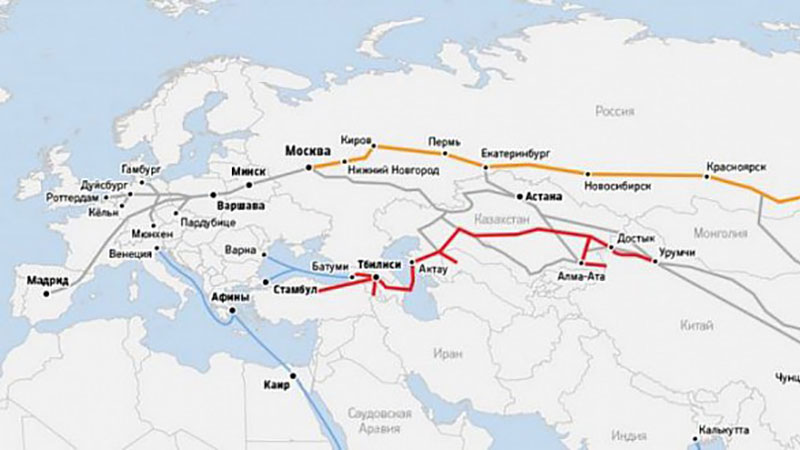
China’s economic clout is also seen in other ways in its interactions with Russia. Transneft, the Russian pipeline company has accused China National Petroleum Company (CNPC) of violating the contract that established the Russia-China Crude Pipeline. The contract indicated that China would pay market prices for the oil, but now they are seeking an adjustment on the price as well as double the amount of oil as previously agreed upon. Despite Transneft spokesman Igor Dyomin’s recent comments about China’s lower price demand, Chinese Foreign Ministry spokesman Hong Lei insists all is going well with the pipeline. Only time will tell which side will prevail.

  • Share/Bookmark

Medvedev style modernization

April 19th, 2011 No comments

Over the past week the plug seemed to be pulled on the BP-Rosneft deal, only to have the Kremlin step in and resuscitated it with a deadline extension to the middle of May. Despite government meddling in this case, there have been other signs that President Medvedev has moved further away from Putin’s managed democracy and the rule of law are taking hold.

Pavel Felgenhauer writes in the the Eurasia Daily Monitor

Russia’s tandem rulers – President Dmitry Medvedev and former president and current Prime Minister Vladimir Putin – continue to profess their friendship, but these statements are increasingly unconvincing as the presidential elections that will install a new head of state for six years come closer. In Russia elections are shamelessly rigged and results prearranged by a corrupt bureaucracy, so the nomination of an official candidate is indeed the election per se, while the casting of the popular vote is a public relations exercise, mostly intended to appease foreigners and gain international legitimacy. The present tandem arrangement with Putin as the all-powerful prime minister officially sitting in the backseat with Medvedev performing the role of a largely figurehead president cannot continue much longer, certainly not for another six years, as it is already beginning to visibly crack.

Last year, President Medvedev signed into law that those charged with economic crimes should not have to face severe pre-trial detention, however, Russia’s best known political prisoner Mikhail Khodorkovsky has been in pre-trial detention since the start of his second trial. In an appearance before Russia’s Supreme Court, Khodorkovsky won his detention appeal.

The decision was a moral victory for Khodorkovsky, who was sentenced to remain in prison until 2017 in a December ruling condemned by Western governments and rights groups, but it will not lead to his release.

Are these signs that Medvedev’s power is ascending? Ordering top government officials to step down from their directorships of large Russian owned companies has not drawn comment from Putin, who set up the system. Perhaps this is a glimpse of modernization in action, Medvedev-style.

  • Share/Bookmark

BP-Rosneft Deal on Hold Indefinitely, Investors in Russia Told to Study Kremlinology

April 8th, 2011 No comments

In London, an injunction prohibiting the share-swap agreement between BP and Rosneft was issued indefinitely. The group Alfa Access Renova (AAR) had an agreement with BP as their investment partner in Russia. BP, still reeling from the Gulf Oil disaster looked to the deal with Rosneft to expand their exploration into the Arctic Circle. BP’s shares have gained 2.6 percent so far this year but still trade well below their value of before the Gulf Oil Spill. The injunction is likely to give AAR more leverage, and money, from any resulting BP-Rosneft deal.

WSJ’s Heard on the Street urged potential investors in Russia to study Kremlinology, the study of the murky underbelly of the Russian government. When BP made the deal with Rosneft, it no doubt received strong support from the Russian government since Igor Sechin is both chairman of Rosneft, deputy prime minister and close confidante of Prime Minister Vladimir Putin. Despite these close ties, the Kremlin has not used its muscle to lean on AAR to forgo their legal battles against BP and Igor Sechin is about to lose his chairmanship at Rosneft.

Despite these and other efforts by President Dmitry Medvedev to make Russia more enticing to foreign investors, critical factors remain:

The country needs to attract more foreign direct investment: It fell 13% to $13.8 billion last year, half the level in 2007. Gross domestic product growth could fall to 2.5% to 3% per year in the next 10 years, compared with 6% to 7% in the last decade unless annual foreign direct investment is ramped up toward $75 billion, investment bank Uralsib forecasts. The government wants foreign investors to participate in a planned $35 billion of state-owned company flotations in the next three years. Industries from farming to oil and gas also need foreign expertise to develop.

…so long as former Yukos boss Mikhail Khodorkovsky languishes in jail, many will be sceptical Russia’s legal system is truly independent. Political risk is the reason Russian equities trade at 9.1 times expected 2011 earnings, a 20% discount to their emerging market peers. It would take a brave Kremlinologist to bet on that gap closing.

  • Share/Bookmark

Kremlin’s top dogs tussle for poll position

April 7th, 2011 No comments

Russian politics, Churchill said, is like watching two dogs fighting under a carpet. Lately, however, Russia’s top political dogs have shed the rug and are nipping openly at each other’s heels.

First, Vladimir Putin, the prime minister, likened western military action in Libya to the crusades, before Dmitry Medvedev, the president, told him, in essence, to hold his tongue.

Then, last week, Mr Medvedev ordered ministers to leave the boards of state-controlled companies. That struck at the heart of “Kremlin Inc” – the intertwined political and economic system Mr Putin created. Putin loyalists were affected, including Igor Sechin, a close ally for two decades and linchpin of a planned alliance between Rosneft, the oil company he chairs, and Britain’s BP.

Deep in the corridors of the Kremlin, it is clear the starting gun has been fired for presidential elections just under a year from now. Less clear, with Mr Putin expected to decide which man will be the presidential candidate – and to remain Russia’s most powerful figure, whatever position he holds – is what the dogfights are really about.

They may be an attempt to stimulate interest among Russians who are wearying of tightly controlled politics: Russians are unlikely to erupt into Middle East-style unrest. But a sense of popular disillusionment is adding to nervousness in business and political elites over the looming election, which is stifling domestic investment and contributed to $21bn of capital flight in the first quarter of 2011, despite a buoyant economy.

The jostling may be an attempt to prevent either figure becoming a lame duck. Mr Medvedev’s assertiveness could be a pitch to keep his job or it could be another feint. The Kremlin spent much of 2007, before the last elections, building up the conservative Sergei Ivanov as presidential heir apparent – until Mr Putin chose Mr Medvedev.

Neither side wants to be outdone. Mr Medvedev has positioned himself as the “modernisation” candidate, calling for Russia to develop high-tech industries to reduce reliance on oil. A liberal think-tank, the Institute for Contemporary Development, whose trustees Mr Medvedev chairs, has urged radical reform, including more democracy.

Mr Putin has formed his own task force of freethinking economists, including Vladimir Mau, an academic who worked with post-Soviet reformers Yegor Gaidar and Anatoly Chubais. Their conclusions resemble those presented to the president, minus democratic reform, an area people involved say was kept outside their remit.

Yet the worry for the powers that be is that voters seem jaded. Russian media have reported young professionals emigrating, fleeing the prospect of the same figures remaining in power for years to come.

Opinion polls show support for both men, still high by western standards, has fallen to its lowest for years. The dominant pro-Kremlin United Russia party performed comparatively poorly in regional elections last month.

Pollsters suggest support is waning, above all, among the growing urban middle class, perhaps 15 per cent of the electorate. Blog-reading, property-owning Russians are finally demanding a system responsive to theiraspirations.

A think-tank originally set up by German Gref, Mr Putin’s first economy minister, warned last week of a looming crisis because of the “fast-growing delegitimisation” of today’s leadership among many Russians. The only solution was to introduce more competition and new faces into the system.

The Kremlin has reacted in typical fashion, by toying with turning the shell of a 1990s-era party into a “tame” liberal group that could enter the ossified parliament in elections in December and champion middle-class interests. Talks have reportedly been held with liberal-leaning officials including Igor Shuvalov, a deputy prime minister, about leading the party.

Fringe pro-democracy politicians, outside the Kremlin-approved system, suggest this savvy new middle class would never fall for another “fake” party. They are targeting this electorate themselves.

One leading intellectual, echoing Russians at all levels, agrees that rampant corruption, now at the level of a “kleptocracy”, is a central issue. High natural resource revenues may see the leadership through the next elections, and buy support for a while yet. But within five or six years, he says, “change must come. If it doesn’t come from the top, it will come from below.”

The Financial Times Limited 2011

  • Share/Bookmark