Archive

Posts Tagged ‘capital markets’

Kremlin and the Capital Markets

February 14th, 2011 No comments

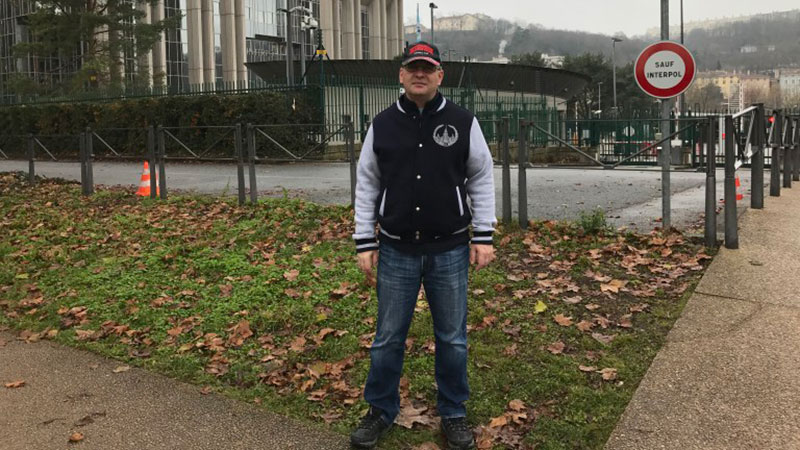
Arkadi Gontmakher, the owner of Global Fishing Inc., based in Bellevue, Washington, was the largest importer of the Russian crab in the United States. Gontmakher was arrested in Moscow in 2007 when he was arrested and charged with poaching, money laundering and organizing a criminal organization. After being acquitted in December 2010, he was rearrested and charged with the same charges again. The Washington Post describes his situation this way:

Gontmakher was caught up in a criminal justice system that makes doing business here a high-risk enterprise – one in which those in power, or with access to power, routinely use the police and courts to crush their commercial rivals, and in which being tried twice for the same crime is a matter of course, if that’s what it takes to keep someone out of circulation. 

This hand’s on approach to managing the economy is also shown through the capital markets. The Russian leadership of Vladimir Putin, Dmitry Medvedev and Igor Sechin have all called for increased foreign investment and strategic asset sales to boost the economy. Of the four companies that announced IPOs to close last week, only one, VTB, the state-owned bank came to the market. The other three, all private sector companies, Severstal, Chelpipe and HMS all abandoned their IPOs due to poor market conditions.

Here is the Financial Times’s assesment of Russia’s capital markets:

Russia’s private entrepreneurs have to take their chances when they know the Kremlin is in the market. The fact that three non-state issues were pulled reflects badly on the sellers and their advisers – the prices they sought were clearly too high. But the Kremlin should be concerned about the damage done to Russia’s reputation in the market.

  • Share/Bookmark

Top Ten Reasons to Rethink Investments in Russia

February 11th, 2011 No comments

Reason One: Chances are you and your clients will lose money.

Russia is “one of the world’s riskiest locations for business to invest in,” according to a survey of 196 nations by U.K risk-assessment company Maplecroft. Russia is the 10th-riskiest country for investors, sliding from 15th last year to place between Pakistan and the Central African Republic, concluded Maplecroft’s annual Political Risk Atlas released in December 2010.  Brazil, India and China, which along with Russia make up the so-called BRIC group of leading emerging-market economies, are ranked 94th, 26th and 62nd, respectively. Russia’s “poor performance is compounded by its ‘extreme risk’ ratings for its business environment, corporate governance and the endemic nature of corruption, which is prevalent throughout all tiers of government,” Maplecroft said.

Reason Two: Russia is the world’s most corrupt major economy.

Little surprise that Russia is also the world’s most corrupt major economy, according to Transparency International’s 2010 Corruption Perceptions Index issued in October, sliding to the 154th spot of 178 countries and placing it alongside Tajikistan and Kenya.

Reason Three: Even President Medvedev says conditions are “very bad.”

Following the conviction of former Yukos CEO Mikhail Khodorkovsky on a second round of trumped up charges in December 2010, President Dmitry Medvedev noted that only 14 companies went public on his country’s market in 2010. “This is nothing to be proud of,” Medvedev told business leaders. “Part of the problem is, of course, is our investment climate, which is bad. Very bad.”

Reason Four: It’s not worth the hassle and you could wind up in jail or worse

The conviction of former Yukos Chairman Mikhail Khodorkovsky’s on a second round of trumped up charges in December 2010 may have “unintended repercussions” for business in Russia, state-controlled VTB Capital said Dec. 31.The “most disturbing detail” was the court’s rationale for the verdict, VTB said. Charges based on Yukos’s use of internal transfer pricing, which redistributes cash flows among units of a holding company, creates a precedent that leaves other businesses open “to attack.” Meanwhile, lawyers in the U.S. are racking up massive billable hours representing corporation and their board members fearing prosecution under tougher Foreign Corrupt Practice Act enforcement. Moreover, CEOs are feeling pressure from board members and shareholder groups to avoid the financial and legal nightmare associated with getting entangled in corruption scandals in Russia and elsewhere. And anyone thinking about investing in Russia ought to remember what happened to corporate counsel Sergey Magnitsky when he tried to defend investor rights in Russia – he died under brutal conditions in a Moscow jail.

Reason Five: Small investors lose, too

Only the the bravest, or most foolhardy, of small investors would consider wading into the Russian swamp, Brian Milner wrote in the Globe and Mail, citing Peter Zeihan of Stratfor, a global intelligence firm based in Austin, Tex. “Russian law, when it comes to portfolio investments, is at best inconsistent,” Zeihan said. “I don’t think we’re ever going to see a rebound of activity to the levels we saw in 2006-07. Too many people have been burned.” Russia, Zeihan said, “is not a global player economically in any way, with the exception of energy sales to Europe. That’s all they’ve got. I don’t mean to say it’s small, but it’s certainly narrow. And the Europeans, to be perfectly blunt, are pretty sick of the Russians. So any time there’s a decrease in demand in Europe, the first importer that gets cut is Russia.” The country, he says, is “in a long, slow twilight. They’re going to have a couple of great years while the Europeans are in a mess. And they have relative strength because the Americans are distracted in the Middle East. But they realize that they’re on borrowed time.”

Reason Six: The Russian equity market’s bad reputation is priced in

There is little doubt that Russia has a poor image and this is probably why its stock market is one of the most lowly-rated of the emerging economies, with an average price-to-earnings ratio of about seven or eight times, the Moscow Times reported.

Reason Seven: Putin’s vendettas hurt the economy and scare away investors

Arkady Dvorkovich, the Duke University-educated aid to Medvedev, said that “a significant part of the international community will have serious questions” about the Khodorkovsky case and that “the assessment of the risks of working in Russia will increase.” Moreover, Roland Nash, co-founder of Verno Capital and a 16-year veteran of doing business in Moscow, told journalist Chrystia Freeland that the Khodorkovsky case had exacted a real, quantifiable economic cost. “The Russian equity market would be worth several hundred billion dollars more if it weren’t for the critical Western perception of Russia, and the Khodorkovsky case is the principal example of that perception,” Nash said. “Within Russia, everyone who matters understands exactly what the Kremlin is trying to say: that there is no one above the rule of the Kremlin.”

Reason Eight: The smart money is going out, the dumb money is going in.

The unreasonably harsh punishment of unbreakable Khodorkovsky and Lebedev shows that this system has grown so thoroughly corrupt that by trying to prove its power it actually destroys its credibility

analyst Pavel K. Baev argues. This disappointment translates into re-evaluation of business and investment prospects in the country of self-serving bureaucracy – and into capital flight that increased sharply in the last months of 2010. In 2010, total captial outflows from Russia amounted to $38 billion. President Medvedev quite possibly doesn’t understand that the Khodorkovsky case is not a minor setback for the markets, as it was five years ago, but the irrefutable verdict for his ‘modernization’ agenda.

Reason Nine: Russia is a sucker’s bet

According to Peter Cohan, president of Peter S. Cohan & Associates, a management consulting and venture capital firm:

Russia is under the illusion that it can use PR spin to dissipate investors’ concerns about its past abuses of capital providers and convince new suckers to invest there. The fate of Khodorkovsky is one particularly unpleasant example. Three cases of Russia’s hostility to outside investors:
  • How Russia used its legal system to kick out BP executives, including Bob Dudley (now BP CEO), from an energy joint venture
  • How Russia offered the founder of Hermitage Capital, an investment firm that had placed capital in Russia, the option of his life or his money
  • How Sawyer Research, a small Cleveland, Ohio, company, lost its $8 million investment in a Russian quartz plant to “creeping expropriation”
The simple reality is that investors may get seduced into a country by high growth rates, but if that growth should slow, the country’s bones will poke through.

Reason 10: Russia will remain backward as long as Putin thwarts modernization

Putin has used the second Khodorkovsky show trial to make clear that he is unwilling to ease his informal authoritarian style, even as Russia seeks a path toward modernization, according to James Beadle, an independent investment consultant and a founding partner of the financial blog Market Melange wrote in an op-ed:

Economic development is the innocent victim in this domestic power play. Russia’s business leaders may understand the message, but international investors don’t. They observe a disturbing dichotomy between words and actions. Putin has demonstrated that his arbitrary word is the law and that Russia’s legal system remains feudal. But once again, Russia’s popularity as a target for investment of all forms will be hindered by insecure political structures. Foreign direct investment will be the biggest victim. Learning from Yukos, as well as Shell, BP and many others, companies will be hesitant to invest in long-term fixed assets as long as the government’s word is the only guarantee that their rights and property will be respected.

  • Share/Bookmark

CREF Chairman’s Open Letter to St. Petersburg International Economic Forum Attendees

June 11th, 2010 1 comment

The 2010 St. Petersburg International Economic Forum will start next week on June 17. This is a key capital markets event for investors, business people and policymakers and supported by the Russian Federation. Talk about the economy and banking is everywhere. This neatly dovetails into Russia’s own focus on economics as the main engagement point with other countries, especially those in the G20. Below is a letter from CREF’s Chairman Pavel Ivlev to forum attendees.

CREF Chairman’s Letter to St. Petersburg Economic Forum Attendees

  • Share/Bookmark

Model State Capitalist

June 10th, 2010 No comments

Zuma Press - Gazprom company worker places a Russian flag on the Nord Stream pipeline last month. The pipeline will run from Russia to Europe.

With the arrival of Ian Bremmer’s new book, “The End of the Free Market: Who Wins the War Between States and Corporations?” the future of the global economy has been set up as an epic battle between state capitalists like China and Russia and free-market capitalists like the US, EU, Japan and Canada.

State capitalists are defined by their domination of strategic assets and creation of wealth that is used to maintain and enrich the political leadership. State capitalists also tilt the marketplace in favor of state-owned companies and put multi-national corporations at a disadvantage through laws and regulations. An example of this from Ian Bremmer in the Wall Street Journal:

In December 2006, the Russian government informed Shell, Mitsubishi and Mitsui that it had revoked their environmental permits as project managers for the $22 billion Sakhalin 2 project, forcing them to halve their respective holdings and give Gazprom, Russia’s natural gas monopoly, a majority stake. This instantly wiped out 2.5% of Shell’s global reserves.

Russia is a model state capitalist as the Kremlin consolidates control over the country’s vast oil and gas reserves and increasingly pressure multi-nationals to sell their companies to state-owned entities. This recently happened with one of BP’s investments in Russia, RUSIA Petroleum.

BP purchased the Kovykta natural gas field back in the early 1990s because of its proximity to China and its enormous reserves. It created a joint venture with local businessmen to create TNK-BP. Before they could make any money, TNK-BP invested hundreds of millions of dollars to develop the infrastructure and pipelines needed to get the Kovykta gas to China.

As the project developed more Russian officials took notice and in 2007 TNK-BP was pressured to sell RUSIA Petroleum to Gazprom, Russia’s state-owned oil and gas company. That same year, the Kremlin passed a law prohibiting private gas exports from Russia, institutionalizing Gazprom’s monopolistic position.

With Gazprom the only buyer of RUSIA Petroleum and government officials dictating not only the pipeline start date but also insisting on a northern, circuitous route, RUSIA Petroleum could not get natural gas to consumers and fell behind on its loan repayments. TNK-BP, which was a creditholder to RUSIA Petroleum, is trying to recoup some of its losses by filing for bankruptcy. It will be seen whether the officials of Russia’s state government give some of TNK-BP’s money back.

Situations such as these make President Dmitry Medvedev’s goal of transforming Moscow into a global financial center and the next Silicon Valley even less likely. Matt Marshall, the only US reporter on a recent venture capitalist tour, was invited to visit Russia as part of the Kremlin’s plan to encourage more foreign direct investment. His critical assessment of Russia’s investment potential is probably not the press the Kremlin was hoping for:

Russia is the sixth-largest economy in the world, but it’s also a country relatively untouched by foreign investors, especially investors in technology. Could Russia potentially be the home of the next massive tech boom?

The short answer is: No way. At least not anytime soon. That’s the conclusion I’ve come to after a week in Moscow, a week in which I took part in the first ever delegation of US venture capital investors to visit Russia.

Now, of course, I’d be delighted if I could report that this Russia is the next India, China or Israel — all places that have seen massive foreign investment in recent years. Russia has among the highest per capita number of students in the world, boasts high levels of mathematics and science education, and being in desperate need of modernization, you’d think Russia would be a gold mine for investors. President Medvedev greeted the delegation, and made clear that technology is needed to diversify from Russian oil, gas and metals — which make up 80 percent of Russia’s total exports. That legacy industry is highly influenced by a group of about 22 so-called oligarchs — many of them exerting their power behind the scenes through corruption. Technology entrepreneurship, if it is fostered, will lead to positive change — there is no question. Everyone agrees.

But investing in Russia can be “insanity.”

The more time I spent in Russia, the more complex the story became (and I’m not the first to say that about Russia). The more I learned — about corruption, the abuses of the courts, the terribly archaic educational system, the choked up traffic, the lack of investment in infrastructure, the cultural penchant for Hobbesian brute leaders, the lack of a truly independent media, and the assassination of journalists when they do show independence — the harder it is for me see a positive short-term future for U.S.-style tech investment for this country.

  • Share/Bookmark

Russia as Janus

June 1st, 2010 No comments

Musings continue about the Foreign Ministry’s leaked policy document on engaging with the West to help Russia modernize. This new leaked policy seeks to import Western techonology and expertise to improve Russia’s infrastructure and jump start its techonolgy sector.

While Deripaska looks towards East for future initial public offerings of his other companies, notably EN+ Group, Rusal’s holding company, and OAO EuroSibEnergo, a power utility company. Rusal is the trailblazer Russian IPO on the Hong Kong Stock Exchange, but with it’s dismal performnace its first six months, it could leave a bad taste for other Asian investors. Additionally, institutional money managers are wary of Russian companies with opaque management rules and only promises of profits.

Investors both from the West and from Asia need to see commitment from the Russian government and the Russian business elite that they are serious about developing the technology and financial sectors in Russia. Russian businessman routinely top Forbes list of the world’s wealthiest; they clearly have the means to invest in domestic techonology firms. Russia’s political system as it has concentrated power to the executive branch has the political will to end corruption and strengthen the rule of law and improve its perception among foreign investors. But so far Russian businesman prefer to use their money on overseas investments while Russian politicans strengthen their own power at the expense of the country’s economic development.

  • Share/Bookmark

Build It and They Will Come

May 24th, 2010 No comments

Field of Dreams

In late 2008 President Medvedev discussed the need to create a global financial center in Moscow and recently has accelerated the process by appointing through executive decree on May 18, 2010 that Alexander Voloshin, chairman of Russia’s metals giant Norilsk Nickel, will be the newest member of a presidential council on financial reform. This group will set out a five year plan to make Moscow a financial powerhouse rivaling Shanghai, Dubai and Mumbai.

Global financial centers are based on basic economics, efficient allocation of capital from investors to businesses. A recent Moscow Times op-ed noted the challenges Moscow faces in creating such a center in five years. One such issue is attracting capital and creating an infrastructure of investment domestically. A main reason Russian companies list on foreign exchanges is that it provides a gateway toward more investors and capital. If Russian companies shun their local exchange, there is little motivation for foreign companies to invest the money required to list in a foreign country through understanding of its rules and regulations.

The four components of successful financial centers include:

  1. Communications infrastructure, including solid and uninterrupted international links and modern IT capabilities.
  2. Legal certainty through clear commitment to the rule of law, protecting property rights and efficient legal processes. Fiscal structures and policies must also be clear and predictable.
  3. Fair treatment. Markets must be better regulated so that local insiders are unable to exploit their position. Standards of governance of corporations and institutions must ensure disclosure and the fair treatment of minority shareholders through adequate and consistent disclosure.
  4. Availability of skills at all levels either locally or through the free admission of foreign staff.

Of these four issues, international standards of corporate governance may be the hardest for Russia to achieve. At Russia’s annual Securities Market Regulation Conference, Dmitry Ananyev, chairman of the Russian Financial Markets Council conceded that, “We have an additional task of overcoming the non-competitive financial system, which we have inherited from the Soviet era.”

Help may come from abroad.

New financial reforms are sprouting in all countries as the global economic crisis deepens on sovereign concerns that extend beyond Greece to Spain and Ireland and some assert may adversely impact the United Kingdom and the United States.

The London Stock Exchange (LSE) remains the favorite listing exchange for Russian companies, but with Rusal’s recent listing on the Hong Kong Stock Exchange (HKSE) more companies are also looking East. The implications o f HKSE’s more lax listing requirements are disputed by Hong Kong officials, but LSE has begun to require that non-UK companies seeking a premium listing on the LSE to comply with the UK’s Combined Code on Corporate Governance, not just the corporate governance requirements in their home country. Maybe this is the impetus Russian companies need to strengthen their own corporate governance even as the Russian government stalls.

The Russian government’s efforts to limit the percentage of shares a Russian company can list abroad is restricting an important source of capital for Russian companies to expand and refinance debt which puts them at a global disadvantage from other companies.

Russia views entry into the International Organization of Securities Commissions (IOSCO) an important milestone in establishing a global financial center. But as the Moscow Times notes, a financial center is built not with only steel and glass, a vital Moscow financial center needs international investors and transparent laws and regulations. In order for President Medvedev to realize his vision, he needs to change the strict top-down management mentality at the Kremlin and allow capital to flow without government interference. And then, foreign investors may come.

  • Share/Bookmark

Hurdles Loom Large for Modernization

May 20th, 2010 No comments

Alexander Zemlianichenko Jr./Bloomberg

Despite President Medvedev’s modernization initatives creating a Russian Silicon Valley, establishing of an international financial center as well as a new Russian identity, fundamental elements in the Russian economy and society remain broken. 

The recent spasms caused by the Eurozone’s response to Greece’s potential default have roiled global markets, erased gains for the year and pushed markets back levels from last fall. Russia’s stock market have followed suit and is now below its 200-day moving average. These global economic winds are difficult to manage as Russian IPOs continue to be delayed such as the $300 million RusAgro and the $200 million Strikeforce Mining & Resources (SMR).

However other IPO postponements can’t be simply chalked up to poor credit markets: Uralchem’s $600 million IPO was pulled after failing to meet ecological standards and Rusal, the first Russian company to IPO on the Hong Kong Stock Exchange, has fallen 31% from its IPO price, which is sowing doubts in foreign investors’ minds about the long-term profitability of debt-ladden Russian companies. It also doesn’t build investor confidence when Rusal’s CEO Oleg Deripaska gives himself a $70 million IPO bonus three months after Rusal’s IPO even as the stock continued its slide.

Russia’s infrastructure problems are well-known internally and externally, given Moscow’s predilection for putting politics ahead of economic concerns. In the latest World Competitiveness Yearbook 2010 from Swiss business school IMD in Lausanne, Russia’s ranking continues to decline in comparison to other BRIC countries despite its natural resource and higher GDP advantages. The Yearbook notes:

Russia is richer than it is competitive. Per capita GDP ranks 38th in the world, but its IMD ranking has slipped eight positions since 2007 to 51st—the lowest among the so-called BRIC countries. Among the main reasons: poor productivity and efficiency, weak management practices, unfavorable prices, and low marks for health/environment. Russia does a lot better in scientific infrastructure, fiscal policy, and international investment.

Attention was drawn to Russia’s lack of rule of law and corruption this week through the hunger strike of Mikhail Khodorkovsky and New York Times report on unsolved attacks on journalists who report on local corruption.

Khodorkovsky’s hunger strike sought to raise awareness that the legal reforms signed by President Dmitry Medvedev on April 7, 2010 are being sabotaged. The law, which resulted from President Medvedev’s efforts to halt abuses by officials of the criminal justice system from attacking legitimate businesses, and to make criminal law more humane after the death of Sergei Magnitsky, ordering that the courts can no longer use arrest as a pre-trial measure of restraint in cases involving allegations of certain economic crimes, including the alleged crimes in Khodorkovsky’s ongoing case. Through an intermediary, President Medvedev acknowledged Khodorkovsky’s plea and so ended the hunger strike.

According to the Committee to Protect Journalists, 32 reporters have been killed since the end of the Soviet Union and the beginning of perestroika and glasnost. As these unsolved persecutions show, corruption in Russia seeps down from above and spreads from below unchecked by any semblance of law or justice.

Khodorkovsky’s second trial continues to display the kind of “legal nihilism” Medvedev claims to end. Yuri Schmidt in today’s Wall Street Journal writes that François Zimeray, the French Ambassador for Human Rights visited the court last month, observed that :

“Mikhail Khodorkovsky’s resistance to being broken by the system has made him an icon for defenders of human rights.” He concluded that not just one man, but rather Russia’s future, is on trial.

For President Medvedev’s modernization to take place, much more needs to be done than creating fantasy technology and financial centers and redefining the national character.

  • Share/Bookmark

Side Door Entrance for Russian Accountability and Transparency

March 9th, 2010 No comments

Despite a recent article linking Russian Medvedev’s liberalization efforts as gloss on Putin’s authoritarianism, there remains a way for political outsiders, Russians and foreign investors to effect change in Russia, and that is through company ownership. With no political opposition and cronies heading up the country’s largest companies, the current political structure is in place to maintain Russia as an ATM for the political elite. According to Transparency International Russia,

Since Putin came to office in 2000, Russian officials are estimated to have skimmed some $200 to $300 billion a year from the economy.

The most important job of the Russian government is to ensure that all the stolen money remains hidden and that the system aiding and abetting the pilfering of national assets remains in place. So, even though 93% of Russians believe that the government is not doing enough to combat corruption, Medvedev will not enact meaningful reform and rock the boat he helped build with Putin.

One of the only ways to make Russian political and business elite to take notice, is shareholder activism. By using his minority ownership of state-run companies, Alexei Navalny has shone the spotlight on the mismanagement and embezzlement by government officials. Foreign investors in Russia can do the same by demanding a greater percentage of ownership and management input from Russian companies that seek to tap into international capital markets. From this ownership position, accountability and transparency can start to take root in the Russian economy.

  • Share/Bookmark

Russia Remains Last Among BRIC Countries

March 1st, 2010 No comments

Moscow Times reports today that even though Russia is one of the top five places for foreign direct investment (FDI) it is not expected to return to pre-crisis levels until 2013. Russia’s economy shrink by 7.9 percent in 2009 and is expected to grow to 3.1 percent in 2010, according to analysts reports.

According to Capital Economics analysts:

[Russia] may not return to its pre-crisis levels until 2012. By contrast, the Chinese and Indian economies are expected to grow by more than 25 percent over the same period. So for now at least, Russia seems destined to remain the fourth BRIC.

  • Share/Bookmark

Jamison Firestone’s Remarks on the Hermitage Capital Affair

February 24th, 2010 No comments

At the September 2009 Committee for Russian Economic Freedome event, Jamison Firestone spoke about the need for greater respect and adherence to the rule of law in Russia and how institutional corruption worked to seize Hermitage Capital’s assets.


  • Share/Bookmark