Archive

Posts Tagged ‘YUKOS’

Rosneft’s acquisition of TNK-BP undermines economic foundations of the Putin regime

October 21st, 2012 No comments

State controlled Rosneft acquires TNK-BP, a joint venture between a group of Russian oligarchs and BP. The newly formed company will become the largest publicly traded oil producer, controlling up to 50% of the Russian crude oil output.

The major cause of the Soviet Union collapse was the central planning system’s failure to meet even the basics needs of the country’s population. In contrast, the Putin extraordinary popularity rests on the rapid economic growth of 1999-2007, resulted from the market reforms and privatization of 90s.

BP's CEO Bob Dudley finally exits Russia with money

Now the Putin team destroys the foundations of his regime. The de-facto nationalization and monopolization of the energy sector has already cost a lot to the Russian economy. The country’s oil industry rapid rise stumbled after the de-facto nationalization of YUKOS, once Russia’s biggest and most efficient oil company. During the last ten years state-controlled Gazprom, which has an exclusive access to the world-largest natural gas reserves, has failed to develop any new large natural gas field and faced a decrease in production.

Even if they act in the best public interest, government officials have neither instruments nor proper motivation for supervising the sophisticated corporate structures. As a result, the huge cash flows of state-controlled companies become an easy prey for managers and insiders. They make fortunes on generous contracts and illogical M&A activities of such companies as Russian Railways, Transneft, VTB, Gazprom, Rosneft and many others.

When there is little room for further oil price increases, the production growth is an obvious way to sustain the country’s economic development. The energy sector opening to the international majors and private initiative would have brought new tax revenues and prolonged the Putin team dominant position in the Russian economy and politics. However, it looks like the opportunity to get access to the TNK-BP’s multi-billion cash flows outweighs all rational arguments for a new policy in the energy sector.

FT

  • Share/Bookmark

Deputy Russian PM Sechin Sees Weakness as Investment Strength in Russia

February 24th, 2011 No comments

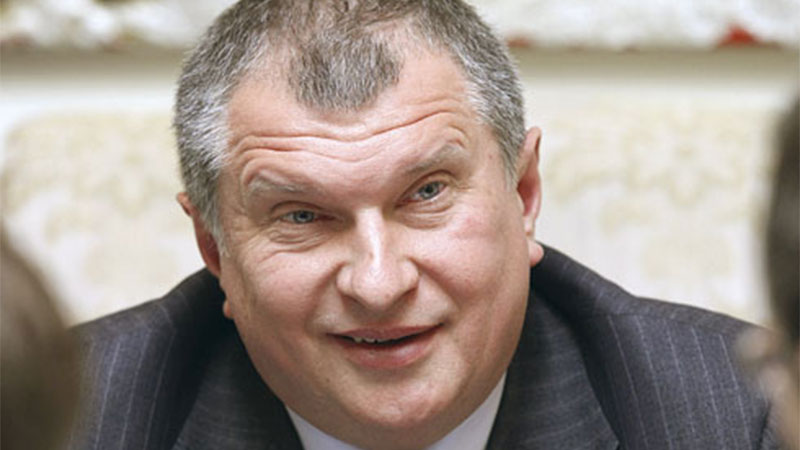
Deputy Prime Minister Igor Sechin, Russia’s top energy official and one of Prime Minister Vladimir Putin’s closest political allies, offered valuable insight into the nation’s investment climate during a rare interview with the Wall Street Journal. Sechin portrayed the risks that fueled an estimated 25 percent decline in direct foreign investment last year as strengths. Remarkably, Sechin asserted that the controversies involving Yukos, Hermitage Capital Management and the troubled BP/OAO Rosneft deal prove Russia is a safe bet for investors. Hermitage CEO William Browder responded that Sechin’s assessment will further erode investor confidence.

The risk of losing one’s business in Russia today is real. But it is not the greatest risk investors face. Investors in Russia risk losing their lives.

  • Share/Bookmark

Capital leakage from Volgotanker fraud case

January 26th, 2011 No comments

Police general Alexander Bokov was arrested in a $46 million fraud case involving Volgotanker, the former shipping giant linked to Yukos. Bokov along with accomplices Mikhail Kreimer and Sergei Stepanov, tried to get businessman Alexei Chegodayev to give them $46 million in exchange for a controlling stake in Volgotanker.

How did a police general get control of the world’s largest river tanker company?

Former Volgotanker executive Ilya Katsnelson testified in front of the US Helsinki Commission in 2009 to describe how the company was illegaly taken over by corrupt Russian law enforcement from its managers and shareholders in the shadow of Kremlin’s orchestrated attack on Yukos. Volgotanker, like Yukos before it, was crushed by a bankruptcy process based on invented tax claims.

However,  the money-making business of the Ministry of the Interior, same organization which denied attorney Sergei Magnitsky medical attention that led to his death, never stops. So once Bokov had Volgotanker under control, he tried to sell it to Chegodayev. Something went awry in the transaction as Chegodayev never got the business he paid for and now the FSB (successor to the KGB) is persecuting the generals. Most probably, the FSB have their own perspective purchaser for the same asset. 

At Davos, President Dmitry Medvedev announced the creation of a special sovereign fund to attract foreign capital. This fund would allow foreigner to invest in state property; it is unclear if that means Rosneft or other strategic assets. Russia has the third largest reserves in the world but it is quickly shrinking due to capital leaking out of the system through corruption and expropriation.  The Reserve Fund, which is used to cushion budget gaps decreased by 58% to $25.4 billion last year.

As Russian officials continue to divide up the economic pie among themselves, they are seeking newer sources of capital from foreign investors. But investors should remember the fates of Yukos and Volgotanker and the corrupion tax on any potential returns.

Helsinki Commission Katsnelson Remarks 2009

  • Share/Bookmark

Facebook Financing Raises Russian Corruption Concerns

January 5th, 2011 No comments

Tony Avelar/Bloomberg News

News that Goldman Sachs engineered a major stake in Facebook, the world’s most popular social networking website, by Moscow-based investment firm DST Global offers more evidence to support Mikhail Khodorkovsky’s observation in the Washington Post last year that corruption ranks as a leading Russian export.

“The source of the funds used to make the Facebook investment merits further investigation,” said Pavel Ivlev, chairman of the Committee for Russian Economic Freedom. “It’s increasingly clear that money stolen by corrupt Russian officials is being spirited out of the country and invested in legitimate Western businesses.”

Created in 2005, DST is owned by oligarch Alisher Usmanov and Yuri Milner, founder of Russia’s most successful Internet ventures, including Mail.ru.

Usmanov, a native of Uzbekistan, spent six years in an Uzbek prison on a conviction of fraud and embezzlement in the 1980s, charges he says were politically inspired. A Soviet court later dismissed the charges and Usmanov eventually made billions of dollars in the post-Soviet era by managing steel mill subsidiaries for Gazprom before they were spun off as his own businesses.

The record shows that Usmanov’s relationship with Vladimir Putin and other Kremlin leaders has made him one of Russia’s wealthiest men. From his lead role at Gazprom, the state-controlled energy giant that absorbed assets stolen from Khodorkovsky’s Yukos in 2003-2004, to his current company Metalloinvest, Usmanov has made the money he used to invest in Facebook by capitalizing on what former Prime Minister Mikhail Kasyanov calls “Putin’s capitalism for friends.”

Milner got his start in business working for Khodorkovsky’s bank Menatep, setting up a brokerage and investment arm before leaving in 1997, the Financial Times reported. Officials aligned with the regime later prosecuted former Menatap financial executives and tried to force them to testify falsely against Khodorkovsky. But not Milner, who shifted into investing in the Internet with the backing of Usmanov and others tied to Putin.

Following Khodorkovsky’s conviction last month a second round of trumped up charges, Russian Foreign Ministry spokesman Andrei Nesterenko dismissed protests from leaders in Washington and EU capitals, saying “we expect everyone to mind their own business, both at home and in the international arena.”

Investors in Russia have done just that, “minding their own business” by pulling assets out of the country at an accelerated pace, according to Pavel K. Baev in a post-verdict analysis.

The conviction of Khodorkovsky proves that Prime Minister Putin and not President Medvedev controls Russia and “translates into a re-evaluation of business and personal prospects in a country of self-serving bureaucracy – and into capital flight that increased sharply in the last months of 2010 and is set to reach $25 billion to $30 billion,” Baev wrote.

“Medvedev tries to explain away this worrisome trend by emphasizing the need to improve the investment climate, which in his view “leaves something to be desired; it is bad.” Medvedev has also initiated a package of reforms in economic legislation that should take effect in 2011-12, and quite probably he simply does not understand that the Khodorkovsky case is not a minor setback for the markets, as it was five years ago, but the irrefutable verdict on his “modernization” strategy.” Yet the verdict renders hollow Medvedev’s statements supporting the rule of law and enforceable contracts in Russia.

“Investors in PepsiCo, Morgan Stanley, Facebook should closely question their board members about the prudence of those companies risking capital with the Putin regime given the growing list of major Western companies that have been defrauded by corrupt Russian officials,” Ivlev said. “But more telling are the latest statistics which show that Russian businesses that have benefited from the regime are now eschewing further investments in the country given the lawlessness that they themselves helped promote.”

  • Share/Bookmark

Russia’s Economic Capital and a Kafka-esque Trial

April 7th, 2010 No comments

Reuters recently released an article outlining three key risks in Russia: the variable price of oil, political shake up in the Kremlin and further insurgency attacks. Though the world’s largest energy producer, Russia’s manufacturing, construction and retail industries continues to contract as domestic consumption and foreign investment continues to lag, increasing the economy’s dependence on oil prices for growth.

Prime Minister Vladimir Putin remains popular and the driver behind the co-governance team with President Dmitry Medvedev. Despite highlighting their differences and indicating Medvedev’s intentions of political and judicial reform, Reuters notes that Russian markets would rebound only if Putin remained in place. The maintenance of the status quo despite Russia’s world renown for government corruption and weak rule of law seems curious. With foreign investors, such as IKEA, Hermitage Capital, and now HBK investments scaling back or pulling out of Russia due to corruption and extortion, why would the markets value Russian companies more if the status quo remained?

And how does the continued expropriation of private business by government officials add to Russia’s economic capital?

The extraction of Russia’s economic and natural resources by the politically connected few leads to only self-enrichment. Perhaps this self-enrichment would be tolerable if the proceeds were reinvested in Russia and the Russian people, but this is rarely the case. What Russia needs is investment to update oil and pipeline infrastructure, capital to encourage innovation and a stronger rule of law to benefit all Russian people.

Russia’s most famous political prisoner, Mikhail Khodorkovsky began his spirited defense yesterday against his Kafka-esque second trial. The government charged Khodorkovsky and his business partner Platon Lebedev with stealing 2.5 billion barrels of YUKOS’s crude oil or a third of the United States’ entire annual consumption of oil.

The trial is also viewed domestically and abroad as a test of Medvedev’s commitment to ending “legal nihilism” and his power and control within the Kremlin. Medvedev even started a national anti-corruption drive this March. According the Associated Press,

The trial is considered a test of whether President Dmitry Medvedev, himself a lawyer, is serious about reforming Russia’s judicial system. In other cases, judges have come forward to complain they face political pressure.

Only time will tell if Medvedev makes good on his words.

  • Share/Bookmark

ECtHR Hearing $98 billion YUKOS v. Russia Case Tomorrow

March 3rd, 2010 No comments

Yukos Oil Company v. Russian Federation – Case in European Court of Human Rights

Tomorrow, the European Court of Human Rights (ECtHR) is holding a hearing on the merits of the complaint against the Russian Federation by the former management of YUKOS. This case is separate from any action being taken specifically on behalf of majority shareholders. 

The Strausburg hearing will start at 2:30pm (Central European time) / 8:30am (New York time) and last for approximately 30 minutes. A live webstream of the hearing will be available at the YUKOS claims website.

  • Share/Bookmark

NEWS: European Court of Human Rights Delays YUKOS v. Russia

January 12th, 2010 No comments

Today, the European Court of Human Rights issued a press release announcing the postponement of the hearing until March 4, 2010. This is the third delay by Russian authorities.

  • Share/Bookmark