

Archive

Archive for the ‘corruption’ Category

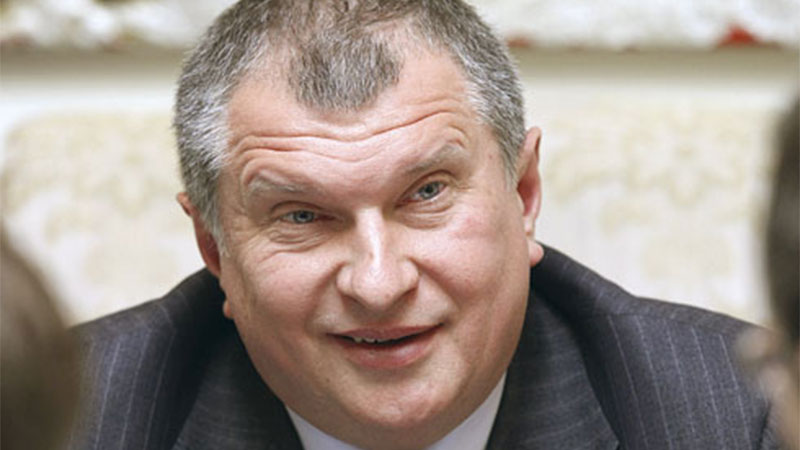
Russia’s top whistleblower Alexey Navalny addresses rampant corruption

May 31st, 2011 No comments
Alexey Navalny, Los Angeles Times

Alexey Navalny, Los Angeles Times

Alexey Navalny speaks with Sergei L. Loiko of the Los Angeles Times about his efforts to uncover corruption in Russia. His profile has recently been elevated as Russian authorities take note of his efforts by opening a criminal fraud case against Navalny.

What’s your advice for those thinking about investing in Russia?

On the whole, investments in Russia may be profitable, and I am in no case warning against investing in Russia. But the gains for investors could be significantly higher if Russian companies were at least abiding by the basic rules of corporate management employed in the West. Investing in Gazprom [the state natural gas monopoly] could yield profits too. But if we made some basic steps aimed at curbing corruption within Gazprom, the company’s worth would rise by about 30%.

In practice, investors have no possibility to influence major Russian companies’ performance and receive information about it. My associates and I have spent three hard years constantly trying to get the basic documents about the performance of big companies such as [oil firms] Rosneft and Transneft. Finally we got a court order that the most basic documents be opened to us. But as a rule, the information about the work of such companies still remains a closely guarded secret.

When did you start to work to expose corruption?

It all started about five years ago as I realized that I needed to do something to safeguard my personal investments. The most interesting investment venues in Russia are oil- and gas-sector companies. These are a bunch of so-called major companies in Russia. Some of them are formally private, but they are all under state control. When I started to invest in those companies, I quickly saw that the dividends were very small while their management were leading luxury lives in their lavish villas in France, Spain and so on.

How seriously has corruption infiltrated the power hierarchy of Russia?

Russian power structures are corrupt inside out. People who don’t become part of corrupt schemes cannot efficiently work within the Russian government.

What are your thoughts on a fraud case opened against you by the Russian Investigation Committee?

It is a purely political and completely falsified case initiated at the very top. None of the cases I initiated have ever reached that level of attention. The Kremlin [leaders are] very irritated by the fact that they cannot control my blog in any way, [so they are responding,] be it scare tactics, a system of licensing or blunt money. I know they can do anything to me if they want.

It is the risk that comes with my job. But I am ready to take that risk. We have already received anonymous telephone calls with threats unless we drop our investigations. They have been digging dirt on me all this time and have come up with such a flimsy case in which they are not even accusing me of embezzling the money but just fraudulently causing some damage to an obscure provincial company. They want to scare me. For them the best outcome would be if I emigrate. But I will not give them that pleasure. I choose to stay and face the risks.

People who fight corruption in Russia take great risks. I am prepared to take these risks to make life in our country better. I will continue to do my work against all odds.

  • Share/Bookmark

Russia’s “aspiration” issues and conspicuous corruption

March 24th, 2011 No comments

Peter Pomerantsev’s look into Russia’s growing television industry reveals the challenges of doing business in Russia. Among the unique features of working in Russia include diversion tactics for tax collectors seeking bribes, strategies for avoid kickbacks or otkat for broadcasters and overcoming societal indifference to rules of the game.

Pomerantsev starts his diary with the production company Potemkim Productions itself, the elaboate set up of gruff security men and rooms behind rooms are a ruse to persuade tax collectors that the company was small and warranted smaller levies.

No entrepreneuer paid their taxes in full: it wouldn’t occur to them. Taxes, he said, were just a way for bureaucrats to buy themselves holidays in Thailand…Ivan haggled with the tax police to keep down the size of the pay-off…then Ivan would bring out the fake accounts from the front office to support his case and they would sit down together to negotiate, with tea and biscuits as if this were the most normal of business deals. And in Russia it was.

Pomerantsev was hired to produce reality tv shows like the ones in the West, but those mainly flopped. The Russian version of The Apprentice closely followed the aspirational themes of those in the West, with someone succeeding after hard work, perserverence and some panache. The problem was:

…no one in Russia believed in the rules. The usual way to get jobs in Russia is not by impressing at an interview, but buy what is known as blat – “connections”. Russian society isn’t much interested in the hard-working, brilliant young business mind. Everyone knows where that type ends up: in jail like Mikhail Khodorkovsky, or in exile like the mobile phone billionaire Yevgeny Chichvarkin. Today’s Russia rewards the man who operates from the shadows, the grey apparatchik, the master of the politique de couloir – the man like Putin…The shows that did work were based on a quite different set of principles. By far the biggest success was Posledny Geroi (“The Last Her0″), a version of Survivor, a show based on humiliation and hardship. this chimed in Russia – a country where being bullied by the authorities is the norm.

The structural and cultural obstacles to aspiration and innovation are reflected Russia’s low ranking in Transparency International’s Corruption Transparency Index where it is the most corrupt major economy. Bloomberg reported on a Freedom House report that

Russia risks turning into an autocracy that resembles authoritarian regimes in the Middle East if Prime Minister Vladimir Putin prolongs his rule in 2012 elections…As venal Middle Eastern authoritarians give way to popular pressure for democratic change, Russia’s systemic corruption is becoming especially conspicuous.

The political risk in Russia remains higher than other emerging markets and for that reason the US private equity firm Blackstone doesn’t invest there. Could concerns with complying with US Foreign Corrupt Practices Act be a resaon too?

  • Share/Bookmark

King Crab Businessman Acquitted Once, Charged Again

February 9th, 2011 No comments

Arkady Gontmakher, the owner of Global Fishing in Seattle, Washington was arrested in 2007 in Moscow for money laundering and poaching king crabs from Eastern Russia to sell to the US market. After being acquitted in December 2010, Gontmakher was charged again with money laundering on the same grounds.

After three years in pretrial detention his health has deteriorated, but he fears for his life if he has to have heart surgery in Russia

Who can guarantee that an operation can be carried out successfully under such police pressure?

Gontmakher just wants to be released and go back to the US where his wife lives. He would not continue to work in Russia, Gontmakher said — and he “wouldn’t advise that to anyone, either.”

  • Share/Bookmark

Capital leakage from Volgotanker fraud case

January 26th, 2011 No comments

Police general Alexander Bokov was arrested in a $46 million fraud case involving Volgotanker, the former shipping giant linked to Yukos. Bokov along with accomplices Mikhail Kreimer and Sergei Stepanov, tried to get businessman Alexei Chegodayev to give them $46 million in exchange for a controlling stake in Volgotanker.

How did a police general get control of the world’s largest river tanker company?

Former Volgotanker executive Ilya Katsnelson testified in front of the US Helsinki Commission in 2009 to describe how the company was illegaly taken over by corrupt Russian law enforcement from its managers and shareholders in the shadow of Kremlin’s orchestrated attack on Yukos. Volgotanker, like Yukos before it, was crushed by a bankruptcy process based on invented tax claims.

However,  the money-making business of the Ministry of the Interior, same organization which denied attorney Sergei Magnitsky medical attention that led to his death, never stops. So once Bokov had Volgotanker under control, he tried to sell it to Chegodayev. Something went awry in the transaction as Chegodayev never got the business he paid for and now the FSB (successor to the KGB) is persecuting the generals. Most probably, the FSB have their own perspective purchaser for the same asset. 

At Davos, President Dmitry Medvedev announced the creation of a special sovereign fund to attract foreign capital. This fund would allow foreigner to invest in state property; it is unclear if that means Rosneft or other strategic assets. Russia has the third largest reserves in the world but it is quickly shrinking due to capital leaking out of the system through corruption and expropriation.  The Reserve Fund, which is used to cushion budget gaps decreased by 58% to $25.4 billion last year.

As Russian officials continue to divide up the economic pie among themselves, they are seeking newer sources of capital from foreign investors. But investors should remember the fates of Yukos and Volgotanker and the corrupion tax on any potential returns.

Helsinki Commission Katsnelson Remarks 2009

  • Share/Bookmark

Russia in 2011

January 12th, 2011 No comments

Russia started 2011 in the shadow of the Khodorkovsky trial. Judge Danilkin delivered a guilty verdict and the maximum sentence requested by the prosecutors, signalling to investors that Prime Minister Putin’s power vertical remained as strong as ever. Despite recovering from the lows of 2009, First Deputy Chairman of the Central Bank of Russia Alexei Ulyukayev recently told the press that total capital outflors will be in the $25-30 billion range. Russian investors took Putin’s retention of power seriously and looked for safer places to invest.

According to Russia analyst James Beadle:

[Russia's] economic development is the innocent victim in this domestic power play. Russia’s business leaders may understand this message but international investors don’t. They observe a distrubing dichotomy between words and actions. Putin has demonstrated that his arbitrary word is the law and that Russia’s legal system remains feudal…Russia’s popularity as a target for investment of all forms will be hindered by insecure political structures. Foreign direct investment will be the biggest victim.

Russia also faces pressure to reduce corrpution and President Medvedev has put that at the top of his agenda. Despite Medvedev’s efforts at combating corruption, Russia continues to fail to comply with the Council of Europe’s Group of Statees Against Corruption (GRECO). Out of 26 recommendations made, Russia completed only a third. Accoring to Alexei Volkov, head of the State Duma’s commission on anti-corruption legislation, change in the area of corruption requires “deep” analysis to see if “they will work in Russia taking into account our culture and tradions.” Would that be the culture of corruption Mikhail Khodorkovsky mentioned in 2010?

  • Share/Bookmark

Corruption Reaches Putin and Top Officials

December 23rd, 2010 No comments

Russian President’s chief economic advisor Arkady Dvorkovich acknowledged in a BBC interview that his country is having a perception issue. He also suggested that 1,000 years of corruption is a hard habit to kick but the authorities are looking into violations of the rule of law. Acceptance is the first step to change and Russia is in need of much change. In the latest Transparency International  survey, Russia declined in ranking again this year to 154 out of 178 countries.

Perception is based on reality and a whistleblower came out today to implicate Prime Minister Putin at the top of an elaborate multiyear scheme to extract contributions from Russian businessmen. Sergei Kolesnikov, a business associate of Putin, has offered the most detailed description of how Putin has engaged in a combination of corruption, bribery and theft to amass his own personal wealth. Read the letter here.

In the open letter to President Medvedev, Kolesnikov reveals Putin’s secret funding network. This letter was delivered Tuesday to the Russian U.N. mission in New York. Two or three times a year Kolesnikov regularly briefed Putin on his personal wealth accumulated through contributions by businessmen. Washington Post columnist David Ignatius wrote today that “it’s one of the most detailed allegations I’ve seen of the links between Putin and Russia’s “crony capitalism.”

Additional reporting by Ellen Barry at the New York Times show how corruption and politics prevent uncovering the truth about the death of Sergei Magnitsky. Contradictory official statements and lack of oversight have prevented the truth to be known. President Medvedev established the Public Oversight Commission to look into the case but after an initial thoughtful review was hijacked by security forces.

These same Federal Security Service (FSB) forces also known as the siloviki are the subject of an article in the New York Review of Books which refers to them as the New Nobility in Russia. In the assessment the FSB runs the country with Putin at the top.

…the FSB focuses its efforts on protecting the Kremlin’s vast economic interests, suppressing legitimate political opposition, and ensuring the Kremlin’s control over the press and television through intimidation and violence.

  • Share/Bookmark

US Congress Acts Against Corruption

September 30th, 2010 No comments

US Congress began steps to battle corruption in Russia. Senator Benjamin L. Cardin (D-MD), Chairman of the Commission on Security and Cooperation in Europe (Helsinki Commission), and U.S. Representative James P. McGovern (D-MA), Chairman of the Tom Lantos Human Rights Commission, yesterday introduced bills that would freeze assets of and block visas to individuals responsible for the 2009 death of Russian anti-corruption lawyer Sergei Magnitsky, related to a $234 million tax fraud scheme against Hermitage Capital.

This bill would bar all individuals connected to the 2009 death of Sergei Magnitsky from receiving U.S. visas and accessing U.S. financial markets.

As the US Congress tries to fight corruption from abroad, Russian authorities continue to tighten their grip on political discourse. This week Russia President Dmitry Medvedev fired Moscow mayor Yuri M. Luzhkov. In early September Luzhkov criticized Medvedev on his management of a highway between Moscow and St. Petersburg and seemed to call for Putin’s return to power. Some say this crack in Kremlin leadership left Medvedev no choice but to let Luzhkov go, but he needed affirmation by Putin, the real power in the Kremlin.

As authoritarianism calcifies in Russia, financial markets and public discourse suffers. Despite Medvedev’s grand tour of Silicon Valley and his musing on legal nihilism, the status quo in Russia remains strong.

Russian Officials Involved in Tax Fraud Against Hermitage Capital and the Death of Sergei Magnitsky

  • Share/Bookmark

PWC Reversal Highlights Perils of Doing Business in Russia

September 8th, 2010 No comments

PWC, Kommersant

Accounting Firm Drops Audits Under Pressure from Kremlin

PricewaterhouseCoopers (PWC) today finds itself thrust into the middle of the world’s highest-profile political show trial – accused by the defendant, Mikhail Khodorkovsky, former Yukos Oil CEO, of improperly withdrawing ten years of certified financial audits to keep PWC executives out of deadly Russian prisons. As the “trial” in Moscow edges towards the end of its critical defense phase, lawyers for Khodorkovsky and his co-defendant Platon Lebedev are engaged in proceedings in the U.S. to show that PWC executives caved to threats by corrupt government officials to help prosecutors bolster their fabricated case, which numerous independent courts and political observers have dismissed as a farce. The stakes are running high as a guilty verdict in the Moscow trial would land Khodorkovsky and Lebedev in prison for another 15 years and thwart much-needed investment in Russia. In the U.S., Khodorkovsky’s defense team has asked the California Board of Accountancy to revoke the licenses of Douglas Miller, the then-PWC partner who approved the audit-opinion withdrawal, and requested the U.S. District Court in Manhattan to order PWC to produce documents related to its decision.

 This situation symbolizes why the Russian business community is not free — a business leader is jailed because he is viewed as a political threat and then his company’s independent auditor, a leading international firm, is attacked and forced to choose between its professional integrity and its professional survival in Russia,” said Pavel Ivlev, Chairman, Committee for Russian Economic Freedom.

  • Share/Bookmark

Russian Untouchables. Episode 2: Pavel Karpov

July 13th, 2010 No comments

Jamison Firestone describes the highlife and crimes of Russian official Pavel Karpov and Sergey Magnitsky lies in prison.

  • Share/Bookmark

HP Bribery Probe Shows Medvedev’s Uphill Battle with Corrpution

April 15th, 2010 No comments

The same day Russian president Dmitry Medvedev announces his new “national strategy” to counter corruption, the German and US authorities begin a $10 million bribery probe into Hewlett-Packard executives. The investigation involves an incident that occurred over seven years ago, according to an Hewlett-Packard spokesman. Medvedev has made combating corruption a priority for his administration, but the corruption in Russia has deep roots.

  • Share/Bookmark